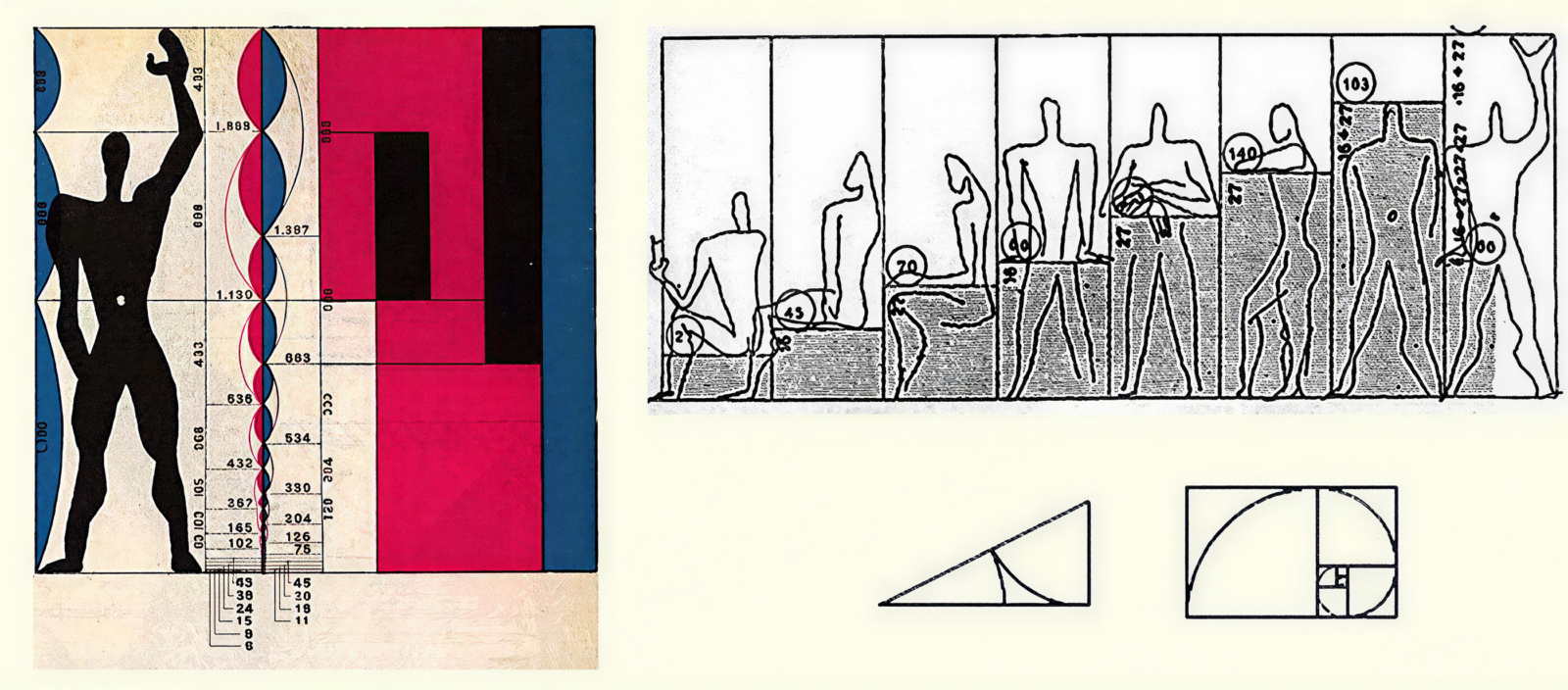
There is no formula for proportion. This is what makes it useful and what makes it difficult. The golden ratio exists; Fibonacci sequences appear in natural growth patterns; harmonic relationships between room dimensions can be calculated with precision. None of this tells you whether a space is well-proportioned. The calculation and the perception are different instruments, and only one of them matters at the moment of inhabitation.
Proportion is what you feel before you measure. When a room is wrong — too tall for its plan, too wide for its ceiling, too compressed for the light it receives — the wrongness registers immediately, before any dimension is taken. The same is true of rightness: a well-proportioned space produces a quiet satisfaction that has nothing to do with style or material or programme. It is prior to all of that. A concrete bunker can be well-proportioned. A marble palace can fail.
This makes proportion the hardest architectural discipline to teach and the easiest to recognize. Giorgio Morandi spent a career painting the same objects — bottles, jugs, bowls, tins — in slightly different arrangements, with slightly different spatial relationships between them. The paintings that work are not the ones where the objects are most interesting or most carefully rendered. They are the ones where the distances between them, and between them and the edges of the canvas, have reached a state of equilibrium that cannot be further adjusted without loss. Remove nothing. Add nothing. The proportions are resolved.
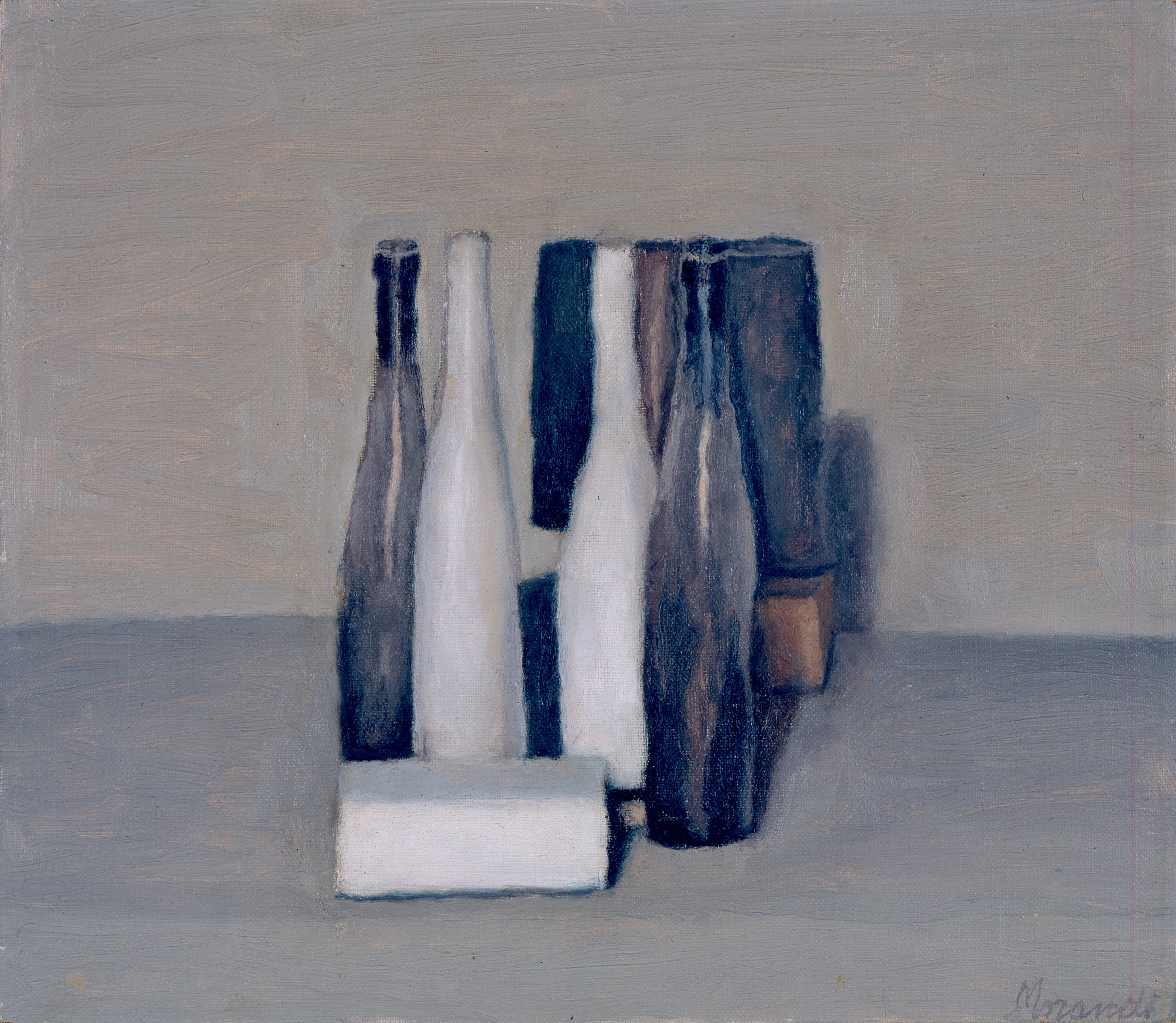 Picture. Still Life, 1957. Giorgio Morandi
Le Thoronet operates by the same principle at architectural scale. The twelfth-century Cistercian abbey in Provence is made of almost nothing: stone walls, stone floors, a few openings. What Lucien Hervé’s photographs make visible — and what Le Corbusier recognized when he wrote the preface to the book — is that every dimension of that building is in relationship with every other dimension, and that those relationships produce a spatial experience no amount of material elaboration could improve. The proportions are the architecture. The stone is merely the medium through which the proportions are expressed.
 Image. Fondation Le Corbusier, Paris / Pro Litteris
We return to this question constantly in our work. Not as a system to apply — we do not use harmonic ratios as generative tools — but as a test to apply. When something is wrong in a design and we cannot immediately identify what, proportion is usually the answer. A ceiling that sits one hundred millimetres too high. A window that is fifty millimetres too wide for its wall. An opening that is correct in absolute dimension but wrong in its relationship to the room it belongs to. These things cannot be calculated into resolution. They require judgment that has been trained by looking at buildings that get it right, and by building enough to develop sensitivity to the difference.
The unverifiable is not the unimportant. It is, in this case, the most important thing.