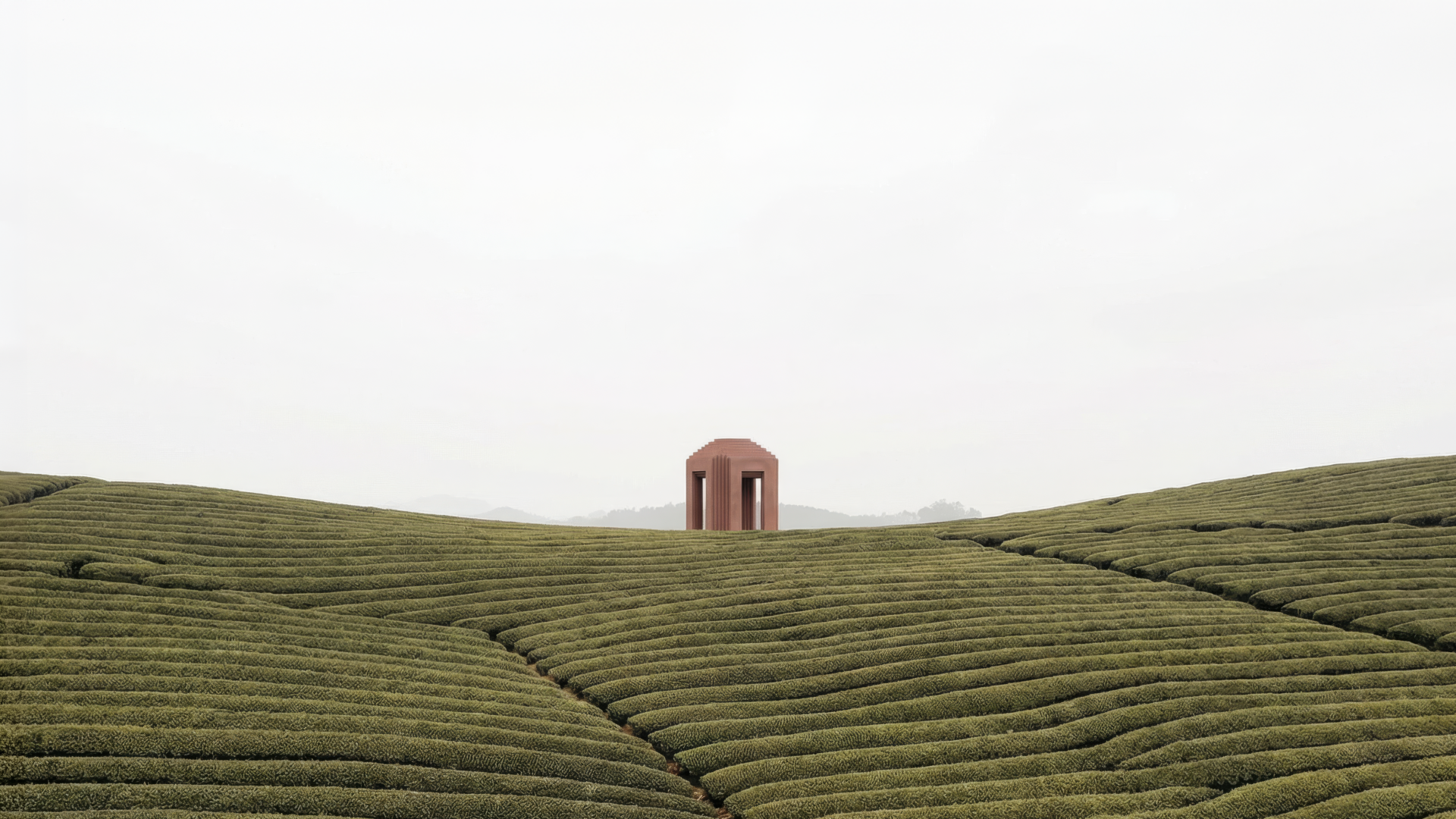
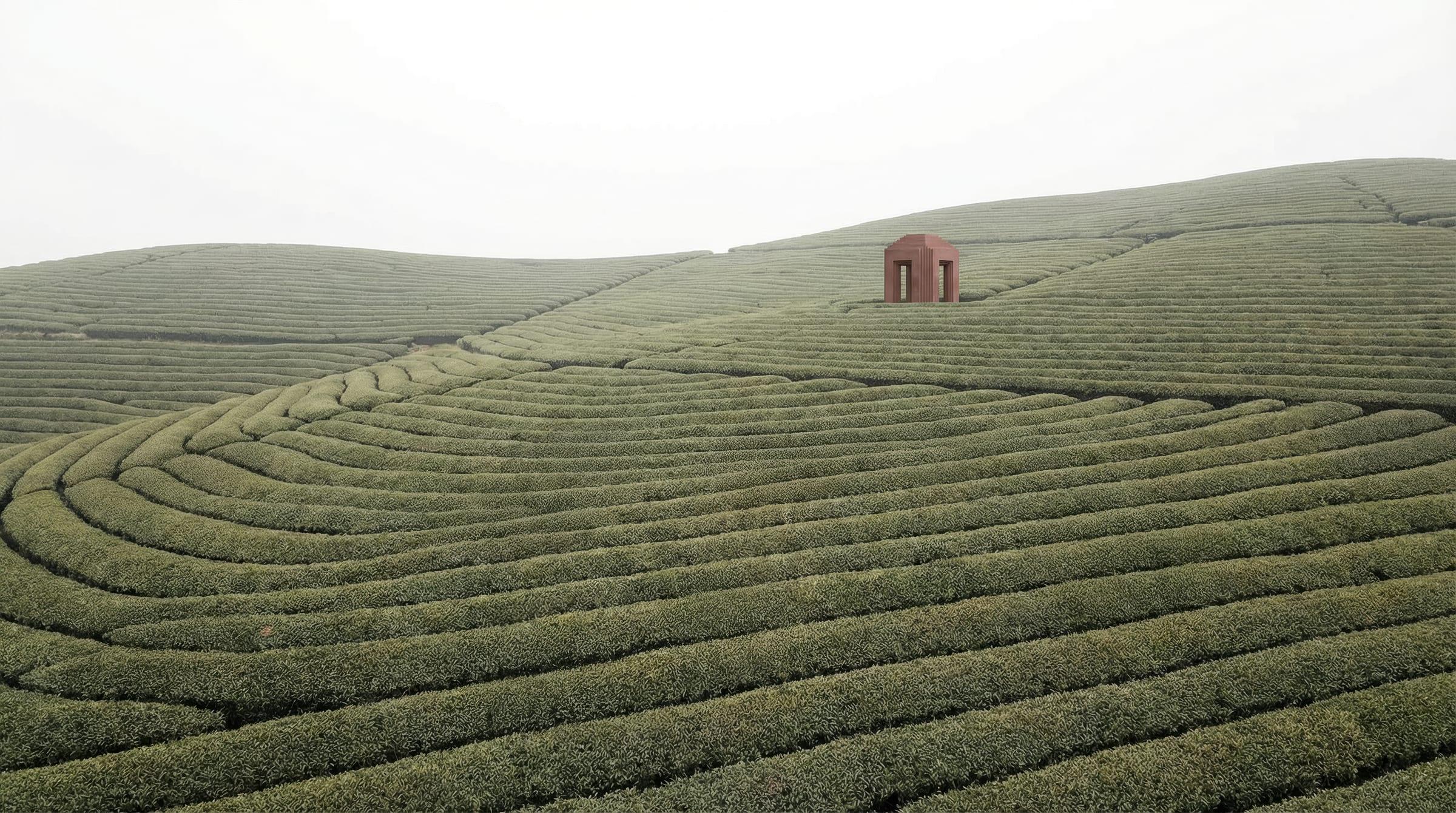
The municipality of Jingshan, in the tea country of Hangzhou, set out to mark fifteen points along a cultivation landscape with fifteen small buildings — a route that lets the territory be read without interrupting it. The studio was asked to design one. The question the commission poses is old and exact: how to build in a landscape without diminishing it, how to give orientation without imposing. The answer is a single stepped volume in terracotta, drawn from the colour of the ground, standing among the tea fields as both a figure and a threshold.
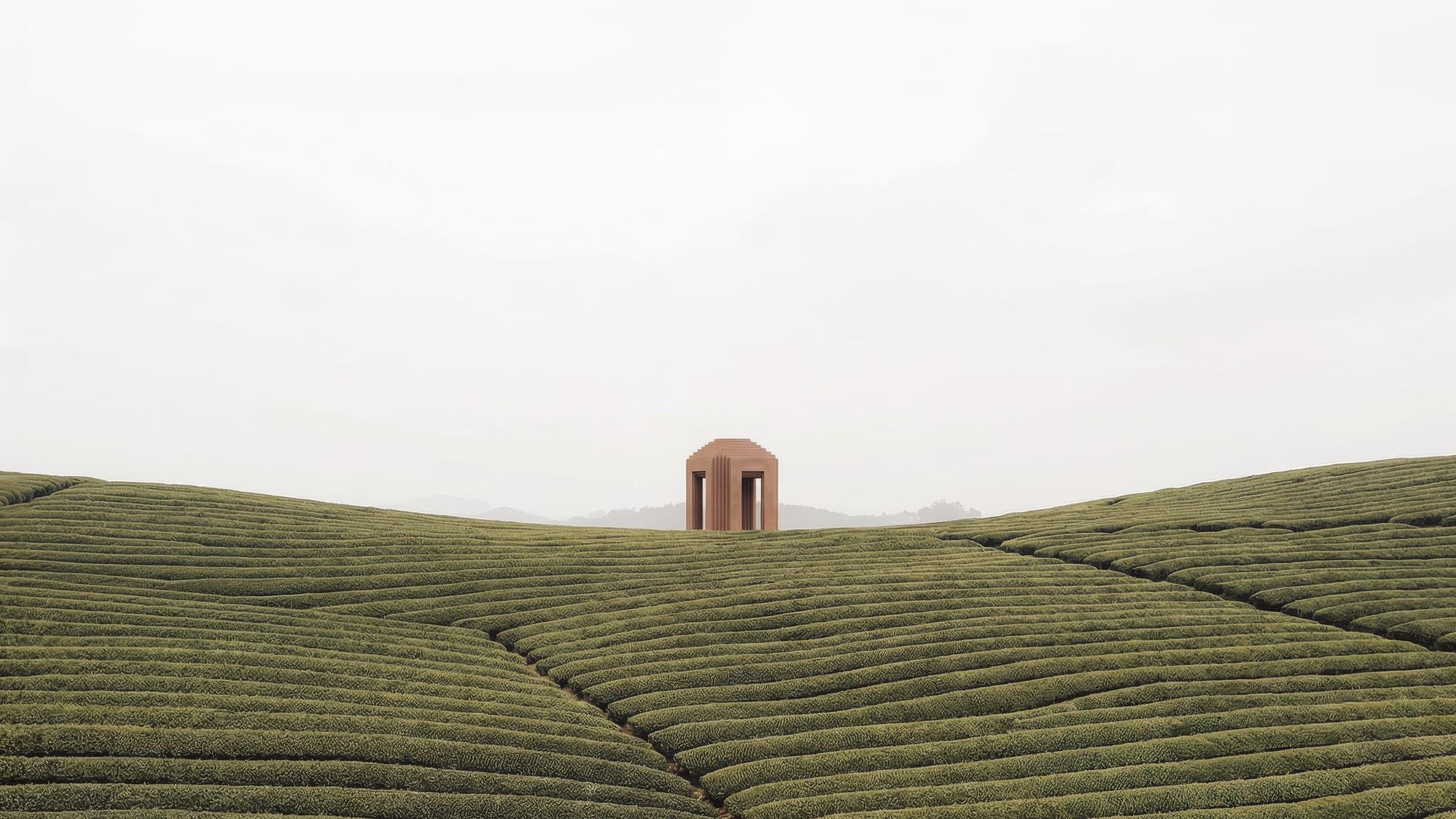
The pavilion is conceived not as an object placed on the land but as a point of orientation within it: a place to stop, to look, to understand where one stands in the fields. It belongs to the route as much as to its own site.
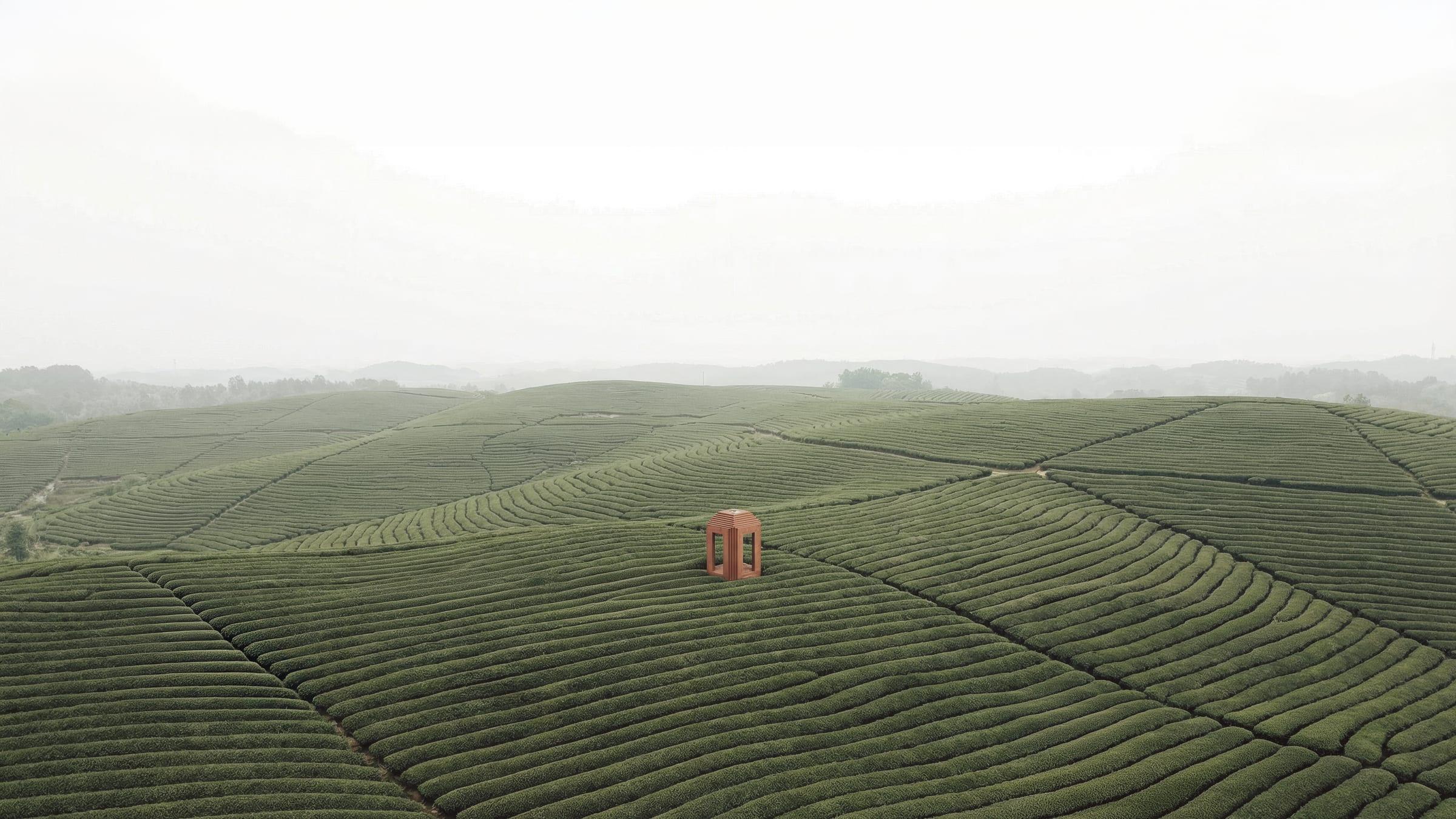
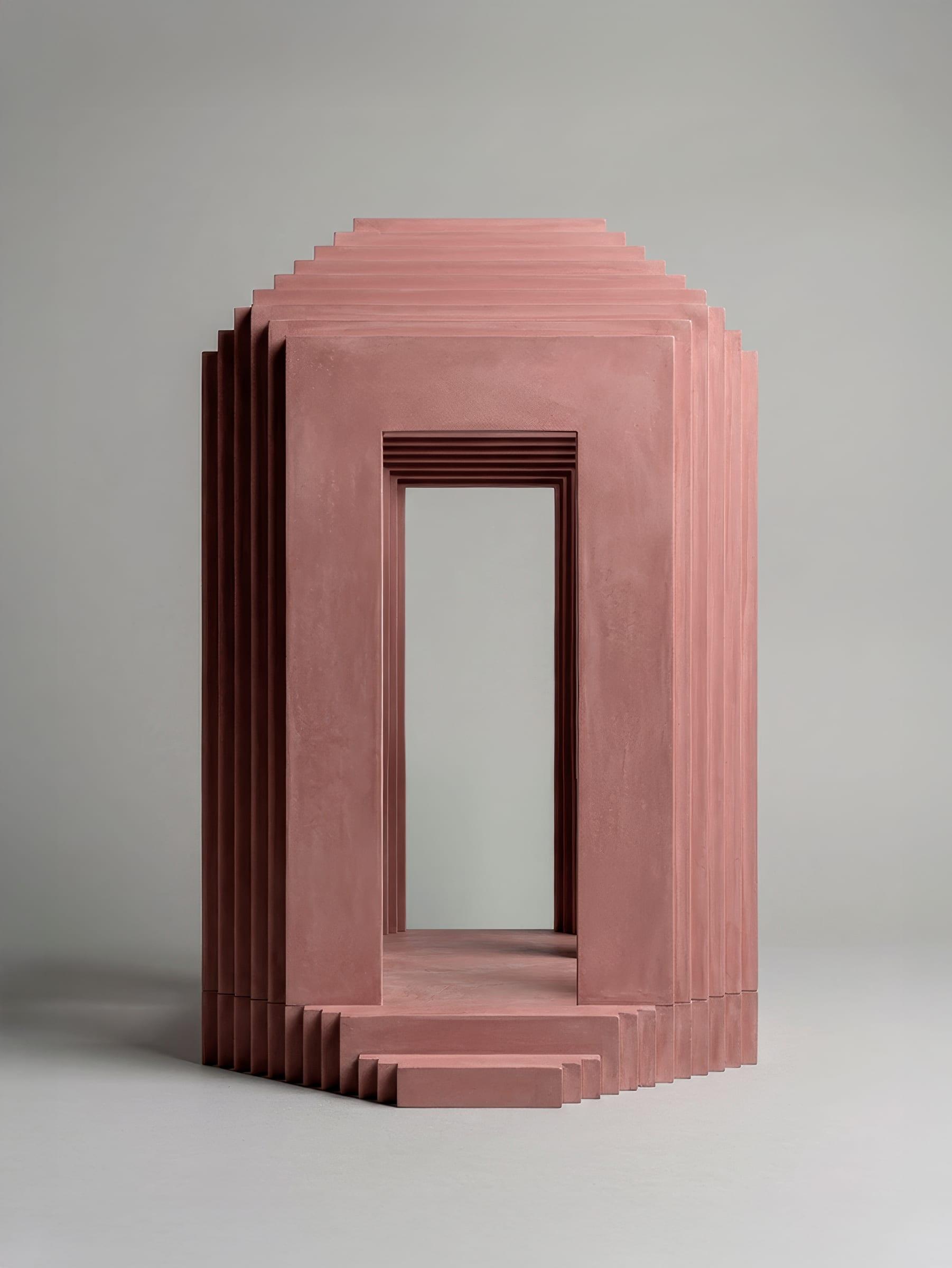
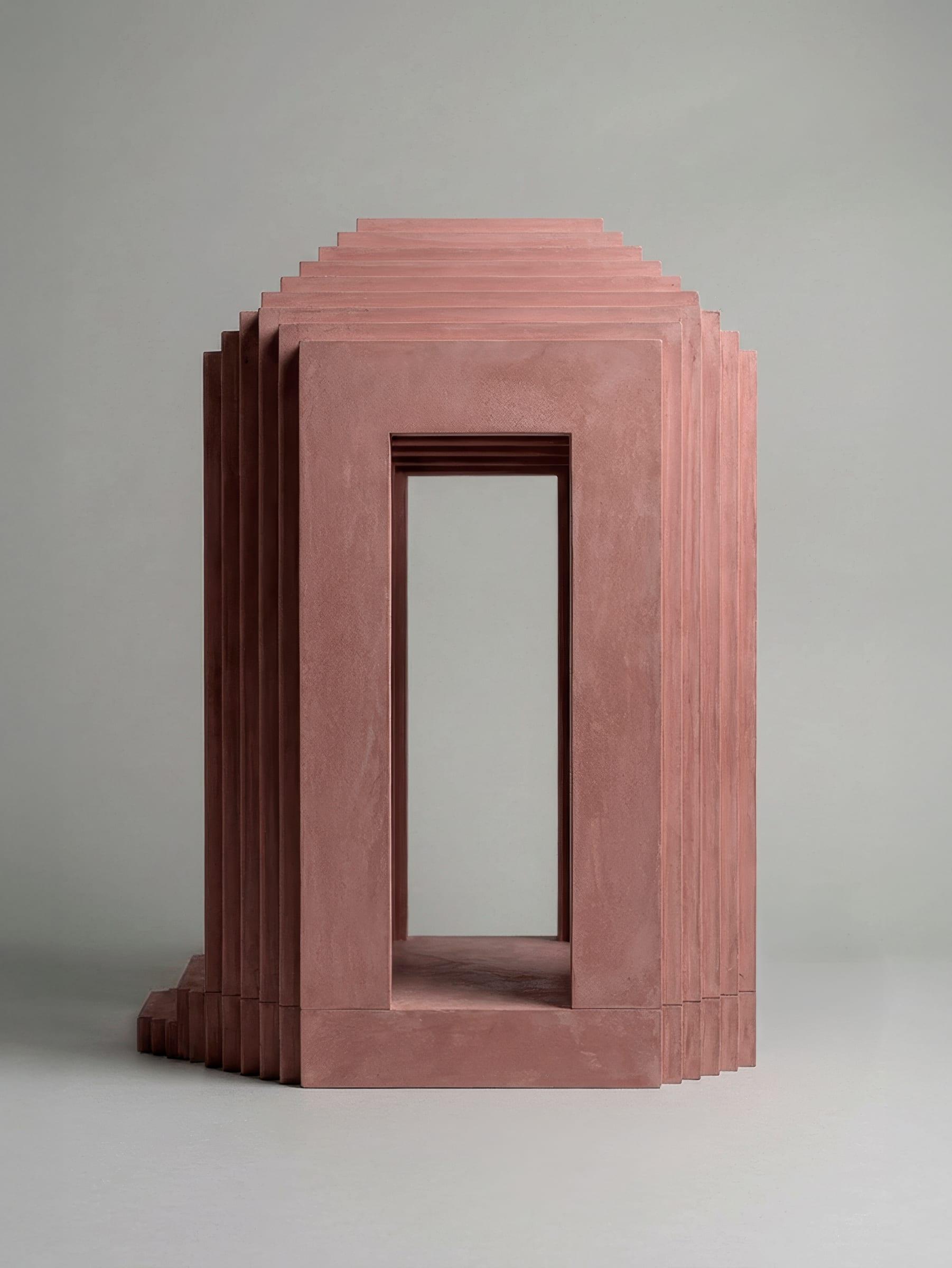
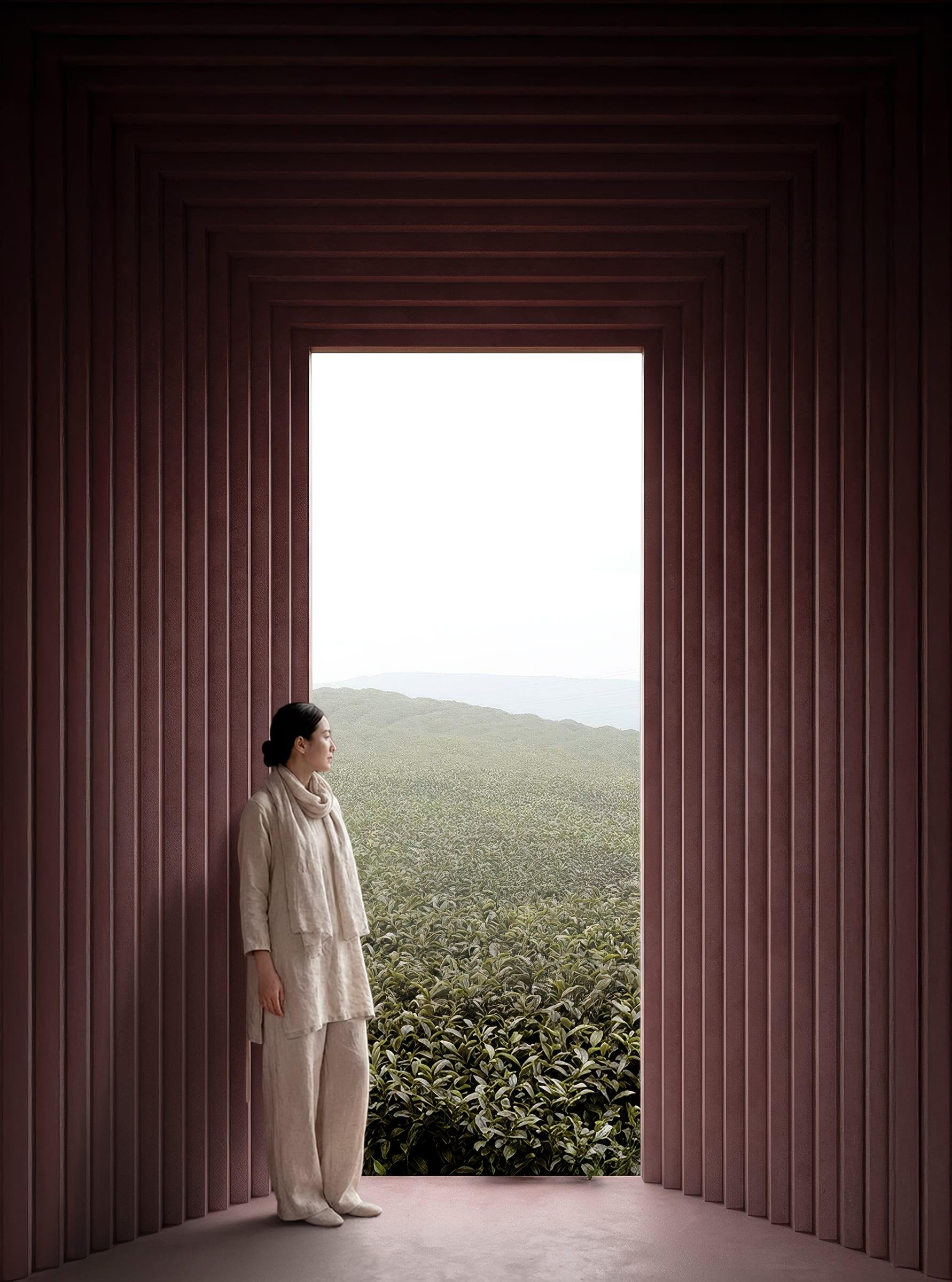
The pavilion is built from stacked horizontal layers, a stepped profile that rises from a low base to a crowned top. The form is read in section: each layer steps in or out from the one below, so the silhouette changes continuously as one moves around it and through the fields. A single portal is cut through the volume, framing a view of the landscape beyond and drawing the route through the structure rather than around it.
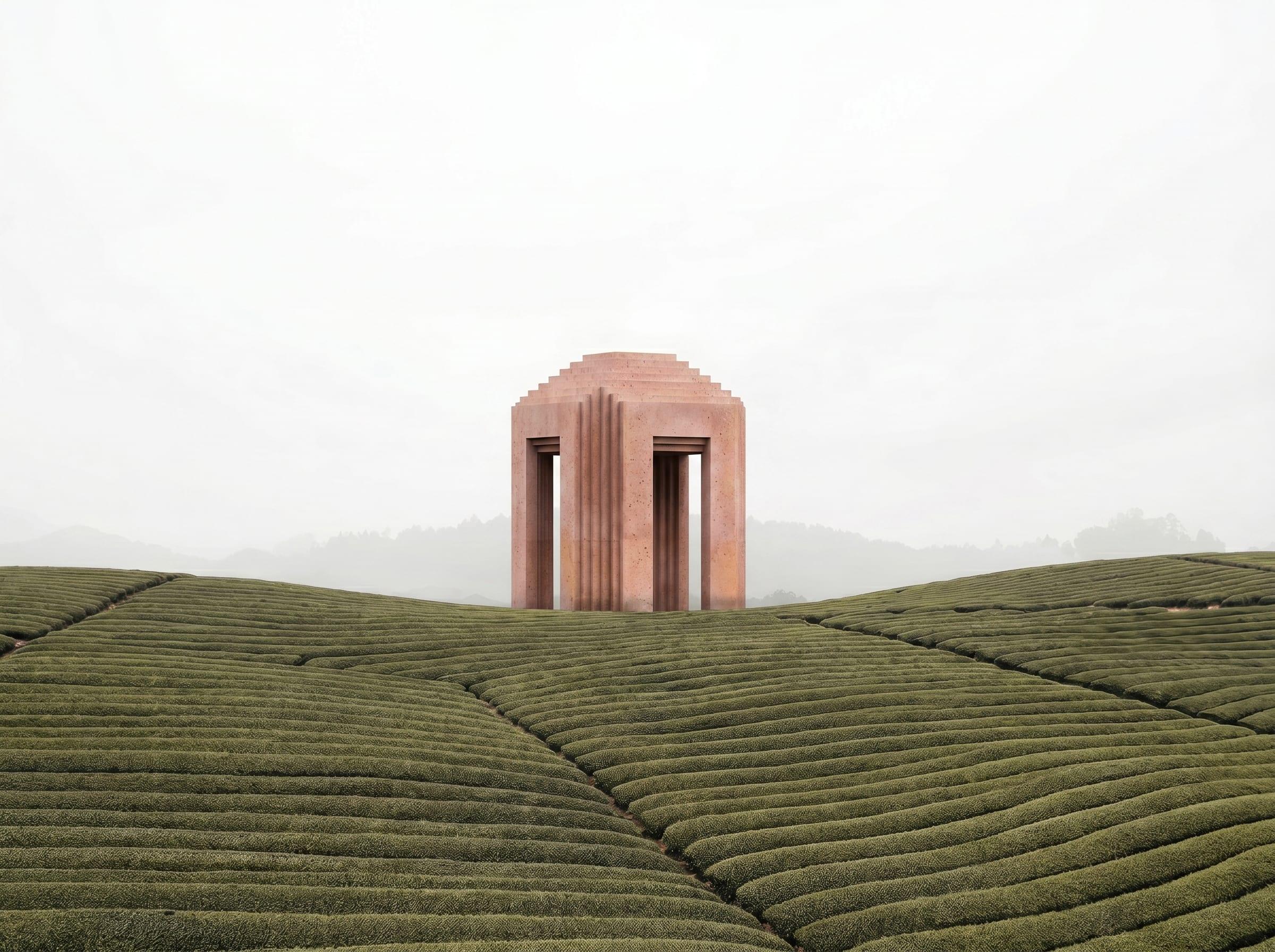
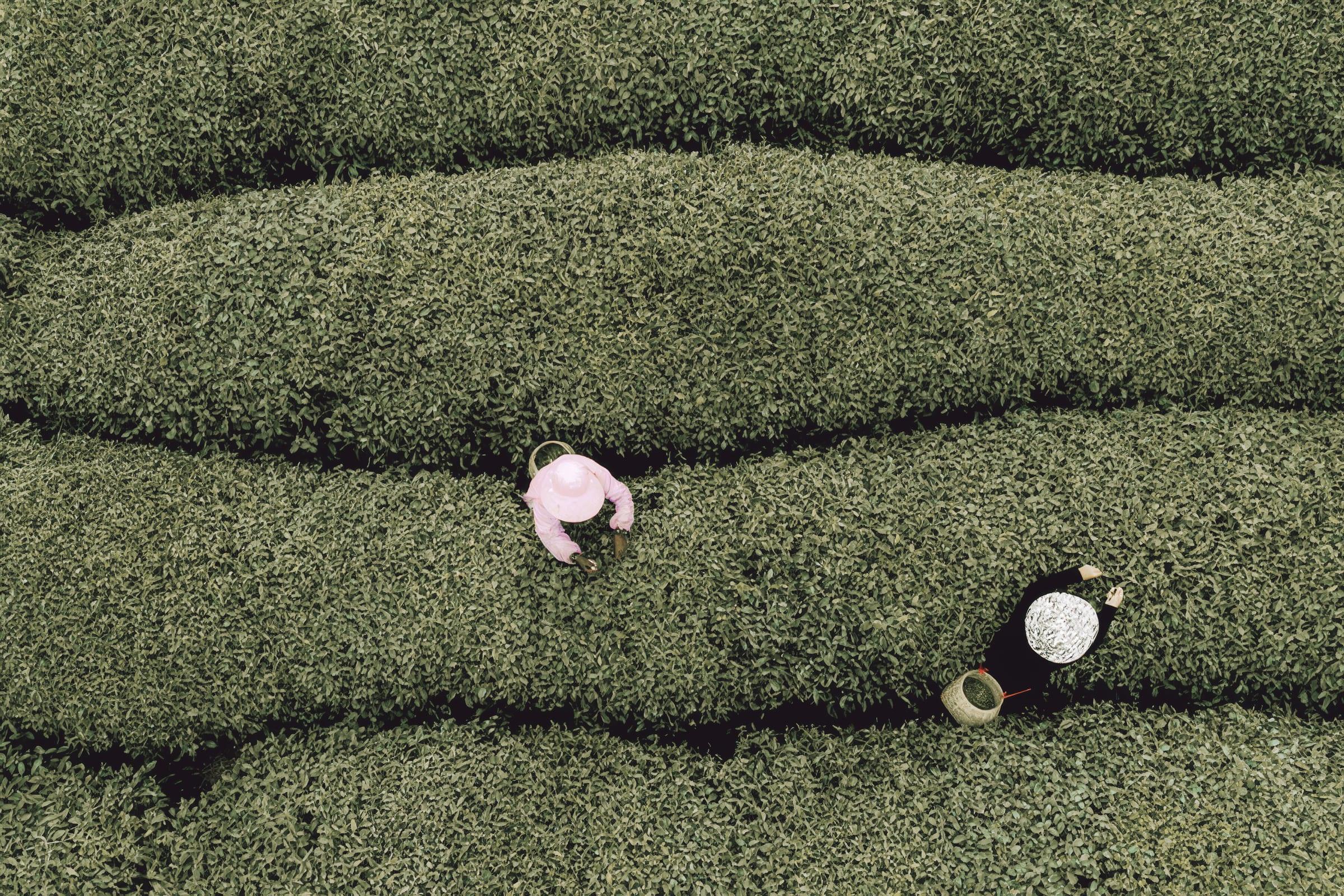
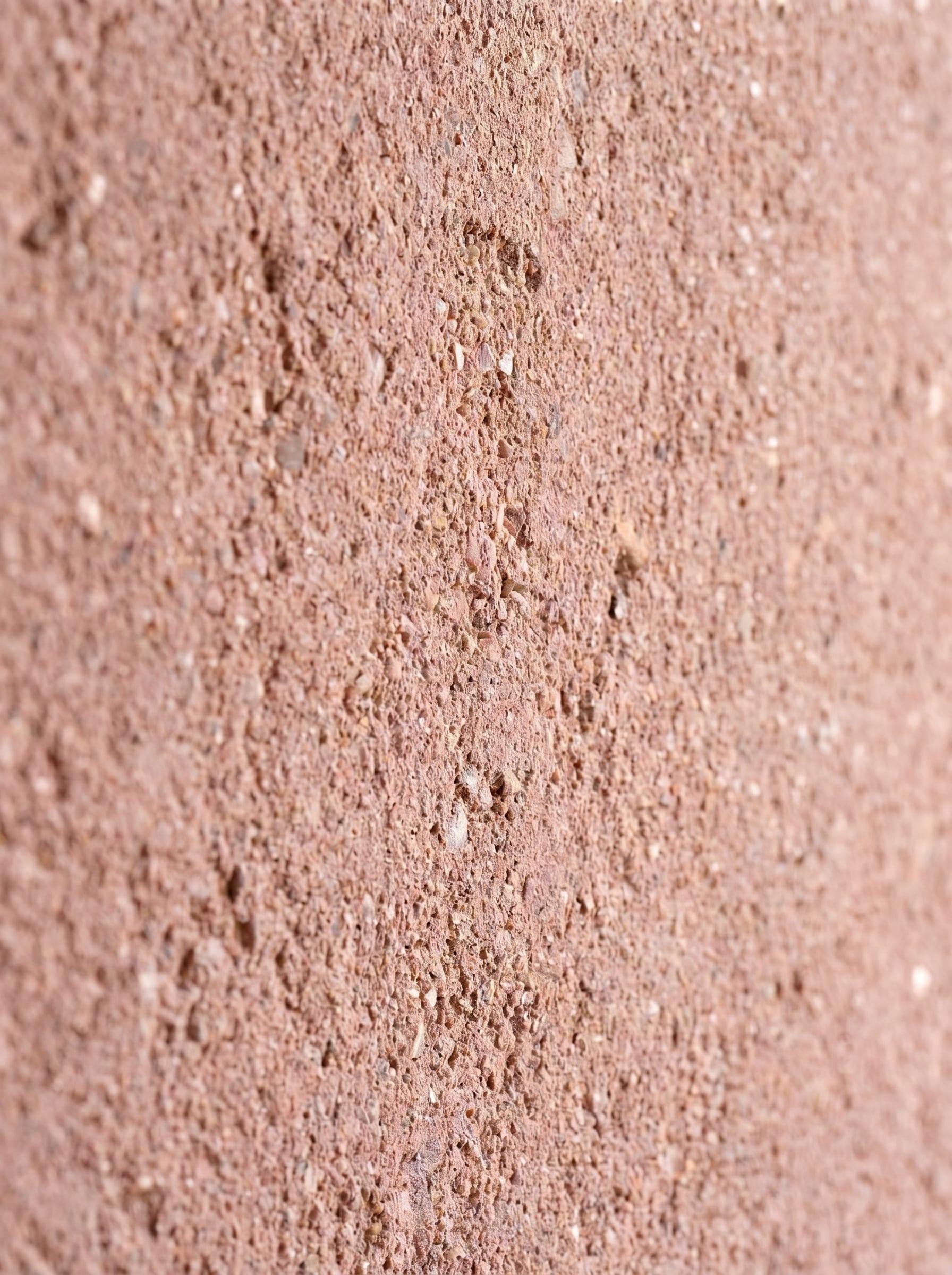
The pavilion is finished in a warm terracotta tone, drawn from the earth of the tea terraces and set against the green of the fields. The colour holds the structure in its landscape: present, but continuous with the ground it stands on. From a distance it reads as a single mark on the horizon; up close, the stepped layers and the cut portal give it the scale of a room. The pavilion offers what the brief asked for — orientation without imposition, a threshold between the visitor and the territory.
More on how the studio approaches work of this kind:
Working with developers: residential and hotel projects