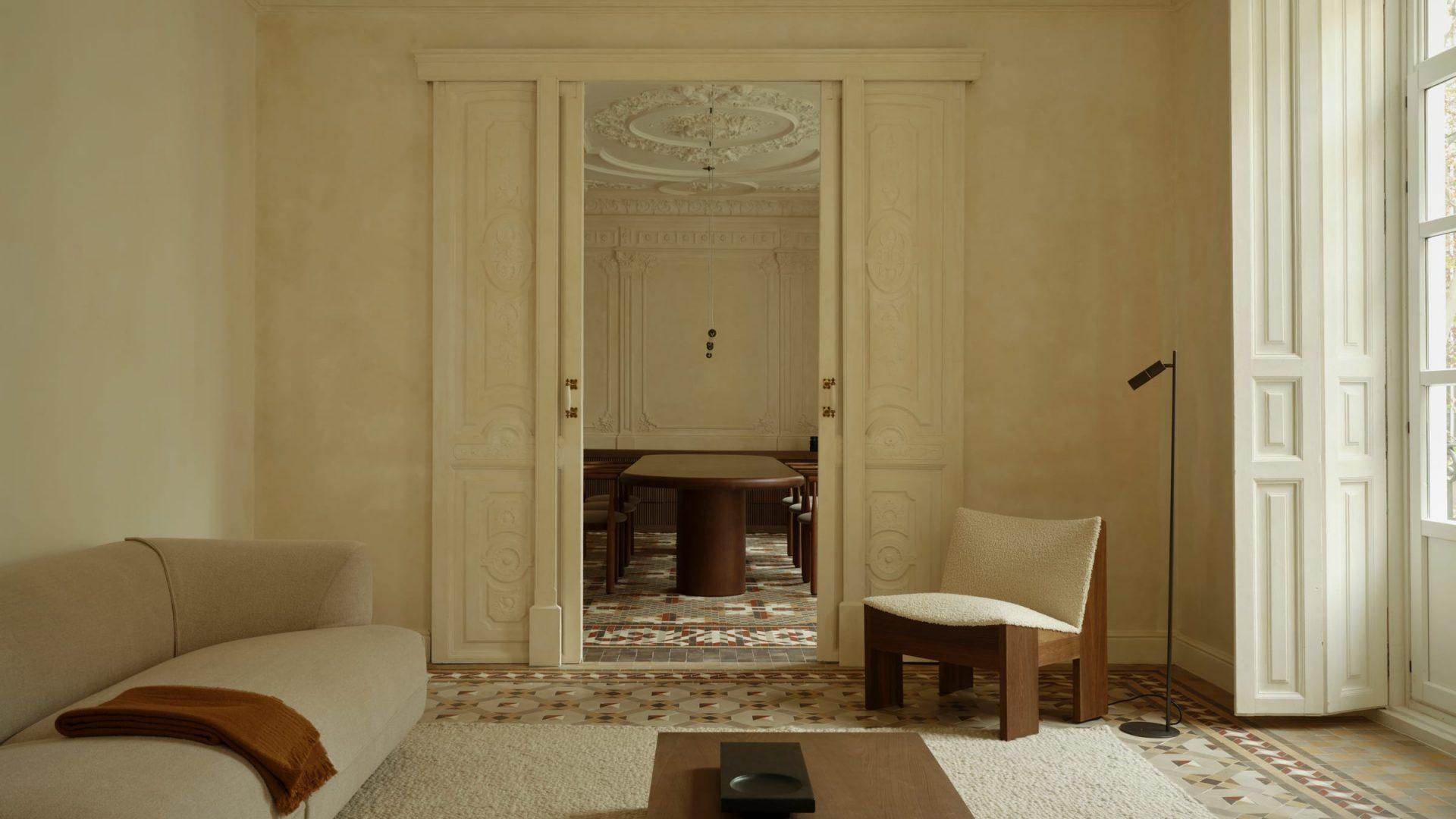
Ciutat Vella Apartment
Valencia
2025
Interior
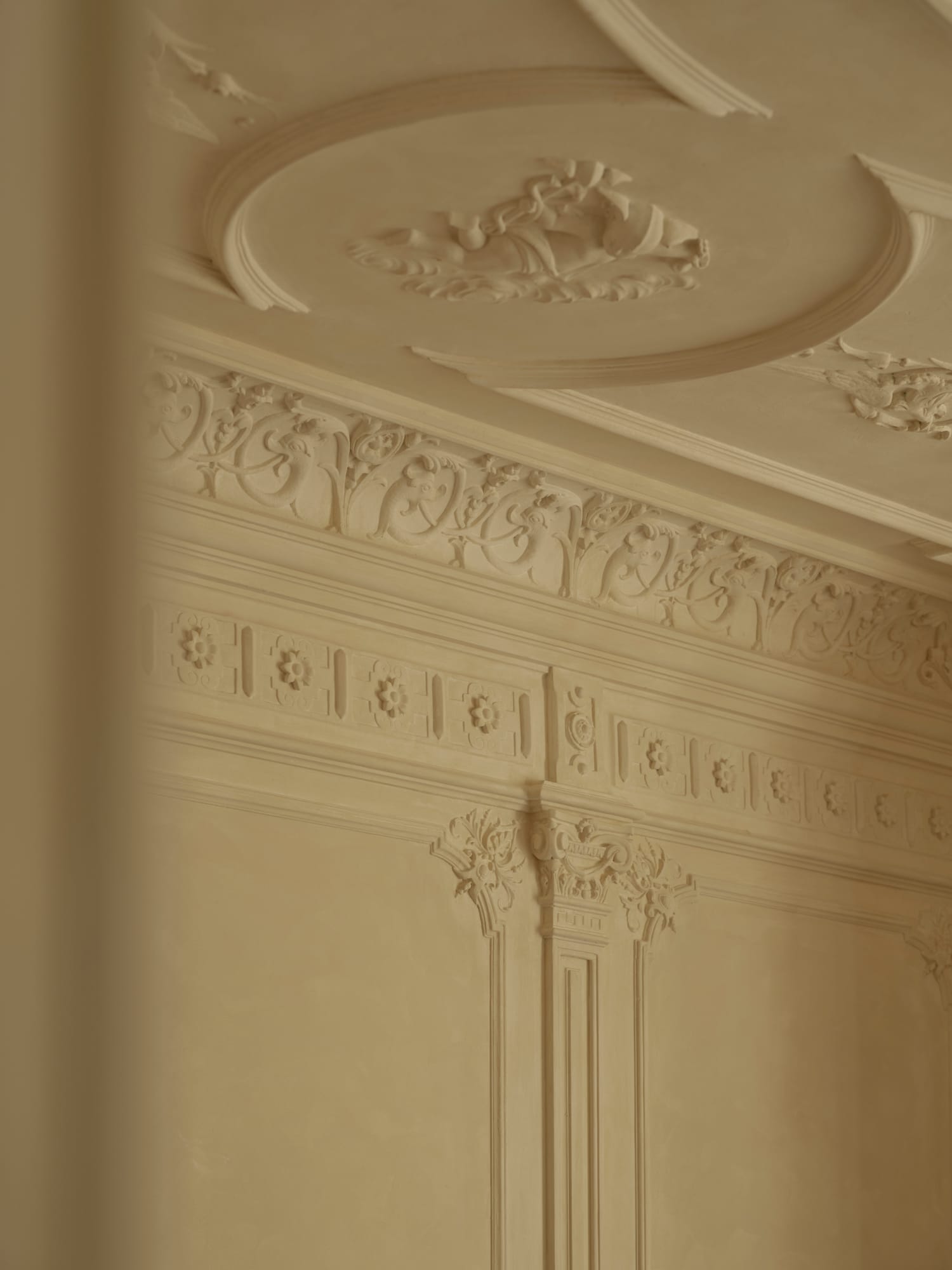
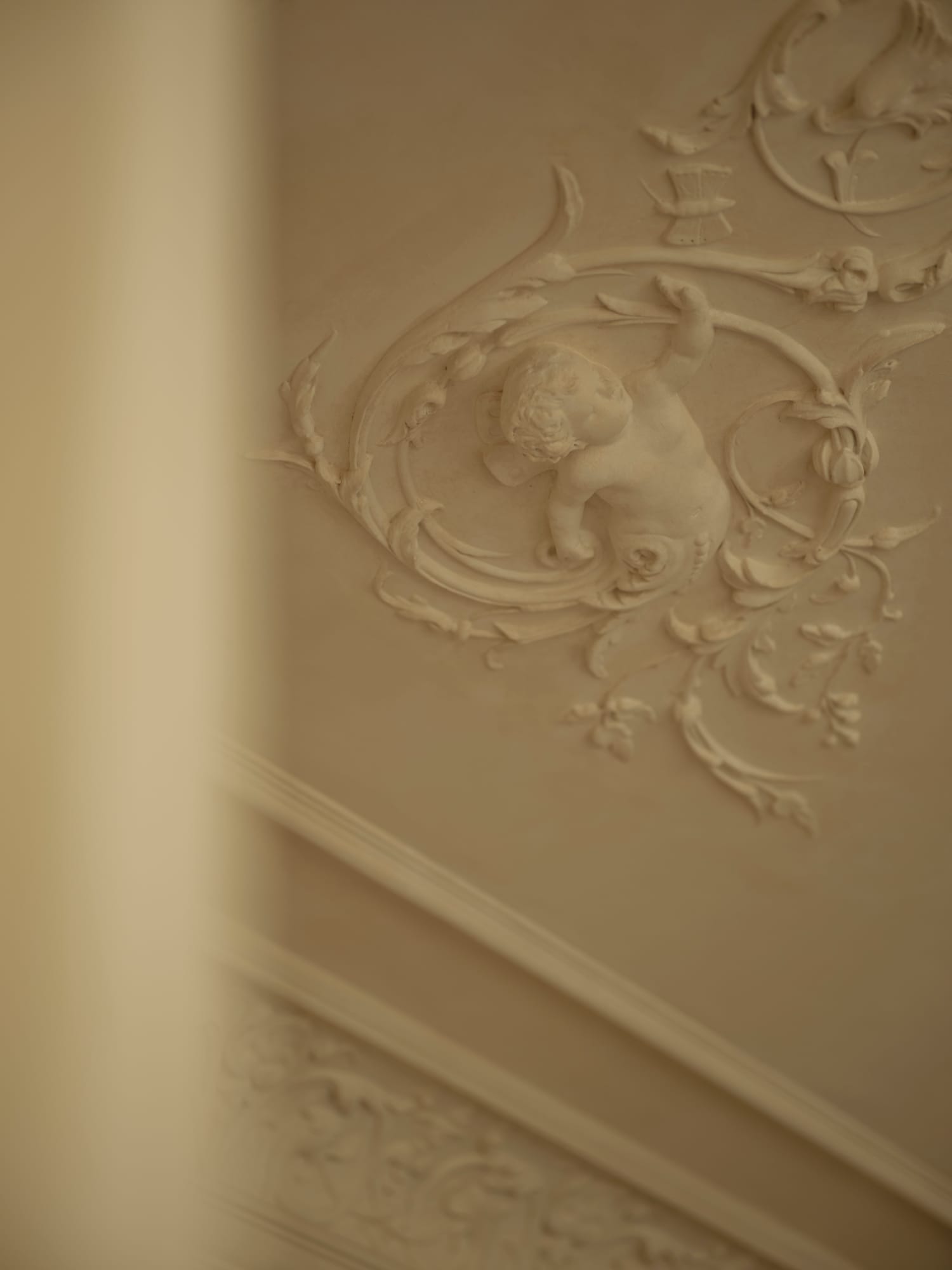
The apartment occupies a building from 1890 in Ciutat Vella, the old town of Valencia, where Roman, medieval and modernist fabric sit within a few streets of one another. It arrived with its period intact: Nolla mosaic floors, wrought ironwork, plaster mouldings, century-old doors, fragments of polychrome paint. These elements are protected. The project takes them as its measure rather than its obstacle — what is original is restored and kept in view, what is new is built to its proportion.
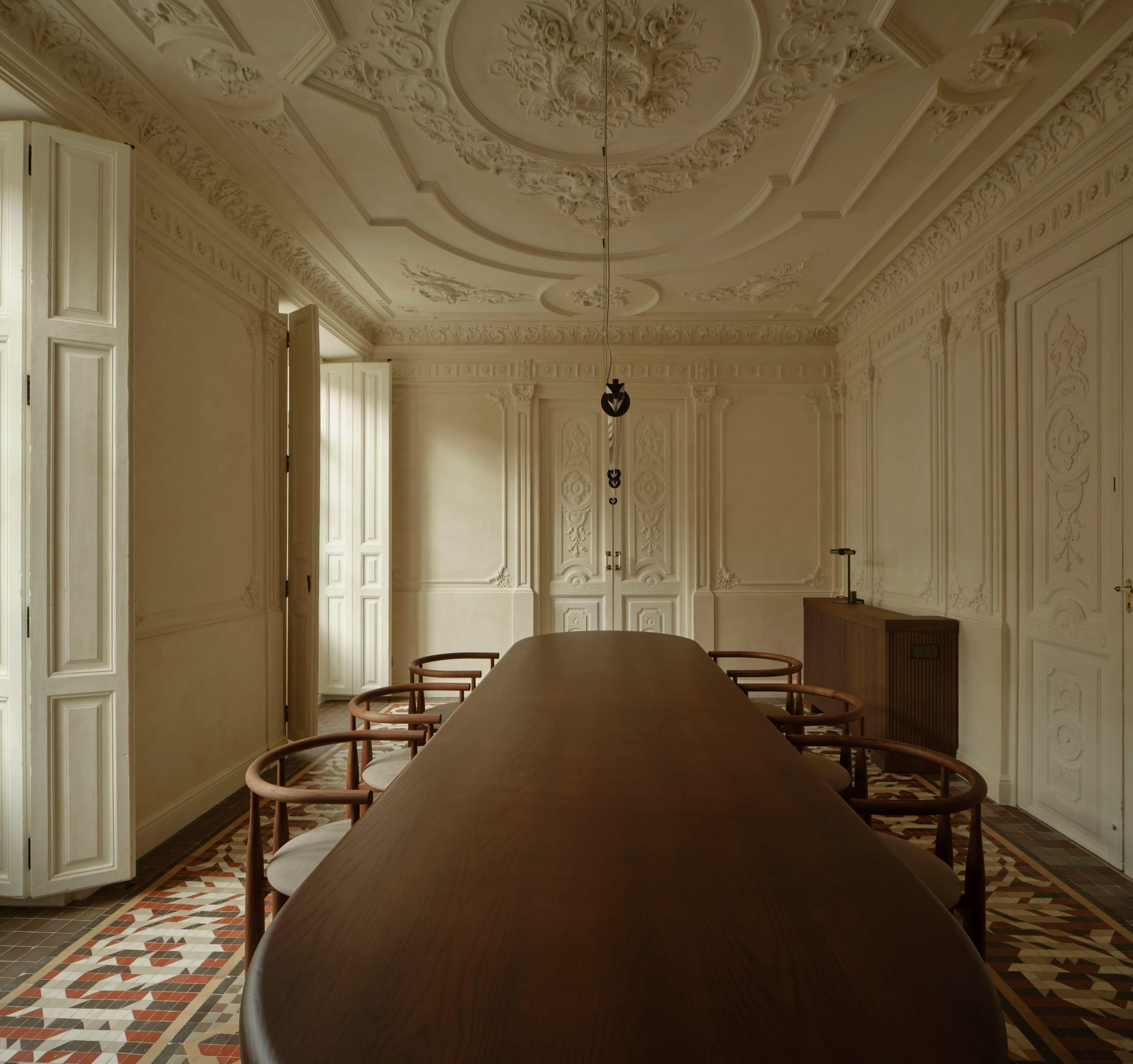
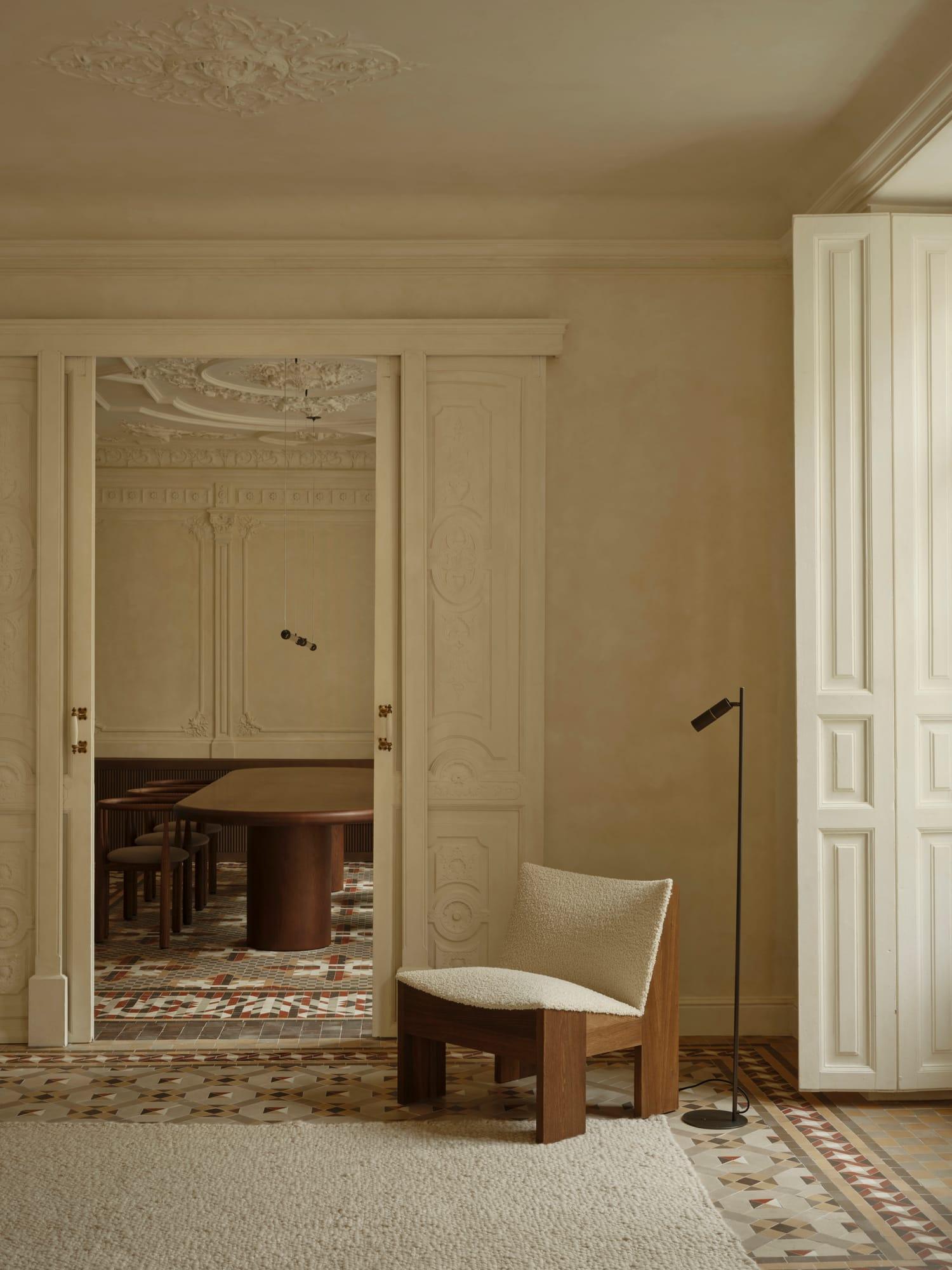
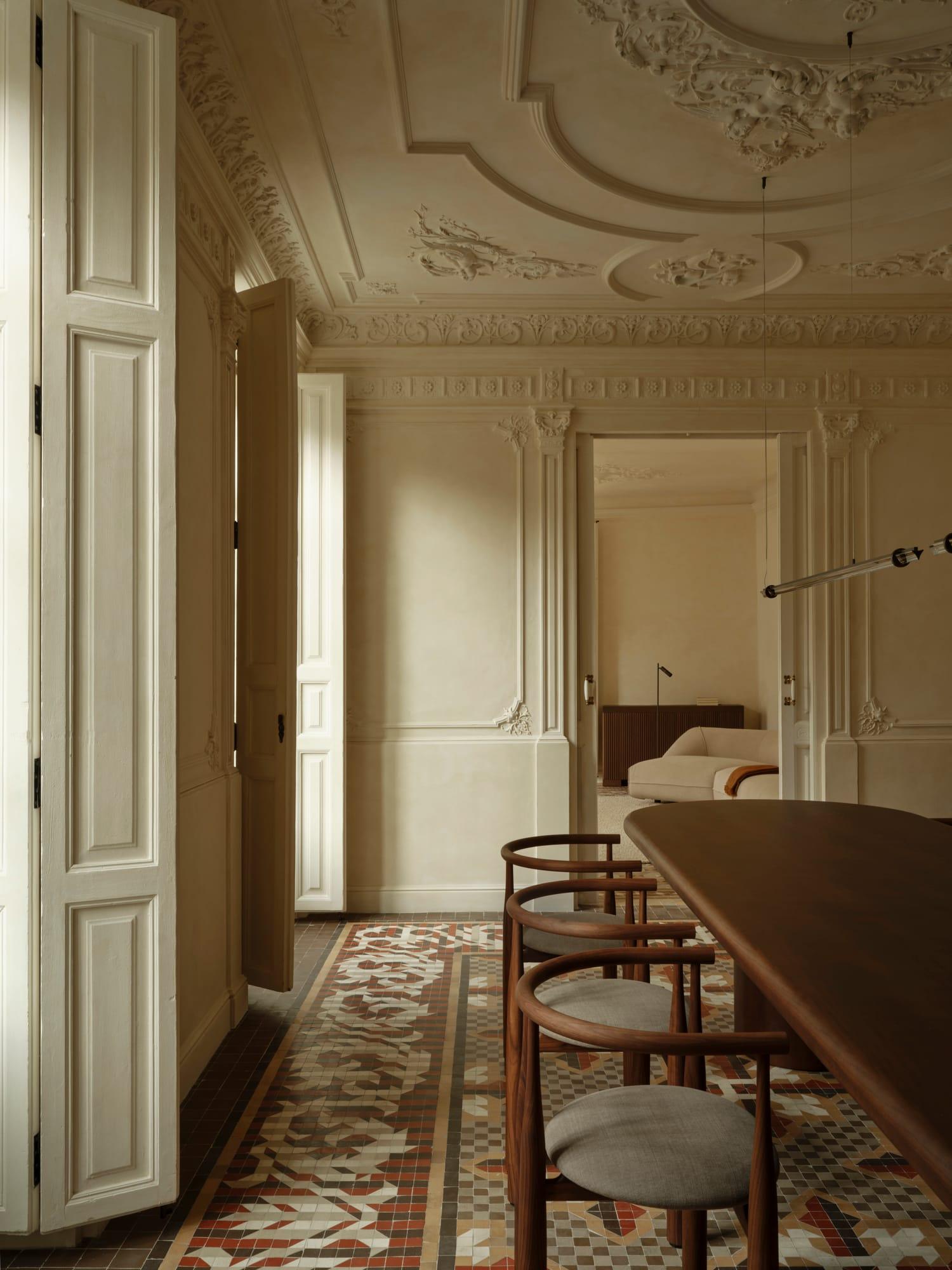
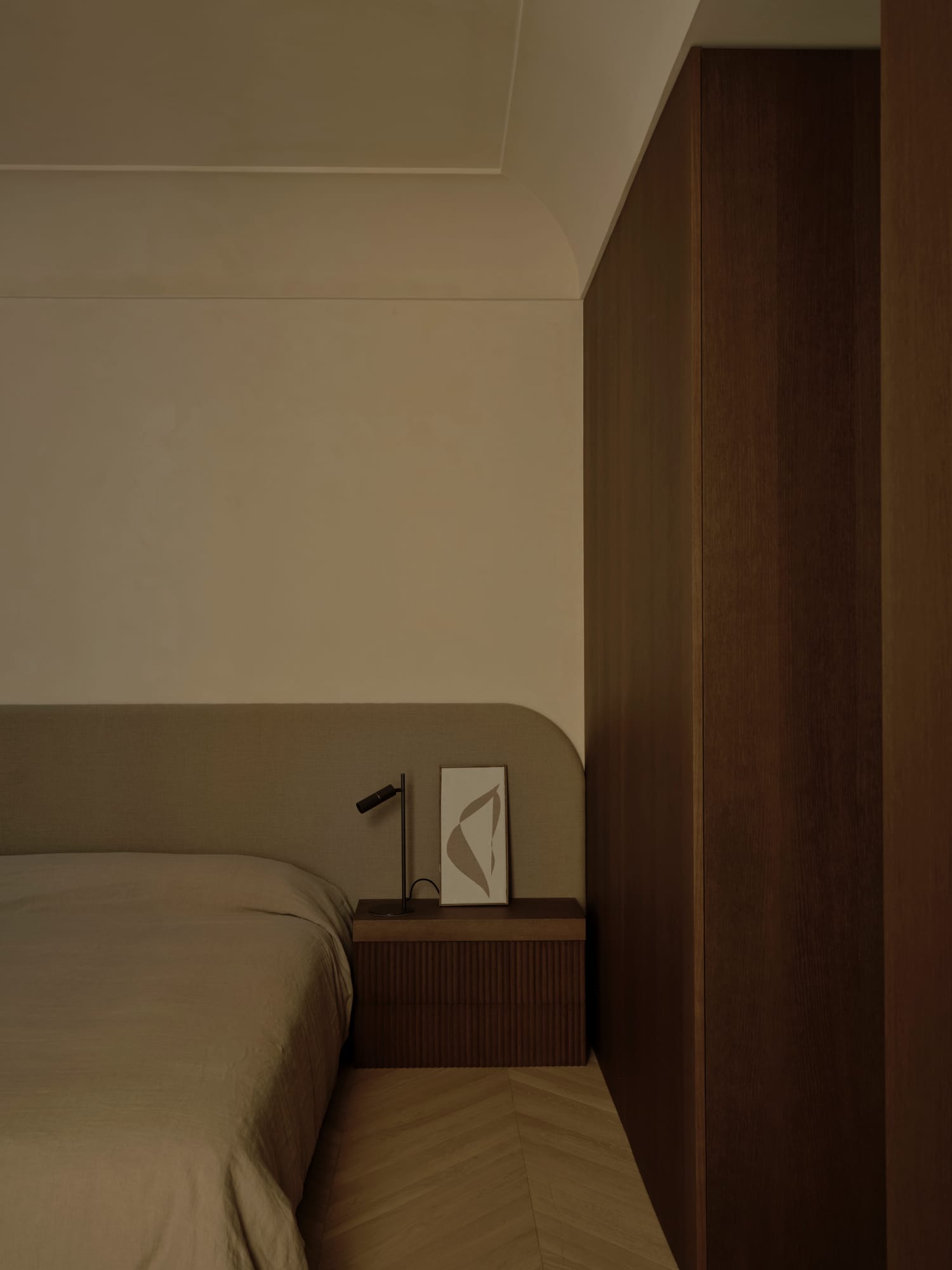
The plan holds two registers. The public rooms — the dining room, the living room, the enfilade between them — keep the ornament of the original apartment: pale lime-plaster walls, carved cornices, the geometric Nolla mosaic underfoot. The private rooms are lined in dark stained oak, a continuous panelled surface that draws walls, doors and storage into one quiet volume. To move through the apartment is to move between these two conditions, the worked surface of 1890 and the calm of the new work.
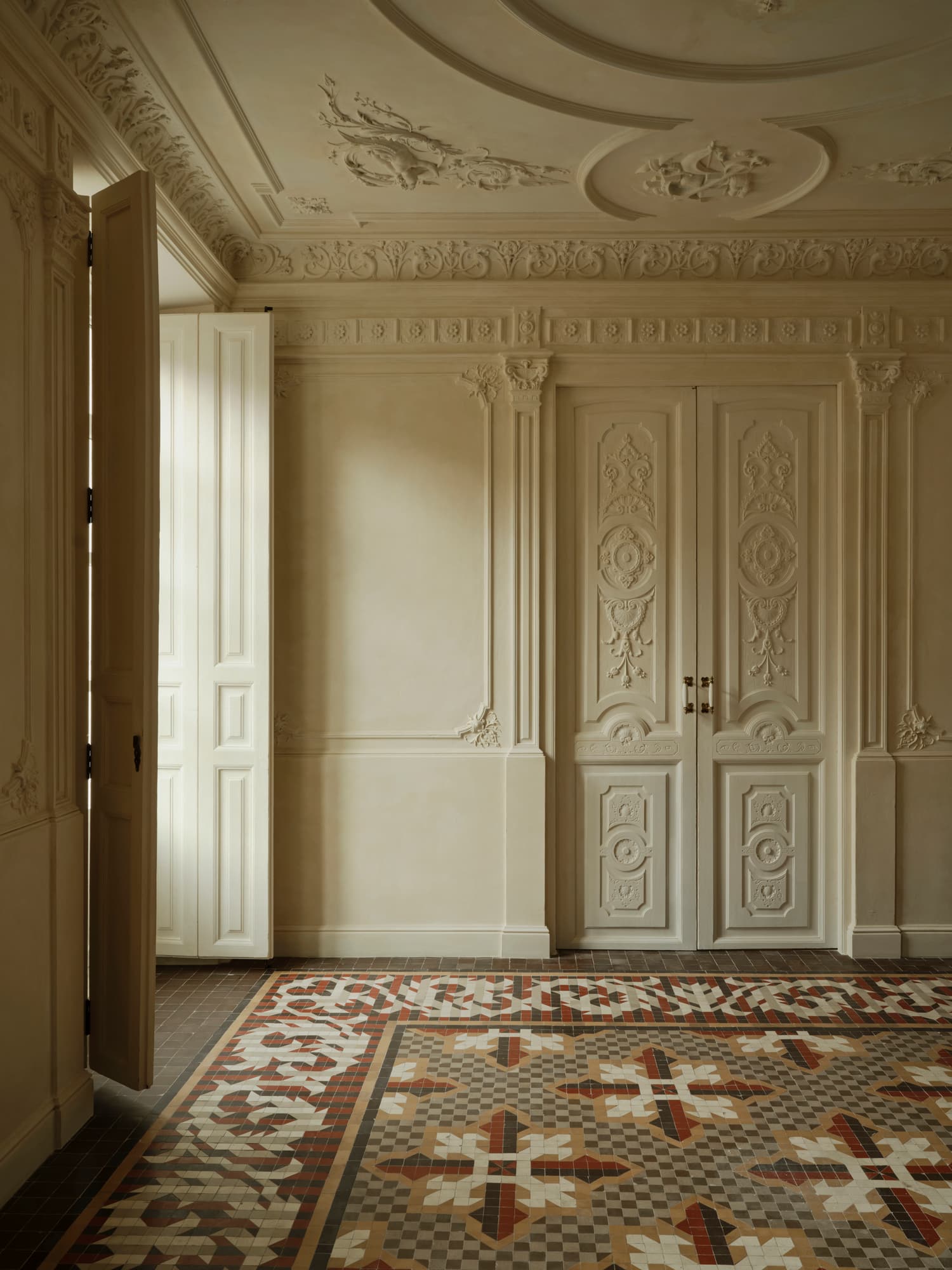
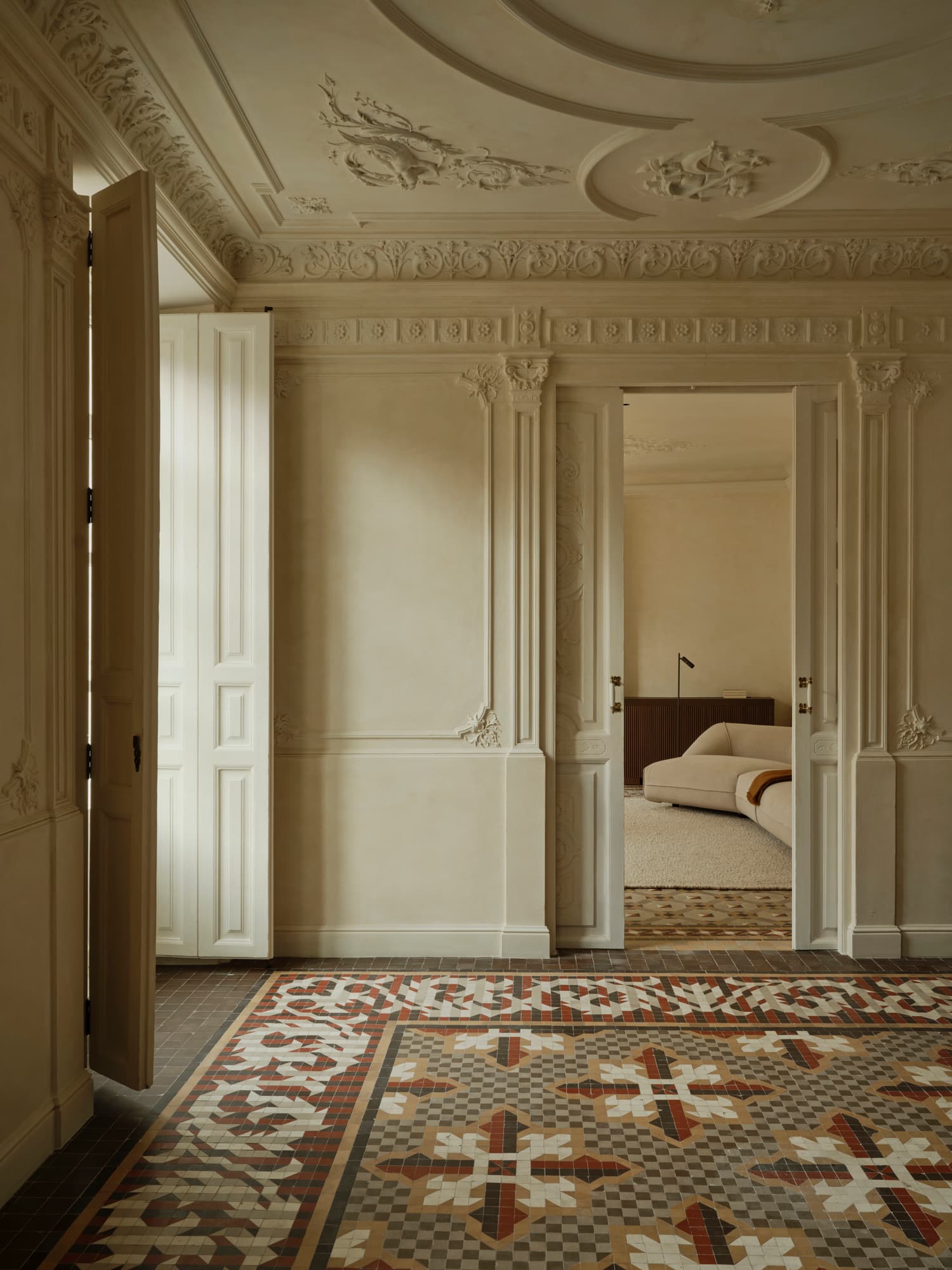
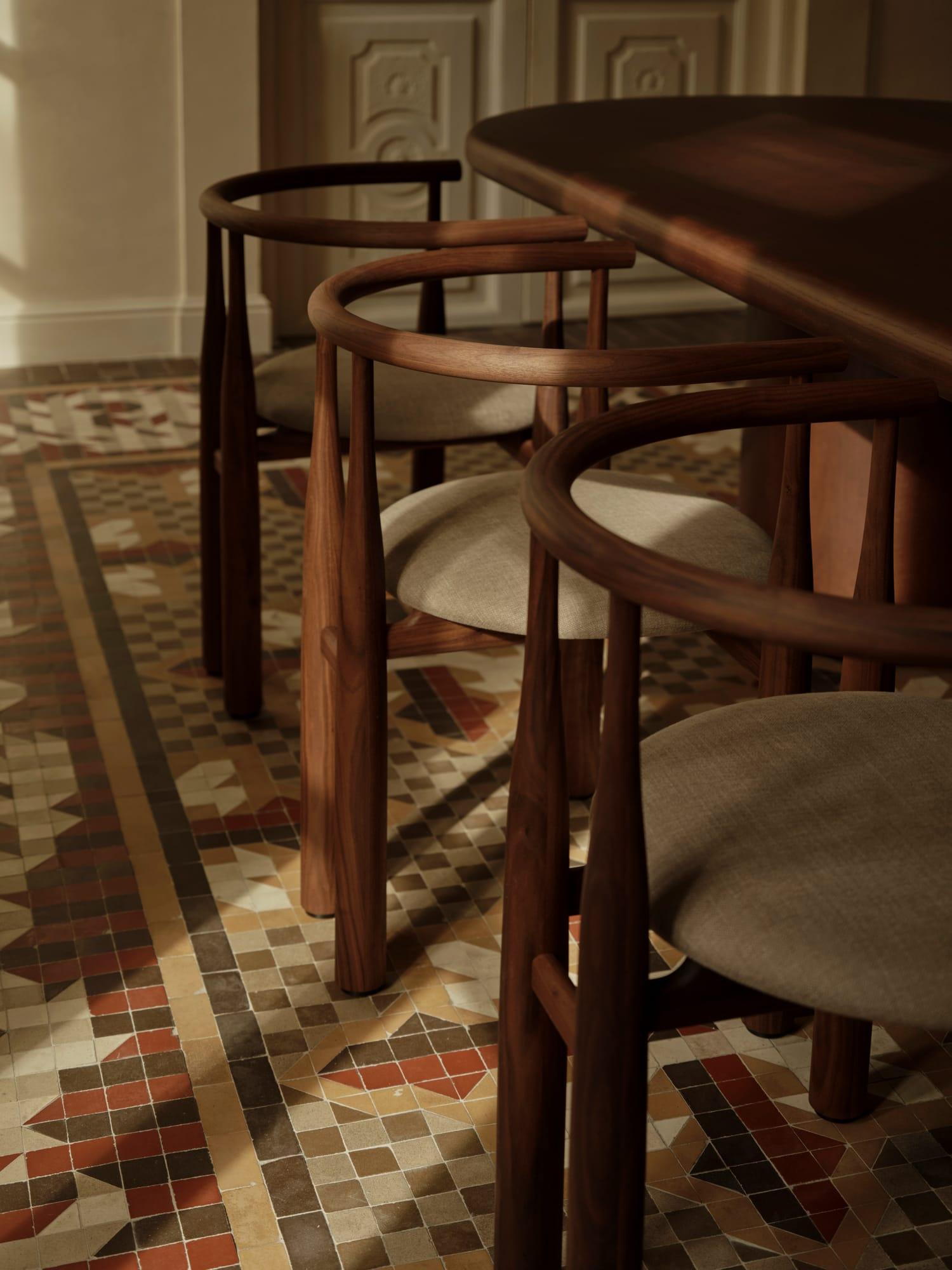
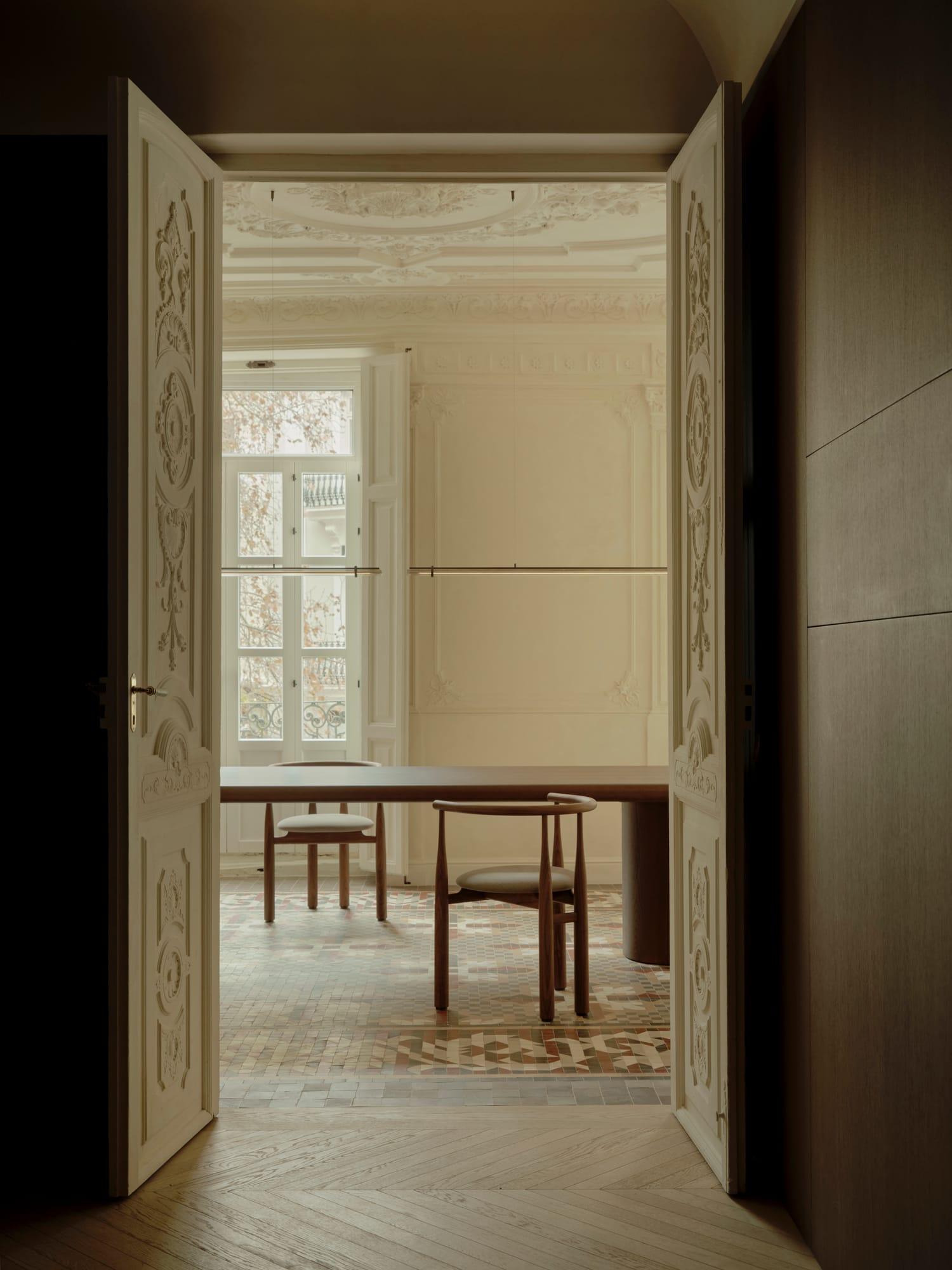
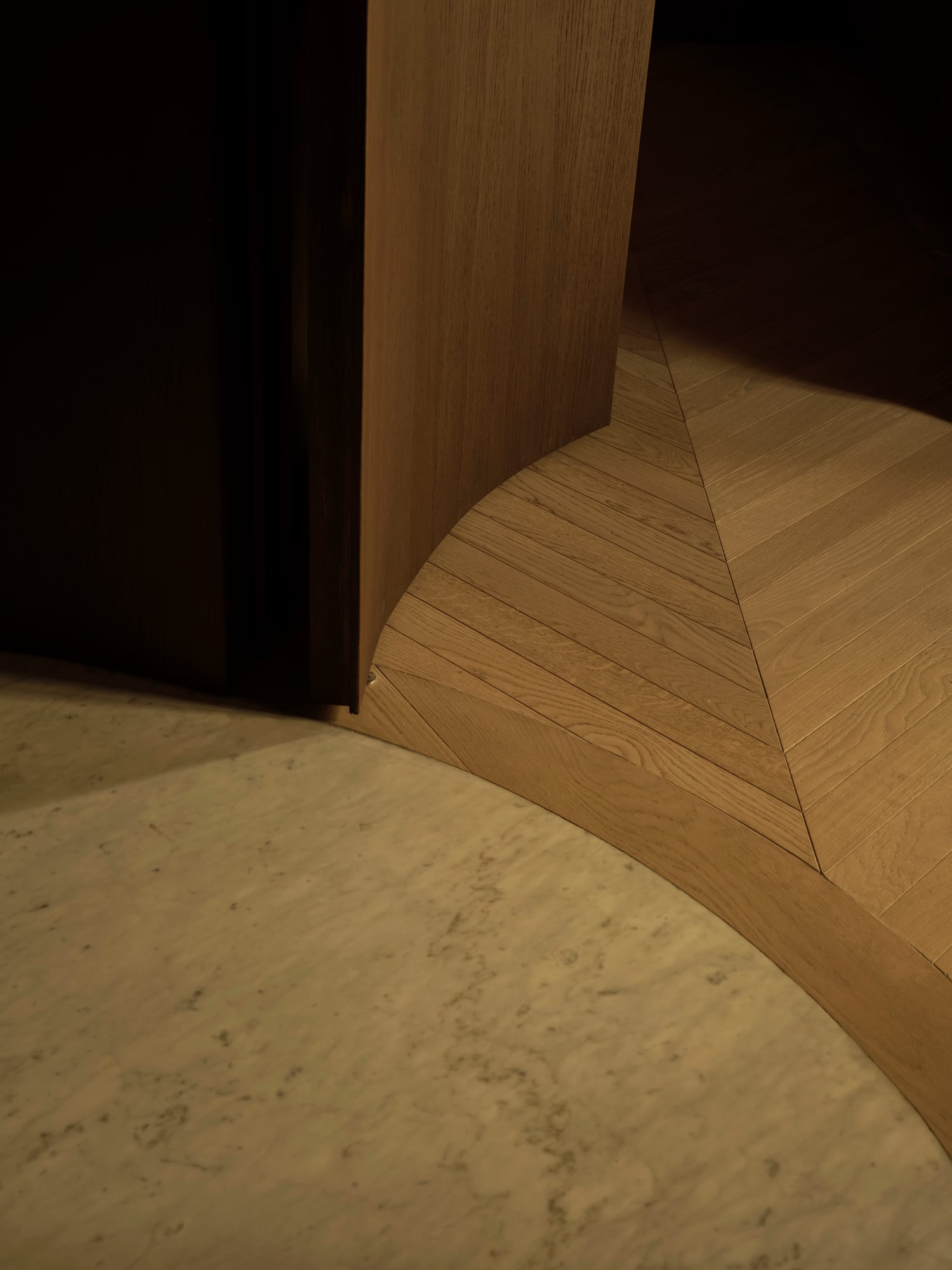
The two registers meet at the floor. The Nolla mosaic and the stone of the original rooms give way to oak, laid in chevron, in the private wing; the change of material is resolved on a curve, the timber drawn around the edge of the stone rather than cut against it. Each passage from old to new is given a precise line. The transitions are constructed, not assumed.
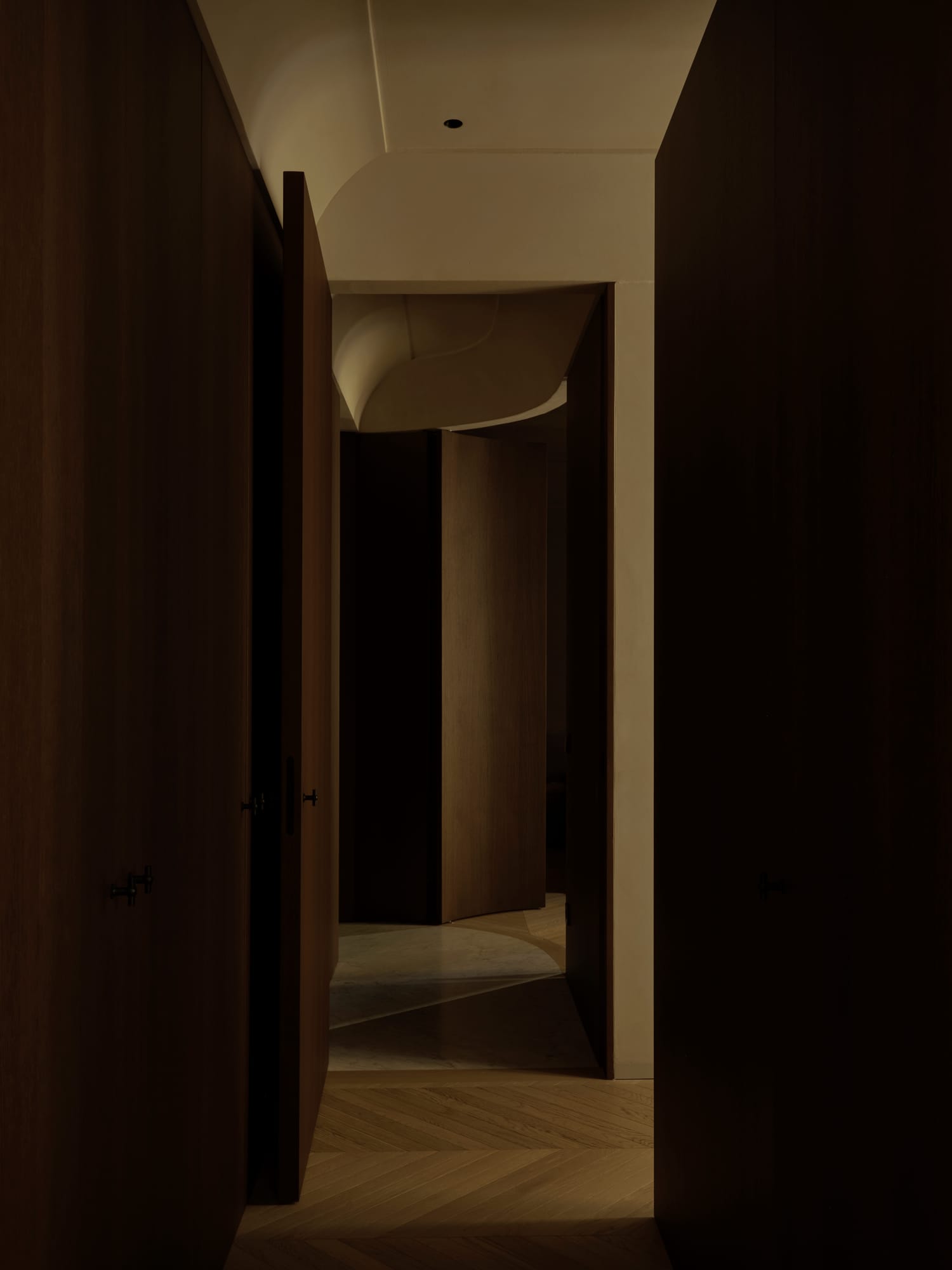
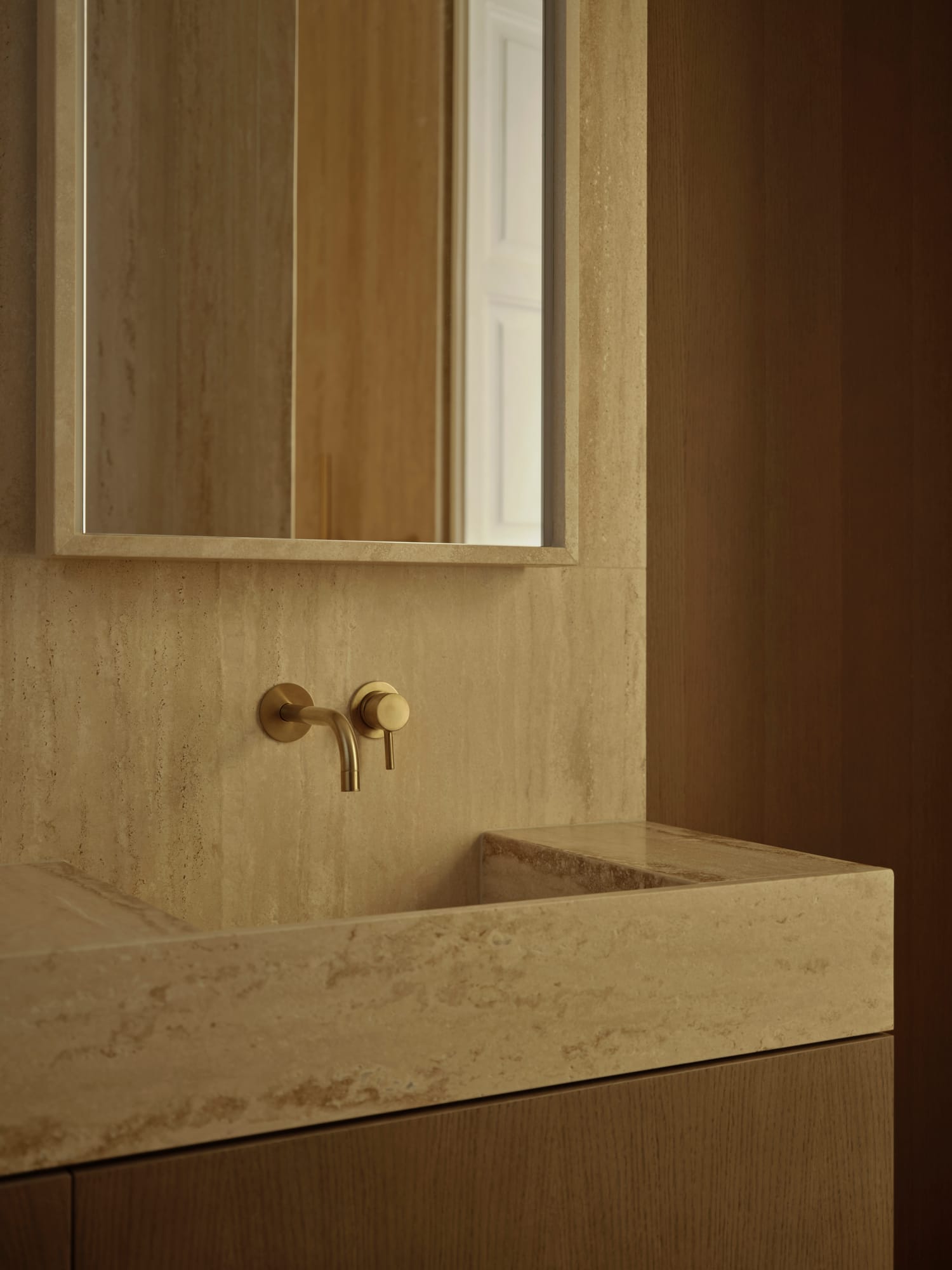
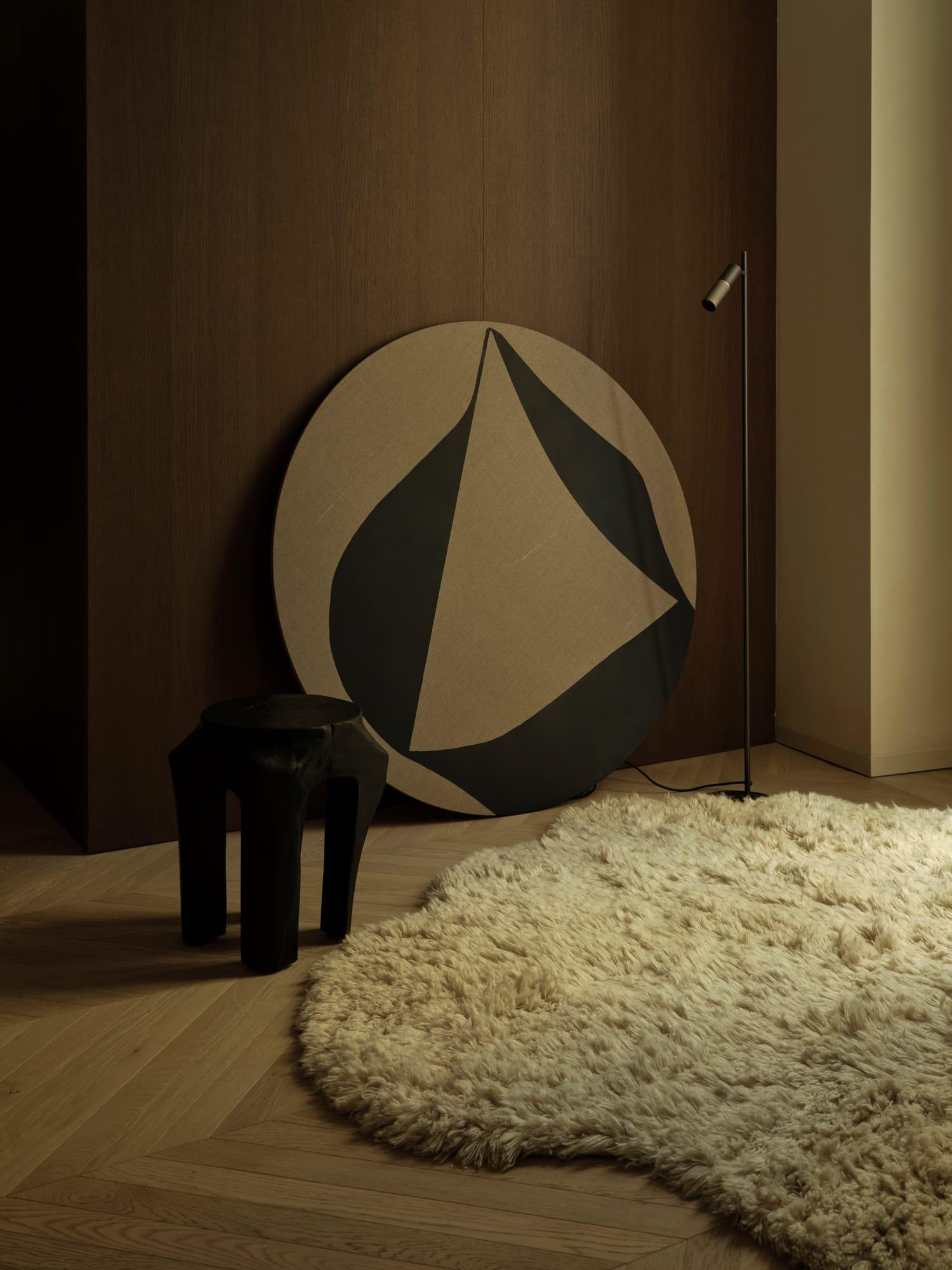
The materials are few: travertine, oak, lime plaster, linen, wool. They are chosen for how they hold light. Travertine lines the bathrooms, warmed by brass. Lime plaster carries the public walls, taking the filtered daylight from the street. Dark oak holds the private rooms, where light is run indirectly along the head of the panelling so the rooms can be inhabited at low level after dark. Colour is kept out. The work is done by texture and by the temperature of the light.
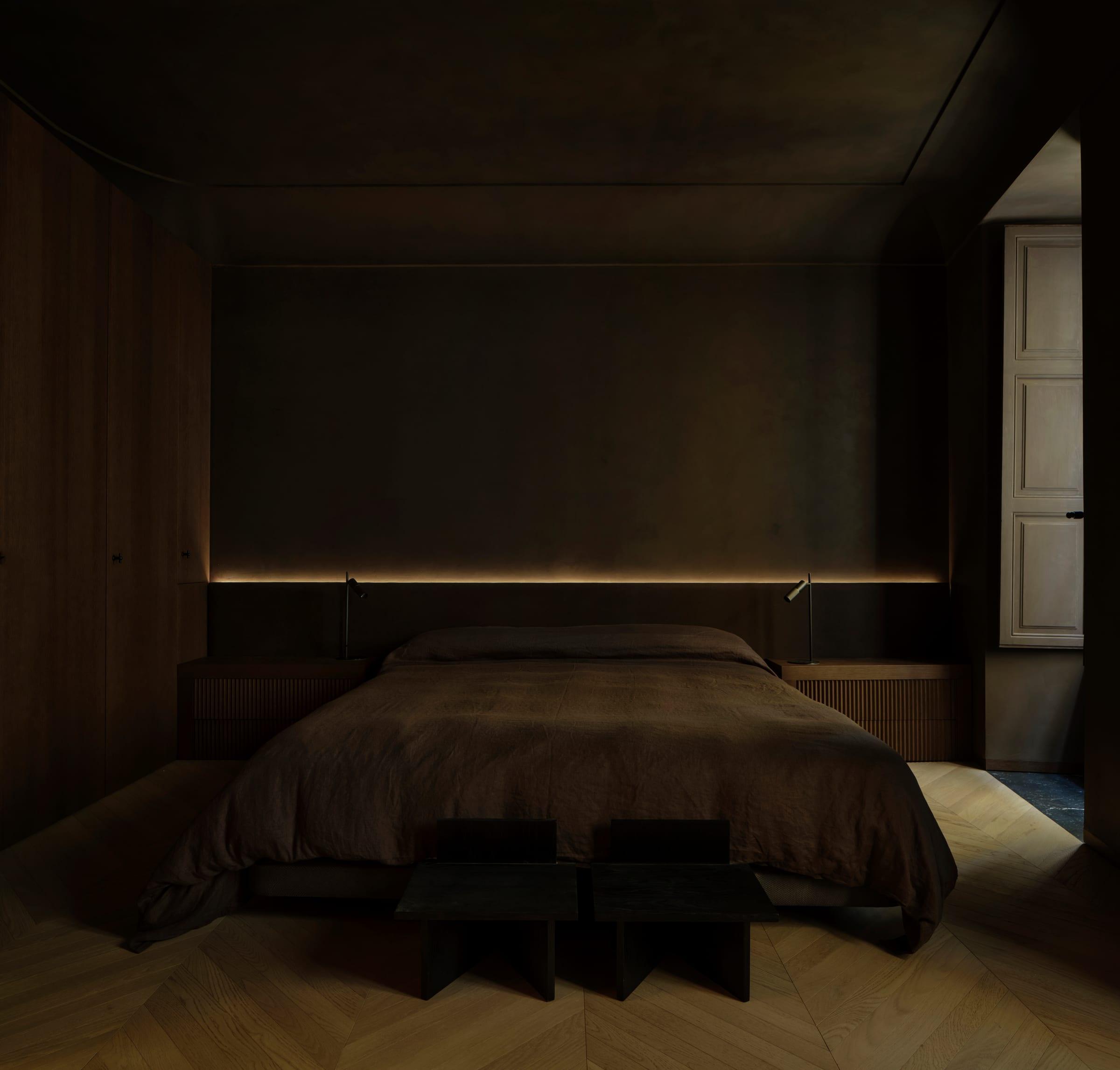
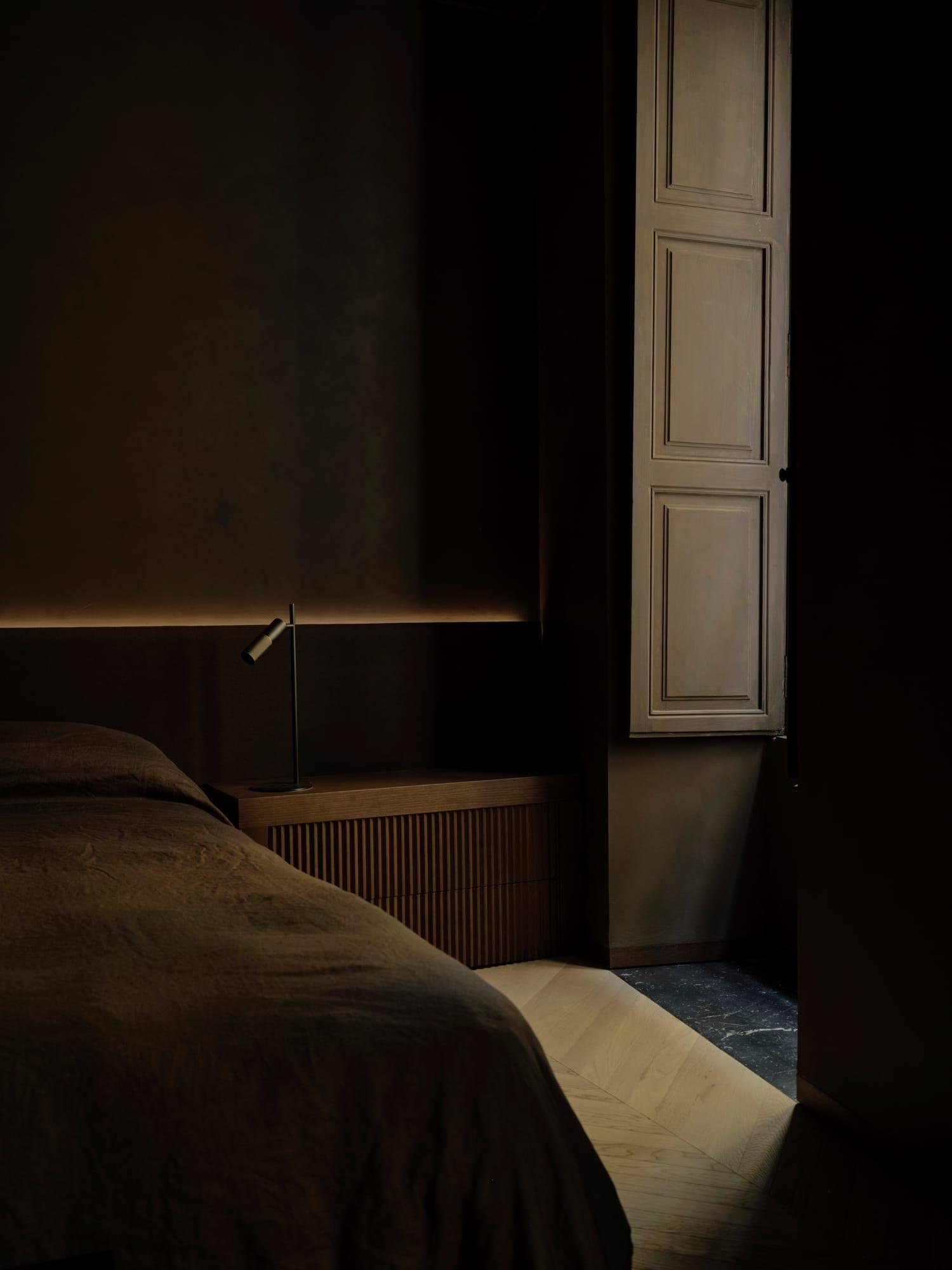
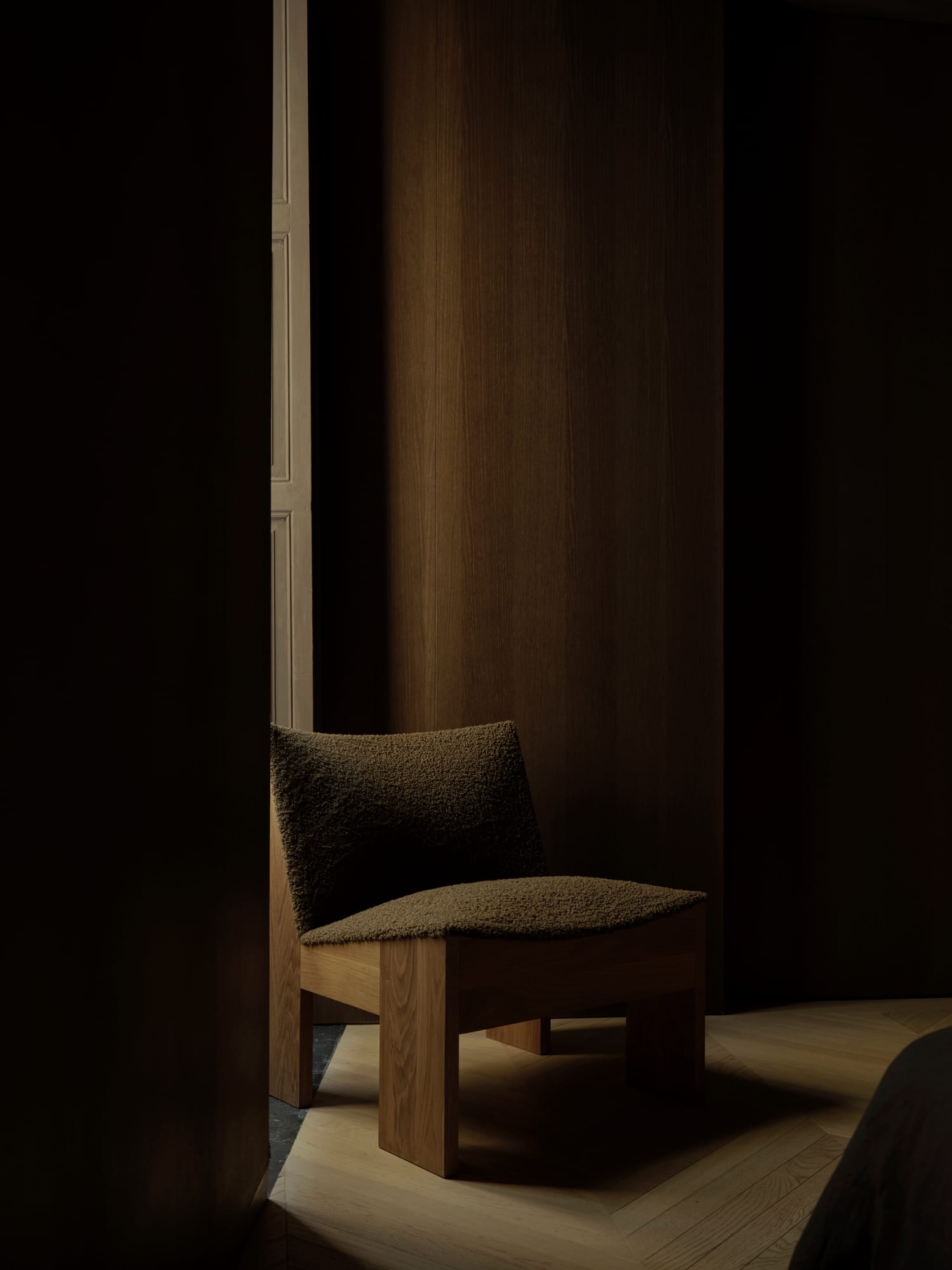
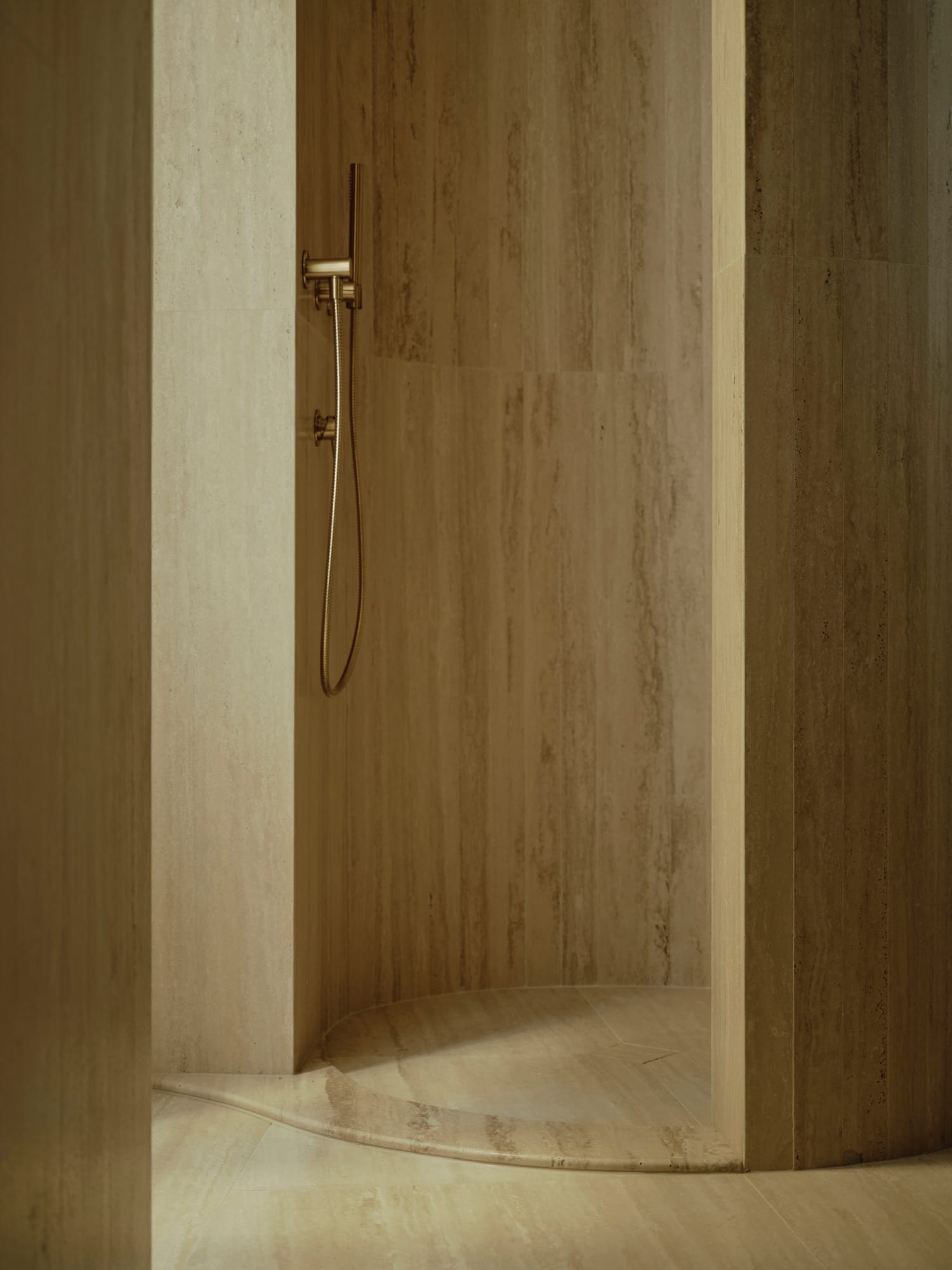
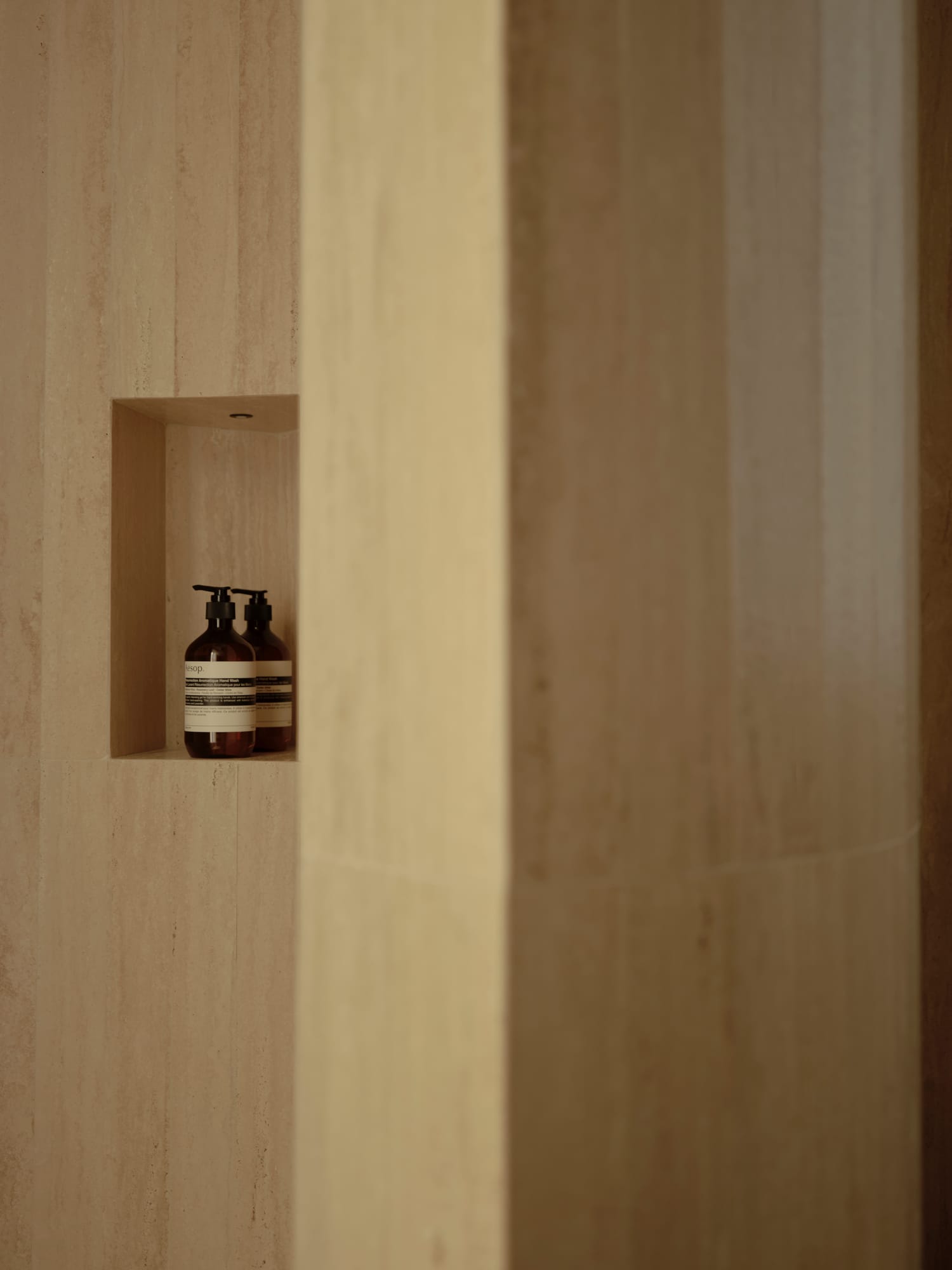
The furniture continues the architecture. Vintage pieces from Nekonato Gallery sit with works by CLC Arte, chairs by New Works and lighting by Venicem; bespoke pieces were made as extensions of the rooms, in the same materials and at the same register. Nothing competes with the protected fabric. The apartment is furnished the way it is built, with few decisions, each one held.
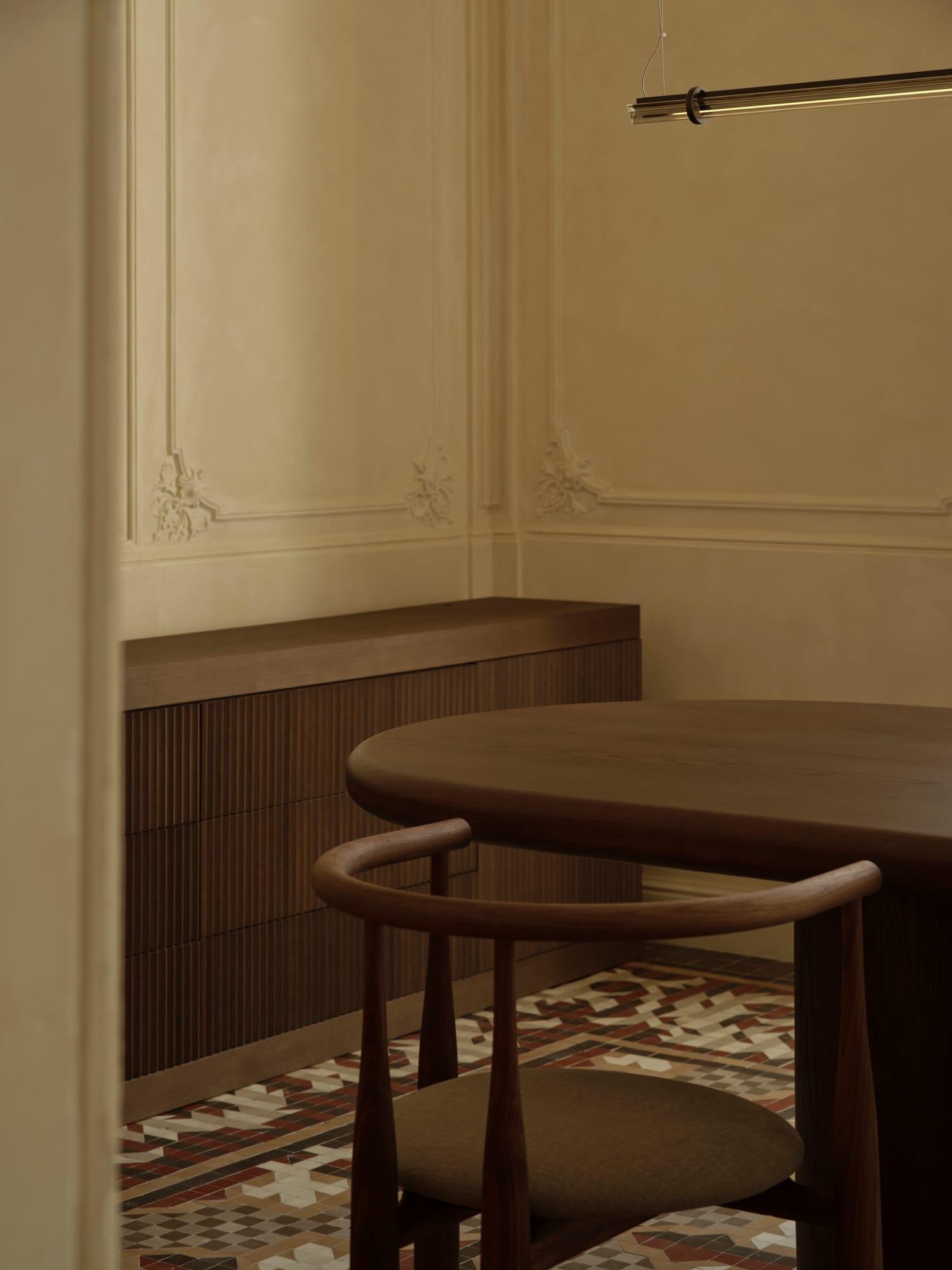
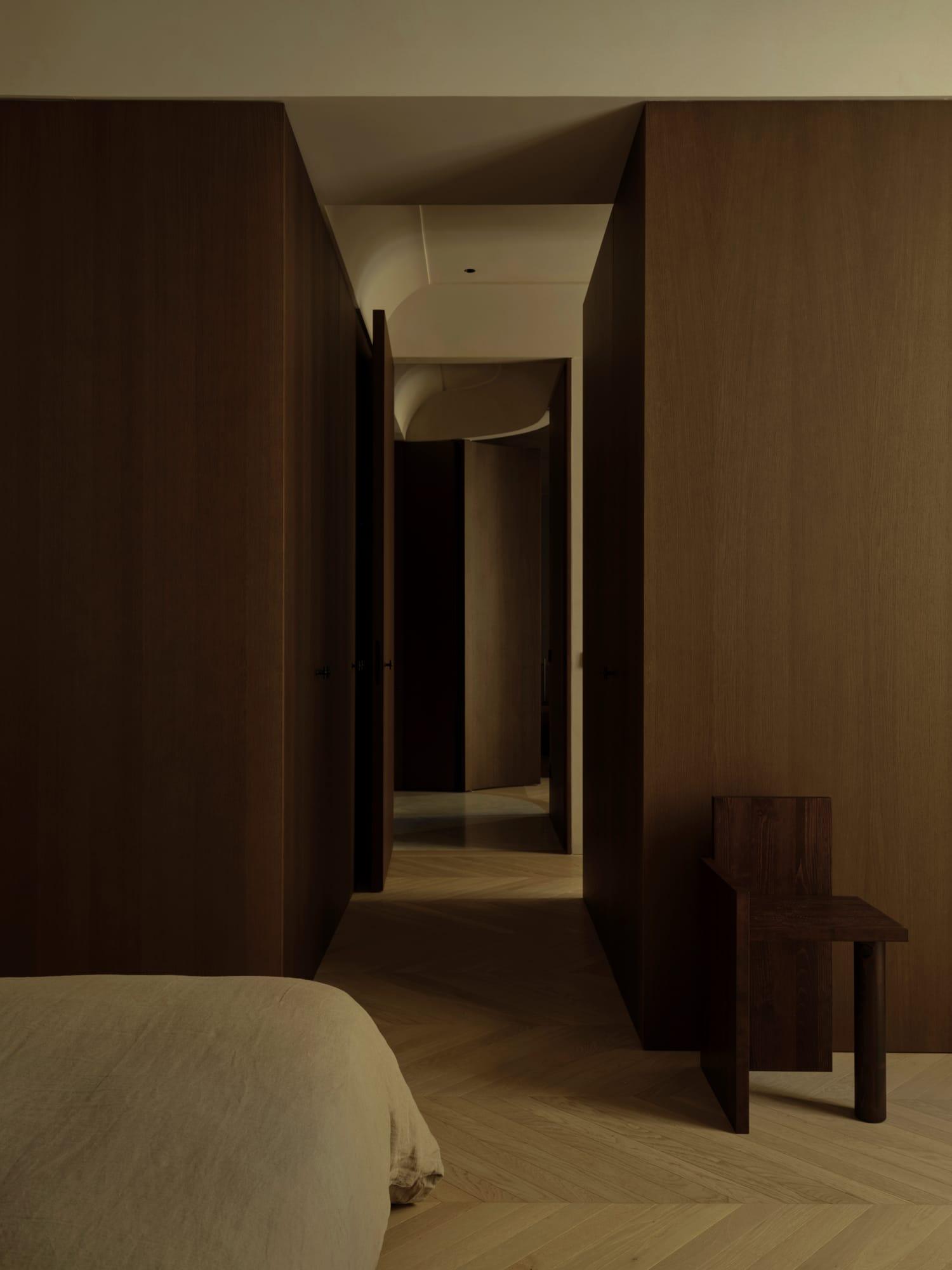
The original apartment stays legible in its public rooms and quiet in its private ones. The two readings hold without blurring.
More on how the studio approaches work of this kind:
Commissioning a private house with Balzar Architects