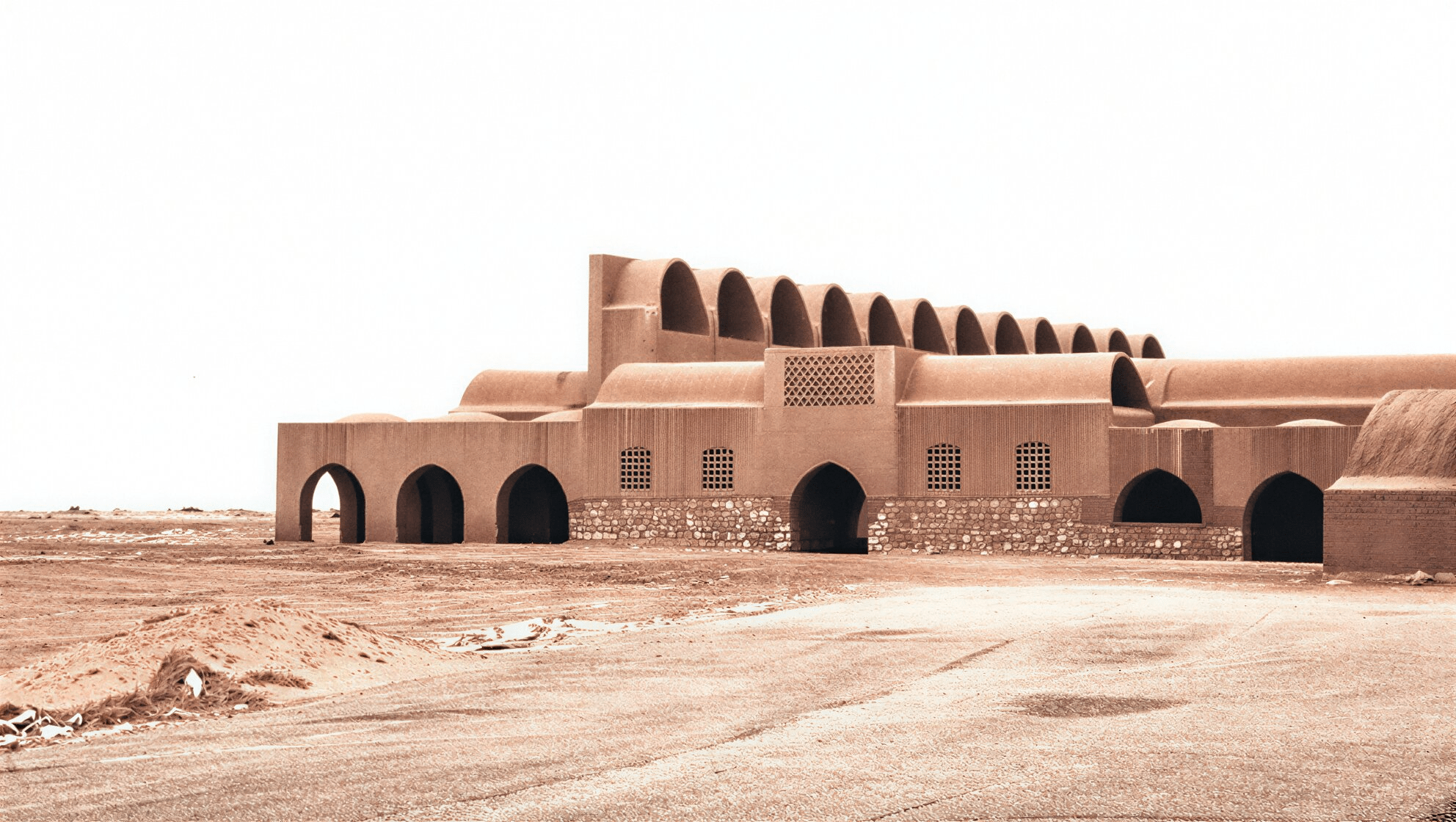
There are two ways colour arrives at a building, and the difference between them is visible within a few years.
The first brings colour from outside. A catalogue, a sample card, a decision made without the ground in view. The pigment has no relationship to the place. It could be anywhere. Within a few seasons the colour begins to look imposed, and the building begins to look tired.
The second draws colour from the ground. The cream of the local sand. The ochre of the dry earth. The salmon of the evening clay. The terracotta of the deep sediment. The warm grey of a regional limestone. These are not chosen. They are found. The palette is not infinite — it is the set of tones the geology and the climate of a place can offer, durably.
The distinction matters because it determines whether a building ages with its setting or against it. A wall finished in a colour the ground produces absorbs dust, weathers under the sun, deepens at dusk, returns flat at noon. It belongs to the same cycle as the landscape. A wall finished in a colour the ground does not produce, however well composed, remains separate. It looks placed. The difference is belonging.
Limewash is the technique that has carried this principle across the Mediterranean and North Africa for millennia. Mineral pigment suspended in slaked lime, applied by hand, bound to the wall through carbonation. It is not a coat in the industrial sense. It is a surface that merges with its substrate over time, that accepts repair, that accumulates the memory of its own reapplication. The marks of the brush remain. The texture is alive.
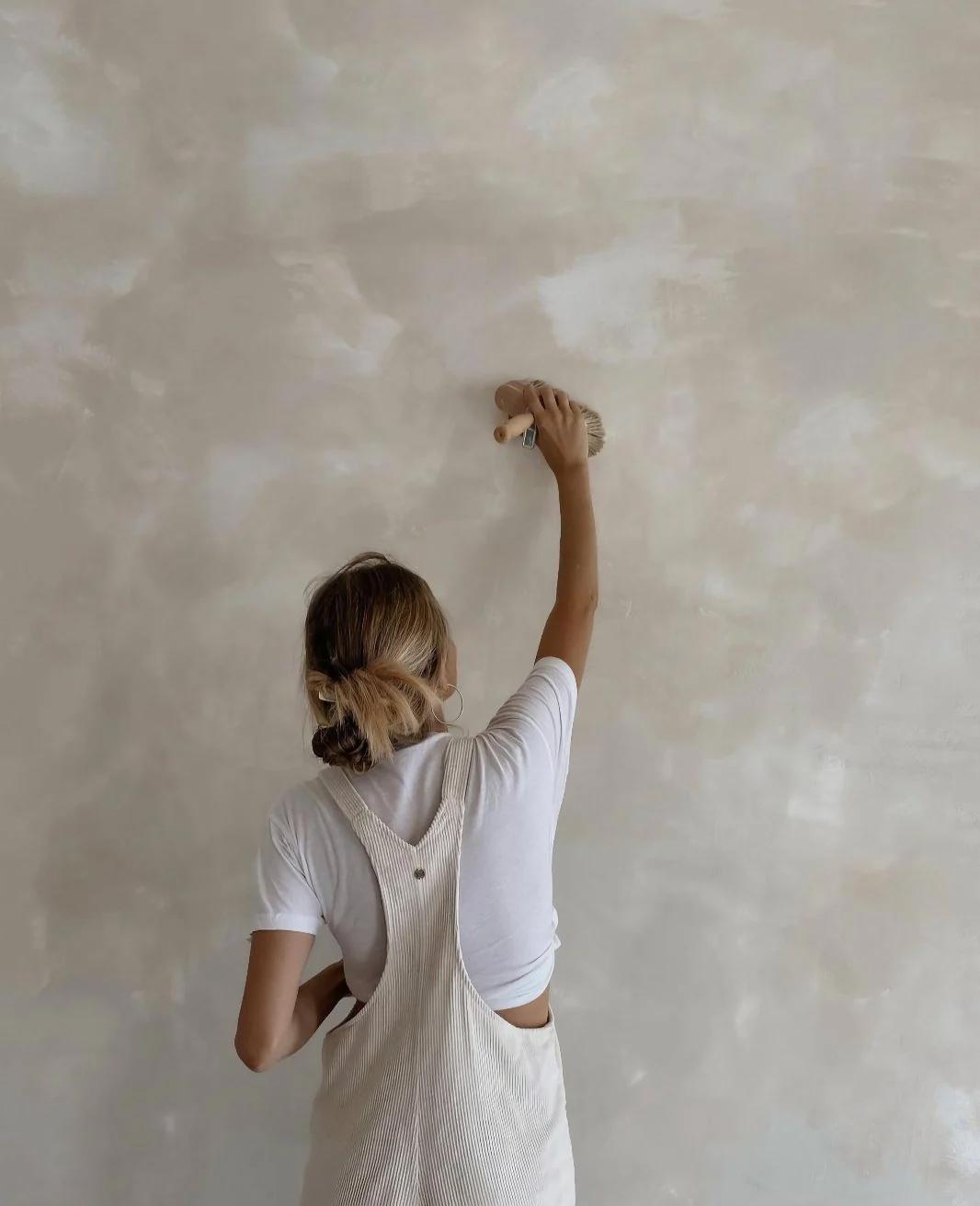 Limewash. Mineral pigment in slaked lime, bound to the wall through carbonation.
The oasis towns of western Egypt have always known this — where the wall is built from the same earth and salt it stands on. The kasbahs of southern Morocco, built from the earth they stand on. The desert coasts of the Red Sea and the Maghreb, where sand and mineral salts have coloured the built environment long before any architect arrived.
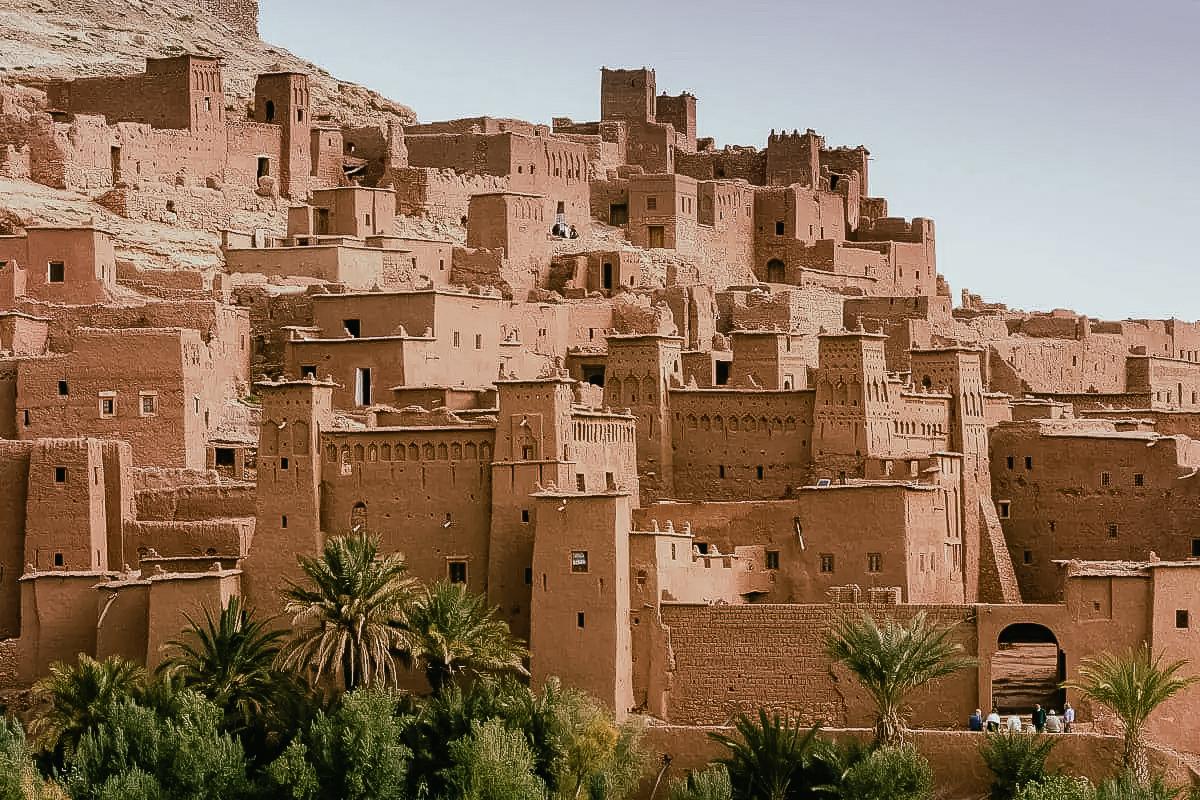 Kasbah of Aït Ben Haddou, southern Morocco. The building is the ground.
Working with these tones is what allows the architecture to sit in the landscape rather than on it. A building of the coast, in any of these colours, reads as if it had always been there. A building of the coast in a colour the ground does not produce reads as arrival. Belonging is the difference.
The colour of a wall, when it is right, is the colour of the place itself, held for a moment in the lime.