Read more — Commissioning a private house with Balzar Architects
AO17 Apartment
Valencia
2021
Interior
The building is in Ciutat Vella, adjacent to the Mercat Central. Its facades are protected; the interior arrived with original ceiling mouldings, corbelled corridors, and the proportional logic of pre-war Valencia domestic architecture, ceiling heights that contemporary construction no longer produces, room dimensions that reflect a different understanding of domestic scale.

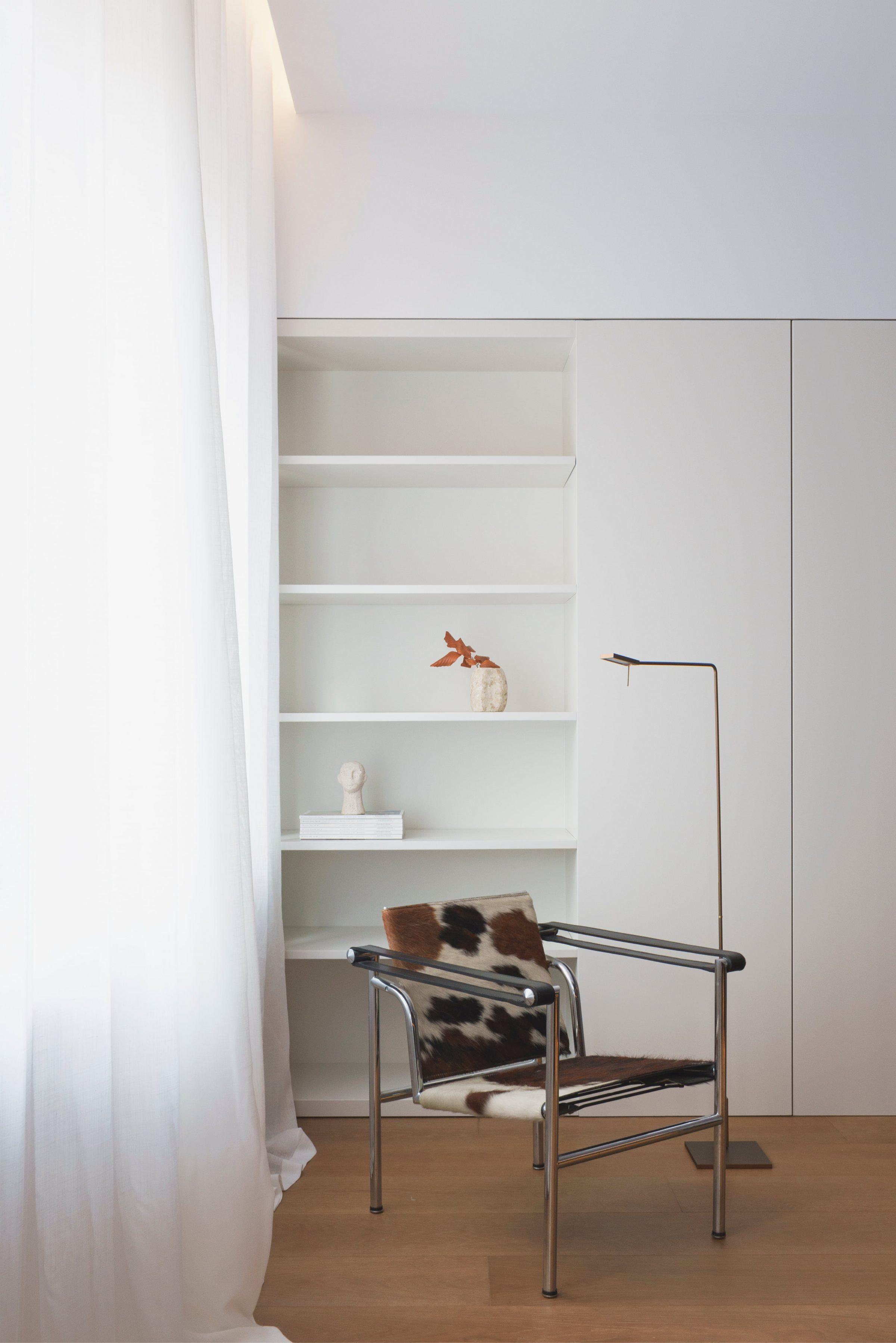
White lacquered wood panelling runs across the main wall surfaces, developed from the logic of the ornamental wardrobes that had originally organised the rooms. The panelling performs three functions simultaneously: it regularises the wall surfaces where the original plaster was uneven, incorporates storage within its depth, and improves thermal and acoustic performance. It is not decoration. It is the building’s new interior structure.
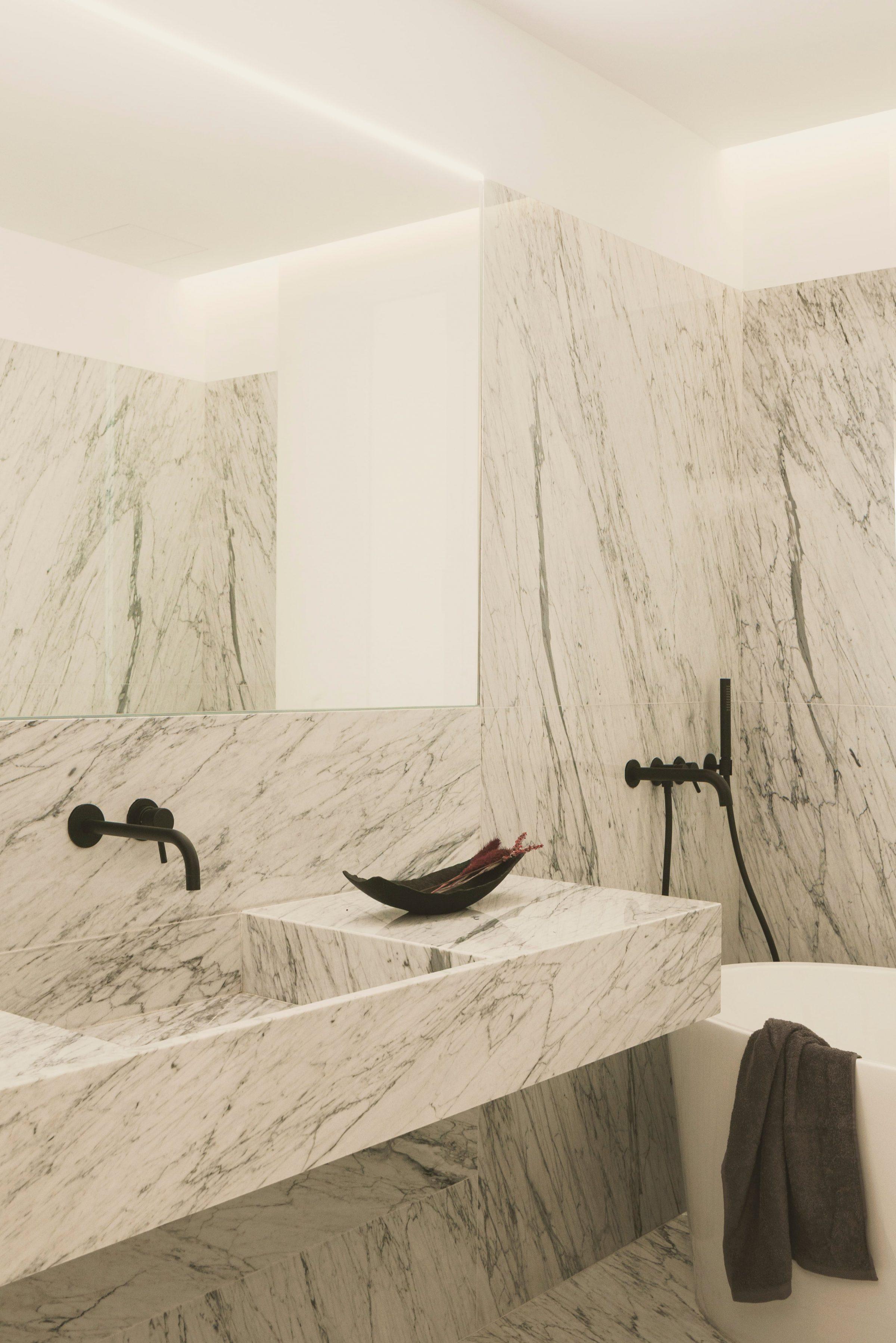
A continuous moulding and skirting profile connects every element in sequence, fitted doors, kitchen joinery, wardrobes, marble bathroom cladding, into a single unbroken line that runs through the apartment. The profile is the thread that makes the apartment read as one composition rather than a series of separate rooms.
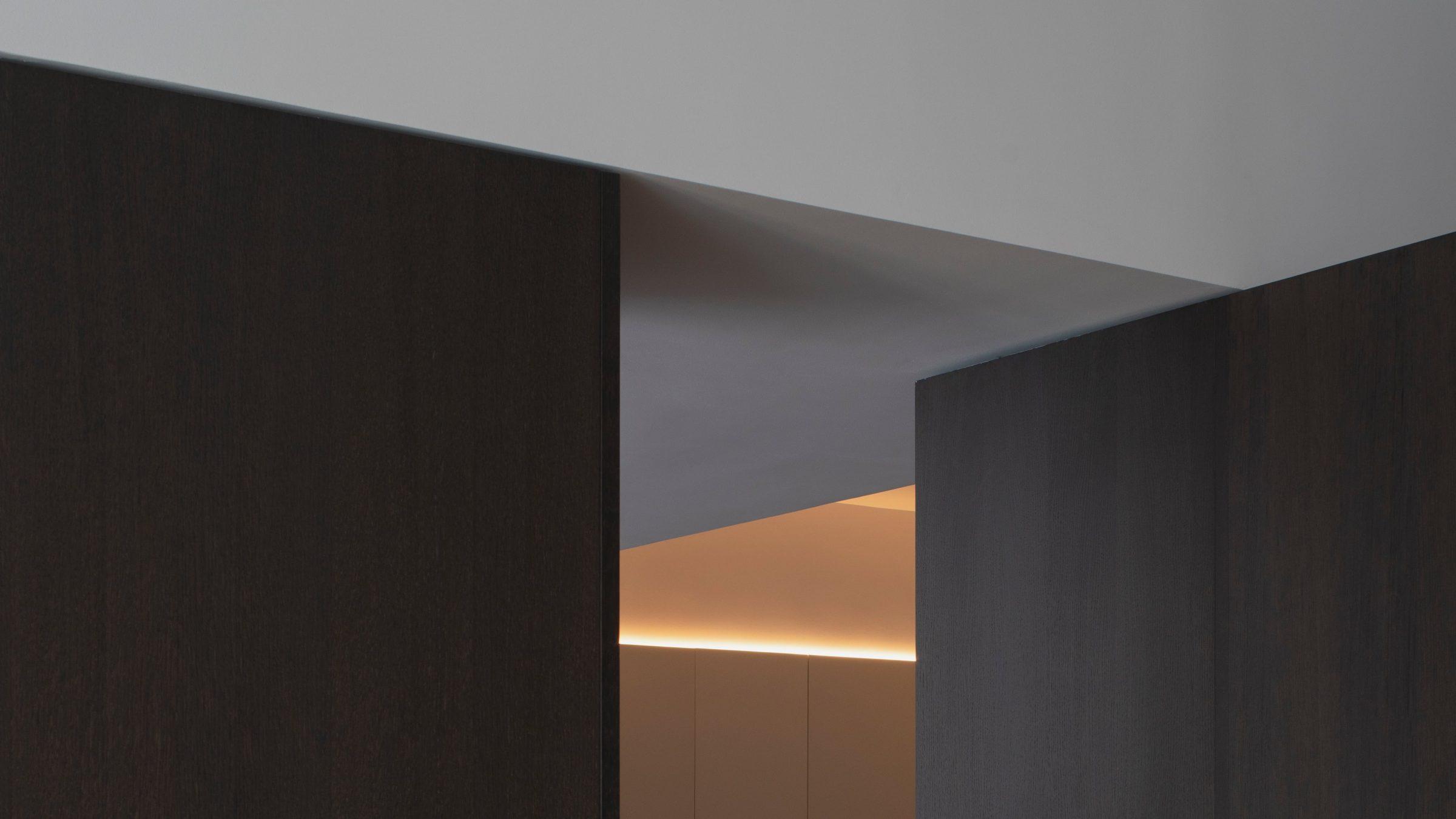
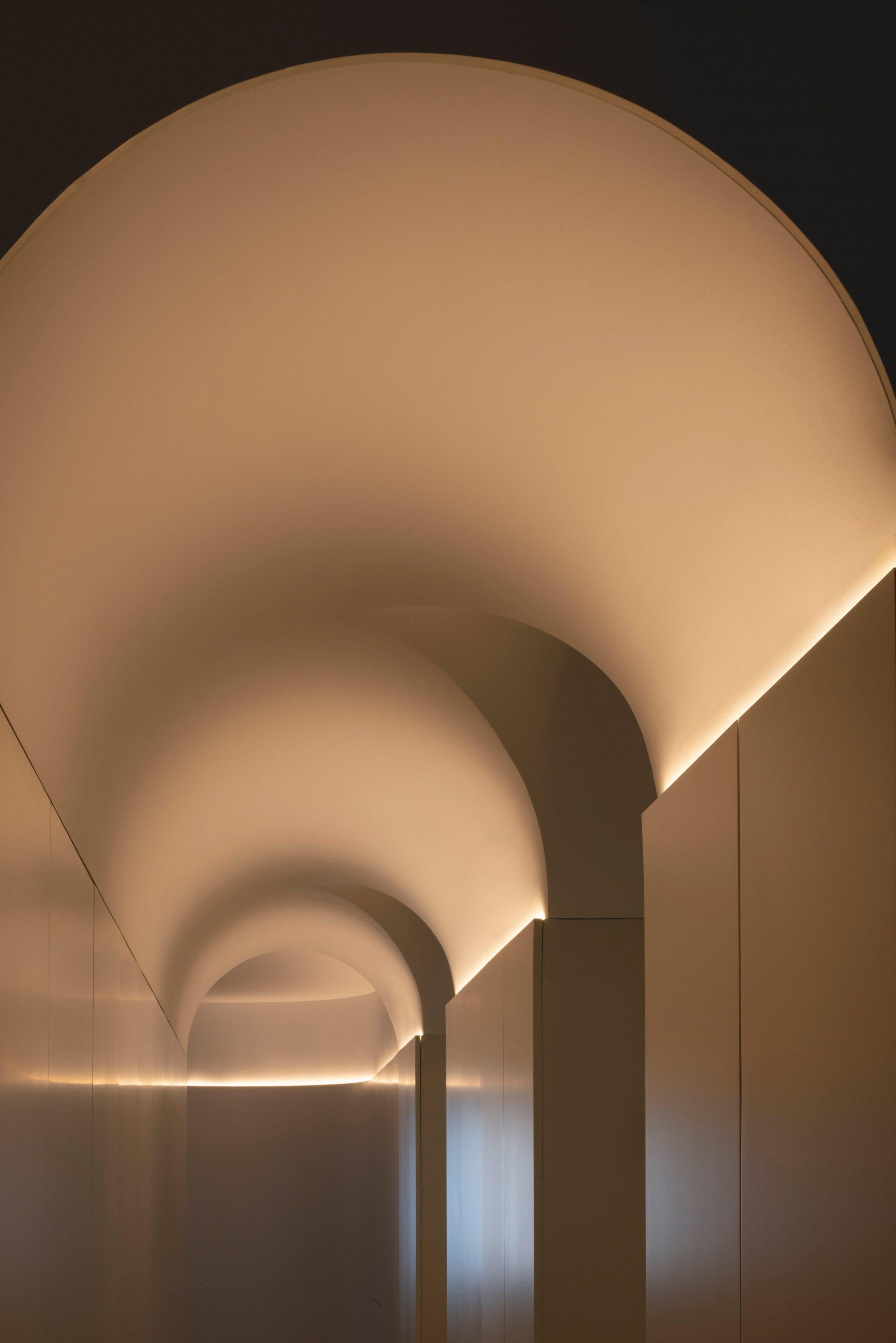
The ceiling of the domed corridor at the entrance retains its original mouldings, preserved rather than removed, because their corbelled geometry was integral to the spatial character of the arrival sequence. The decision to use a vaulted form in the corridor rather than a flat ceiling avoids demolishing the moulded brackets while reinforcing the decorative impact of the threshold.
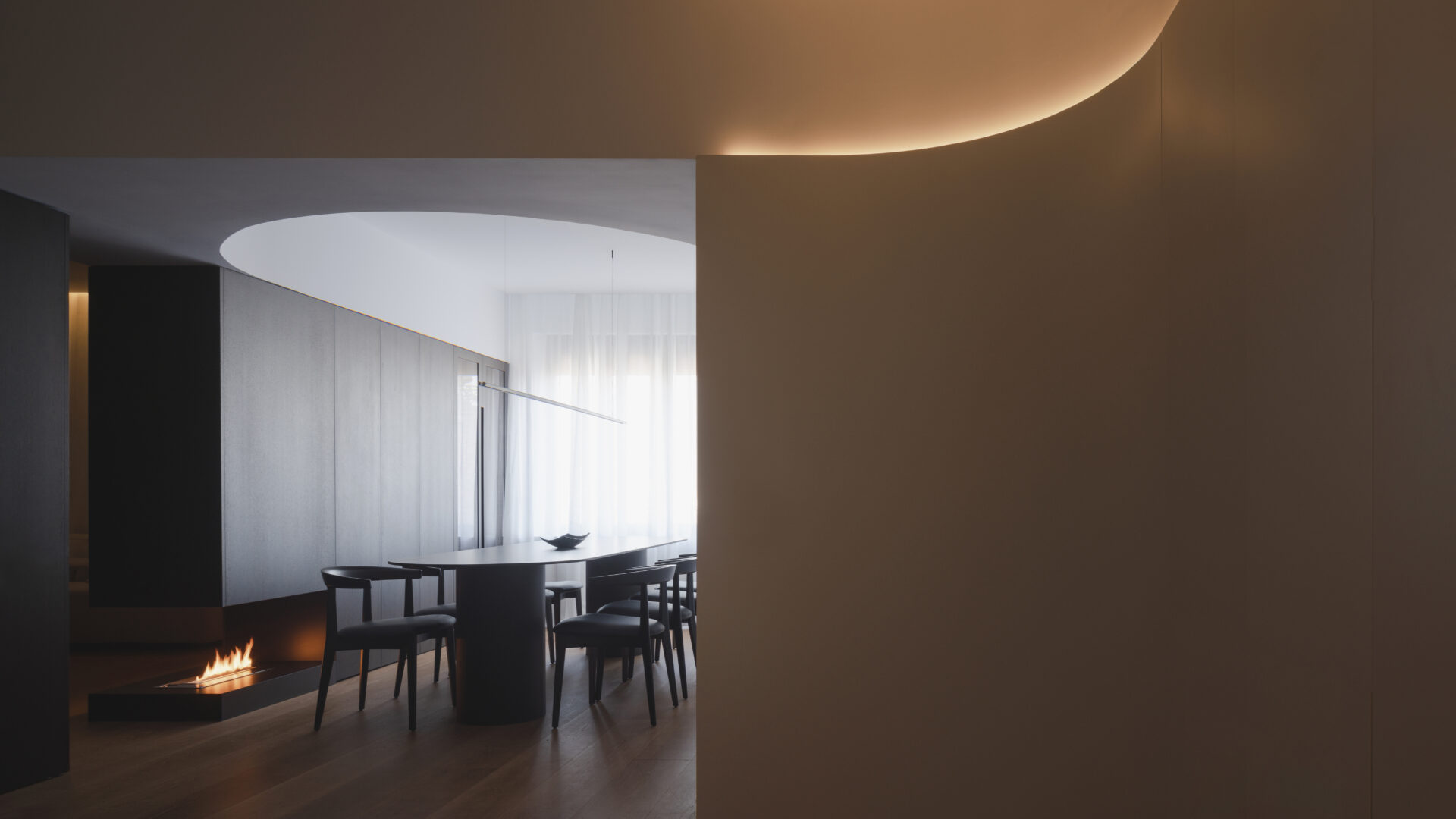
In the dining room, a curved ceiling plane echoes this corridor geometry, establishing visual continuity between the entrance and the main living space. The curve here is not decorative repetition, it performs the same spatial role as the dome at the entry: it marks a zone, defines a character, and maintains the compositional thread.
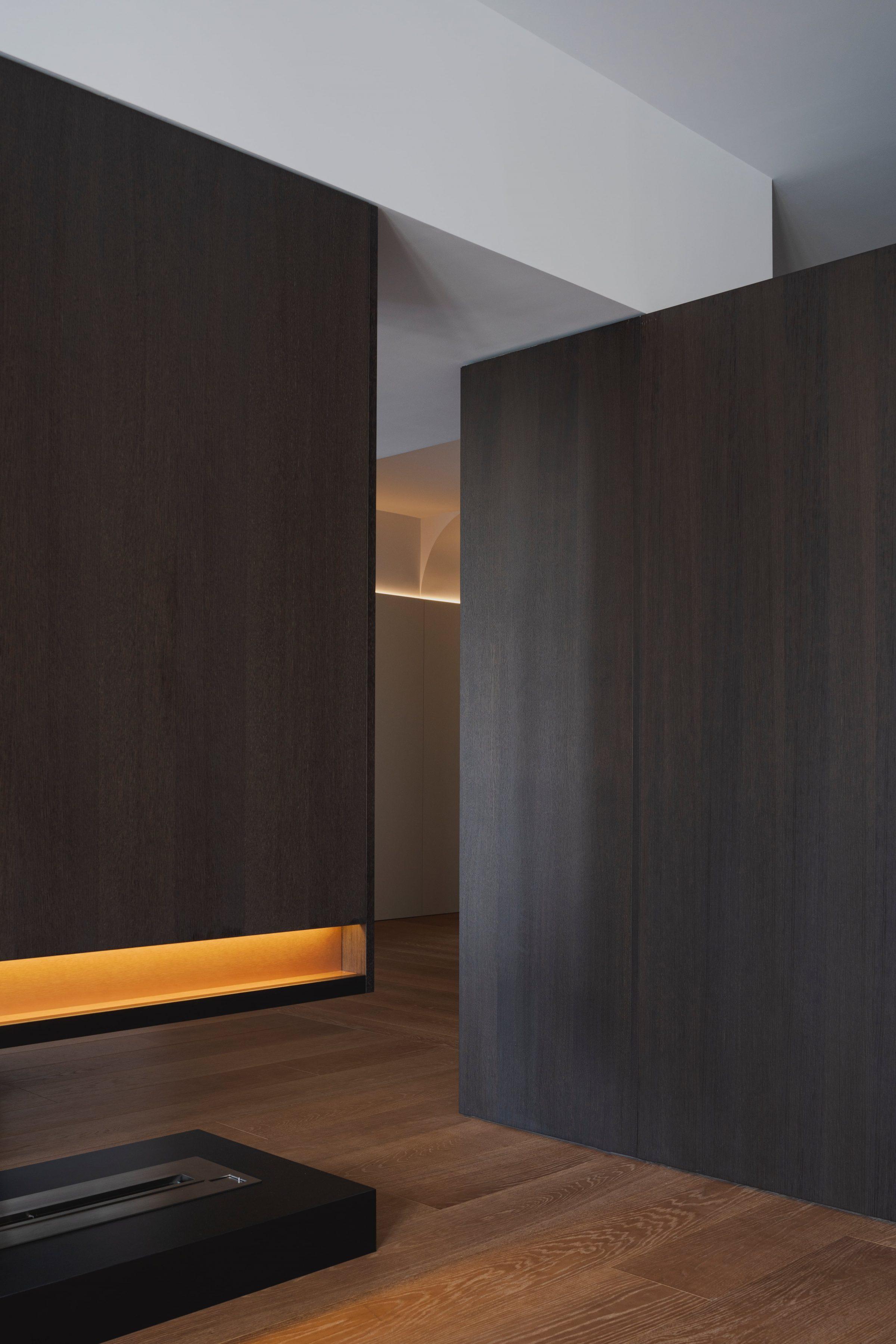
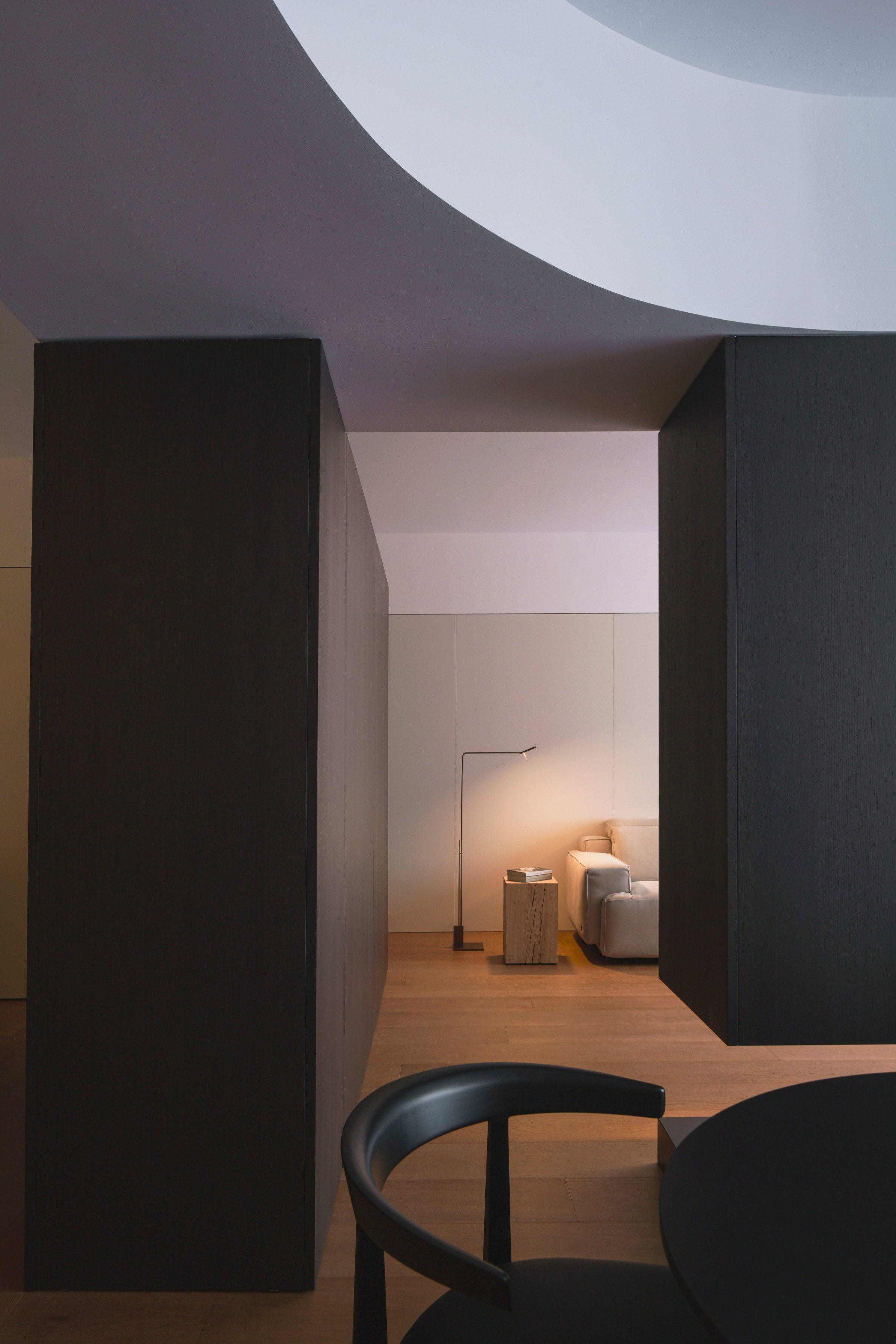
The day zone, kitchen, dining room, living room, is a single continuous space, divided only by the positioning of furniture and the kitchen island that doubles as the dining table. The master bedroom, bathroom and dressing room are at the far end; the bathroom in natural black marble connects to the bedroom through large sliding panels.
The material palette moves from white through cream to warm brown, with occasional copper, in the chimney interior, in recessed joinery cavities, that catches the light from the Mercat Central side without asserting itself. The warm tones accumulate gradually from the entrance to the private end of the apartment: the progression is spatial as much as material.