Artes Gráficas Apartment
Valencia
2021
Interior
The apartment was a vacant office on Avenida de Artes Gráficas, in the university district of Valencia. The conversion is for a young family — the plan reconfigured entirely from scratch, the programme organised around the demands of domestic life: rest, meals, work, play, storage. The building is rationalist; its structural logic is expressed rather than concealed.
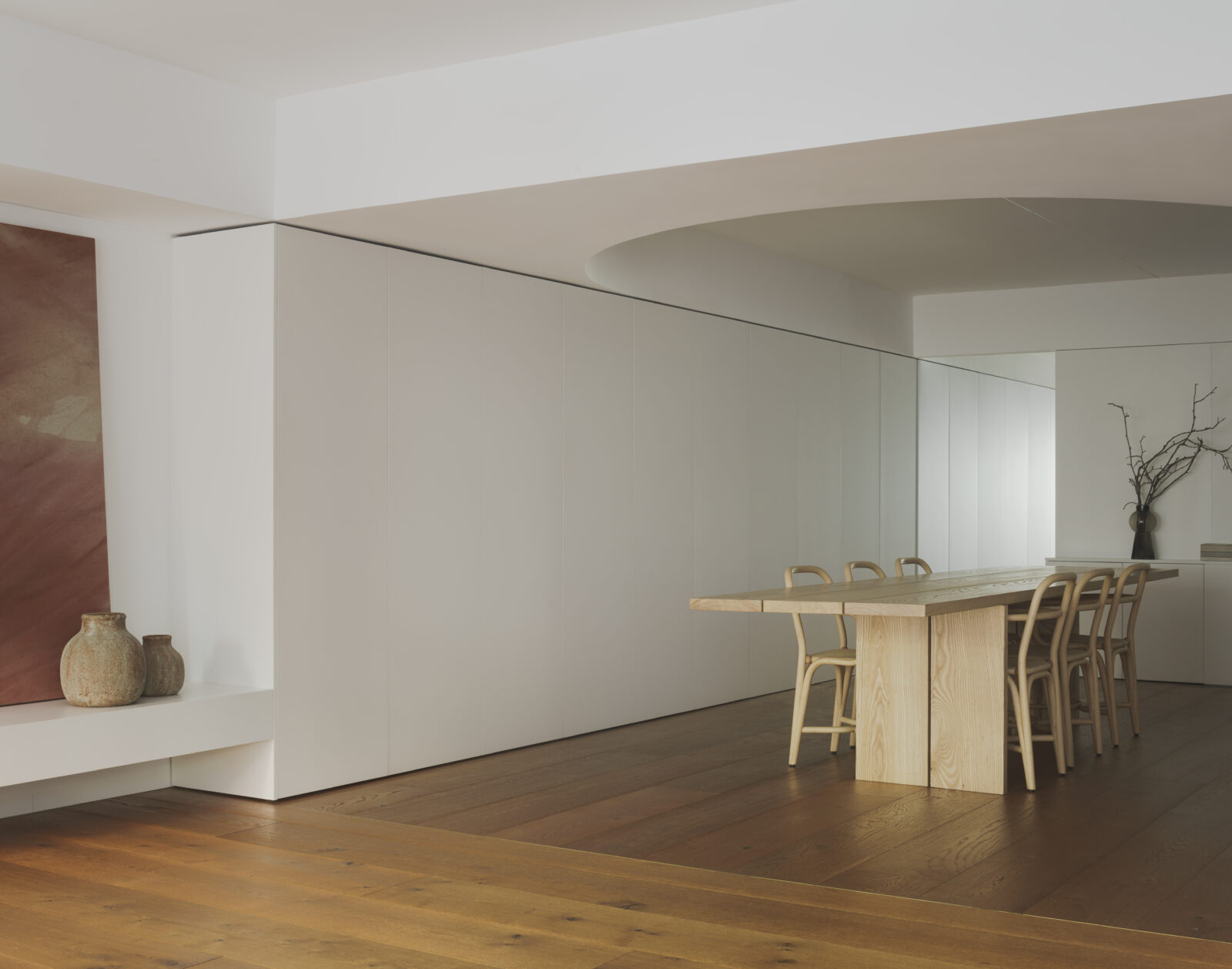
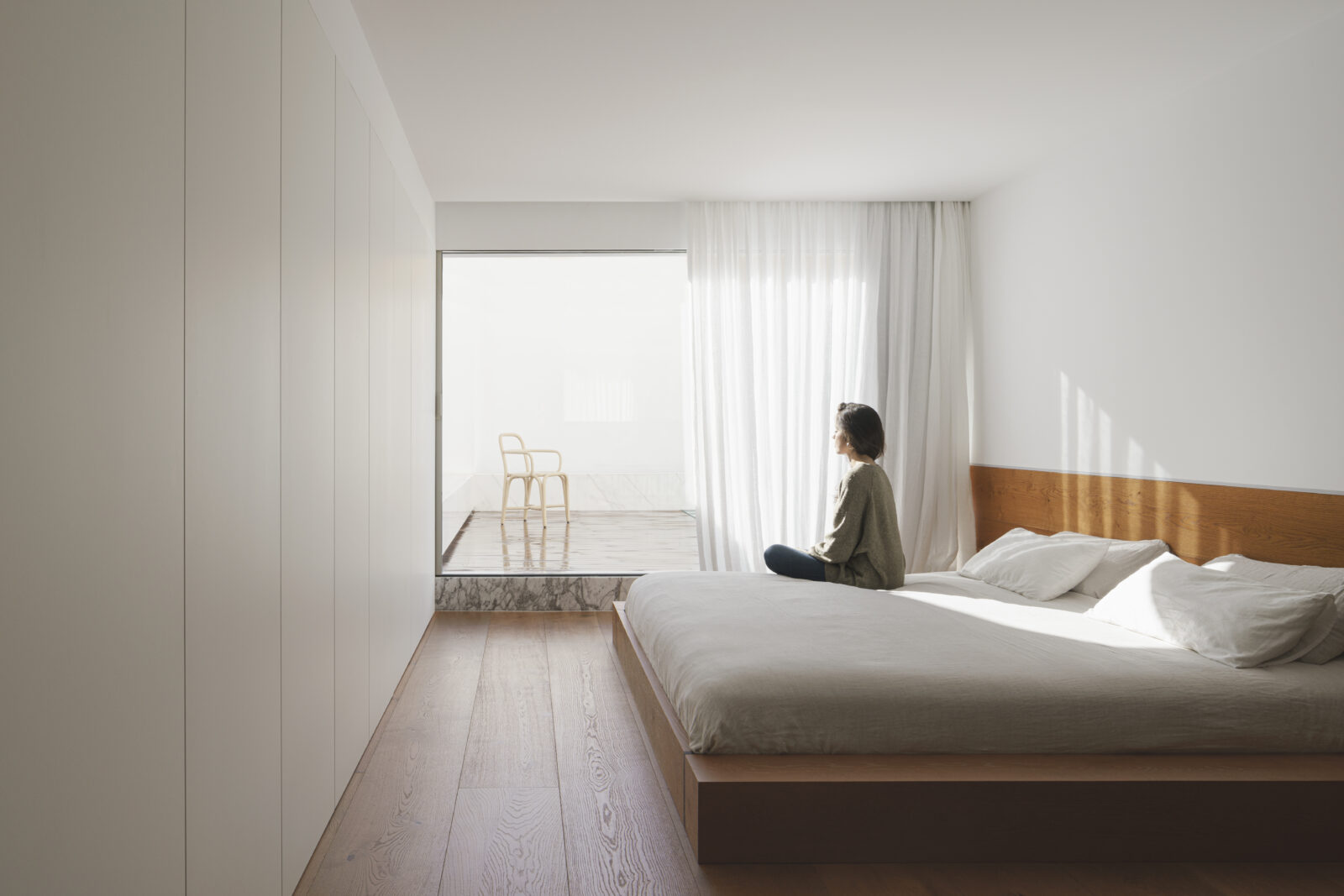
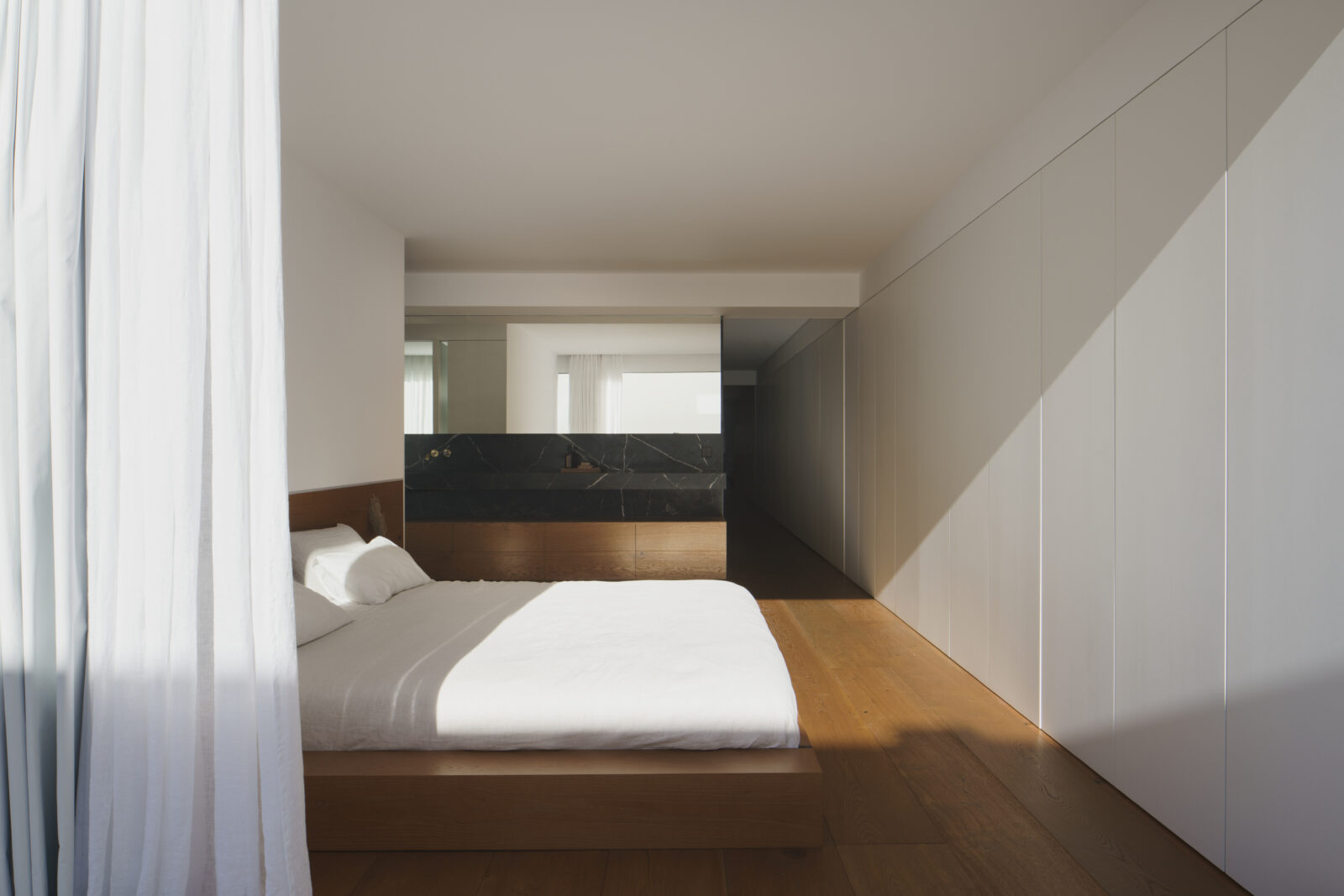
The primary spatial decision is a continuous storage band that runs the full length of the apartment along its interior wall. This band absorbs the existing structural elements and service runs within its depth, eliminating exposed columns and ceiling-mounted ducts. It defines the boundary of each room without fixed partitions: the rooms are what remains between the band and the exterior facades.
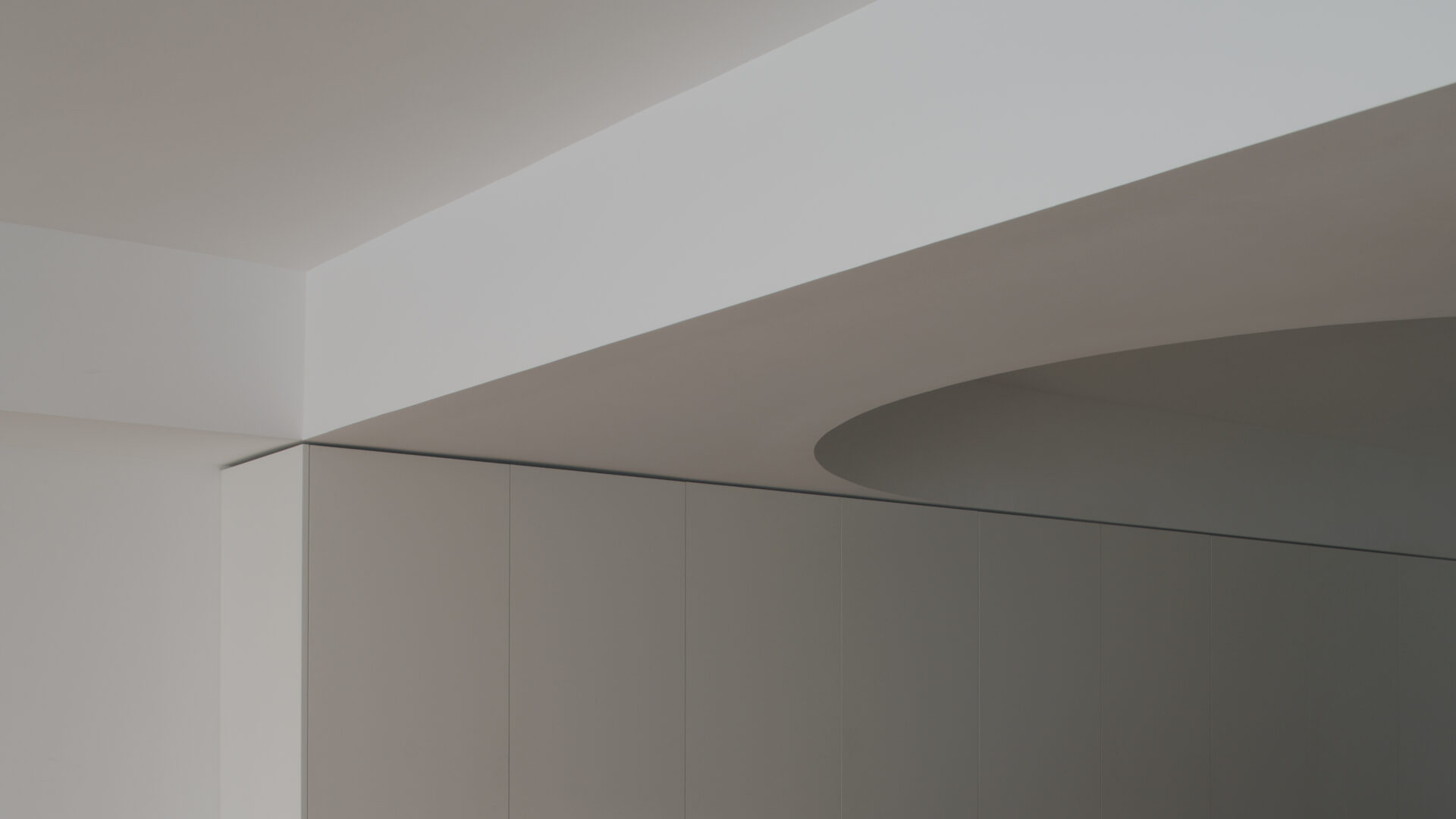
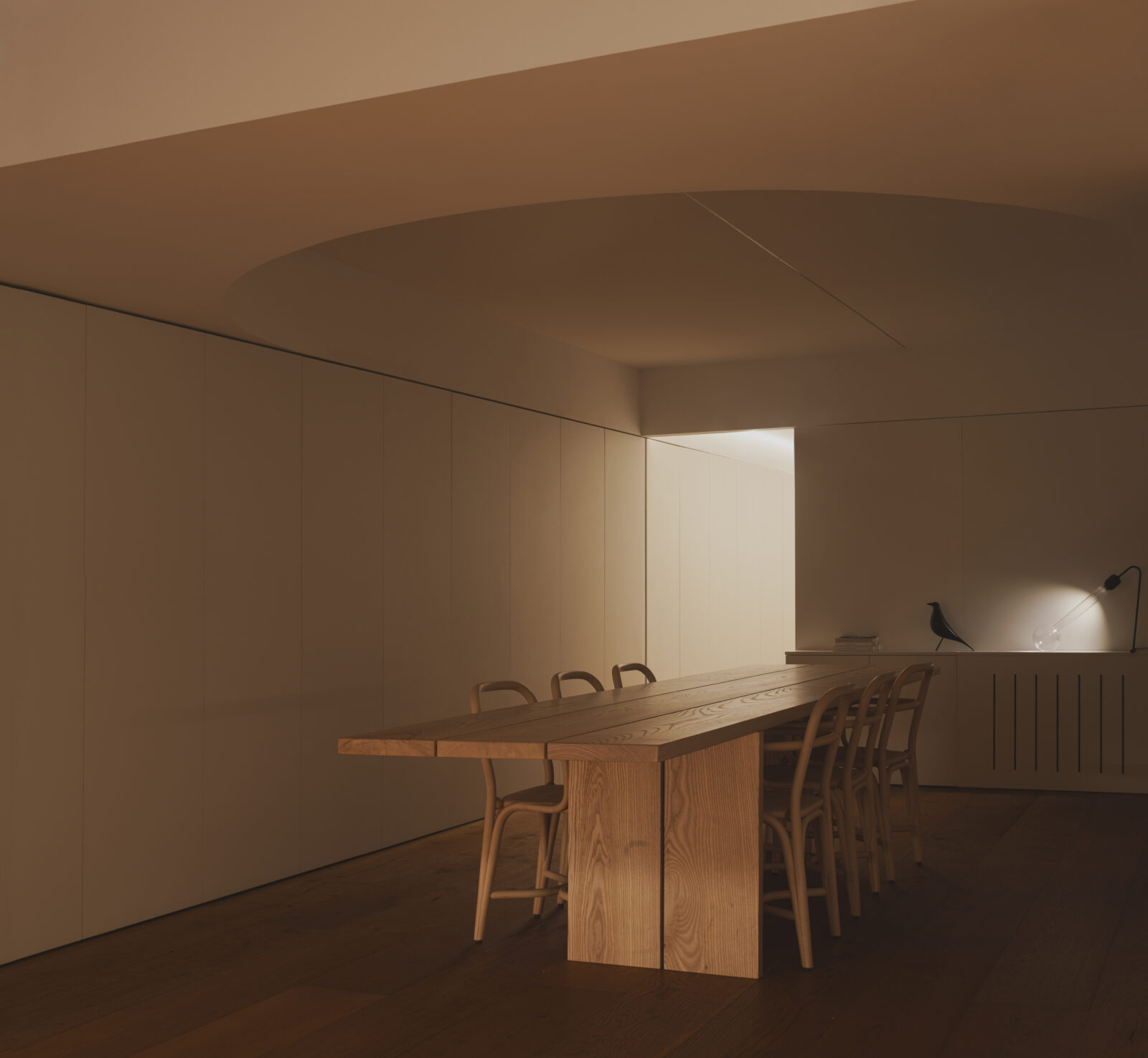
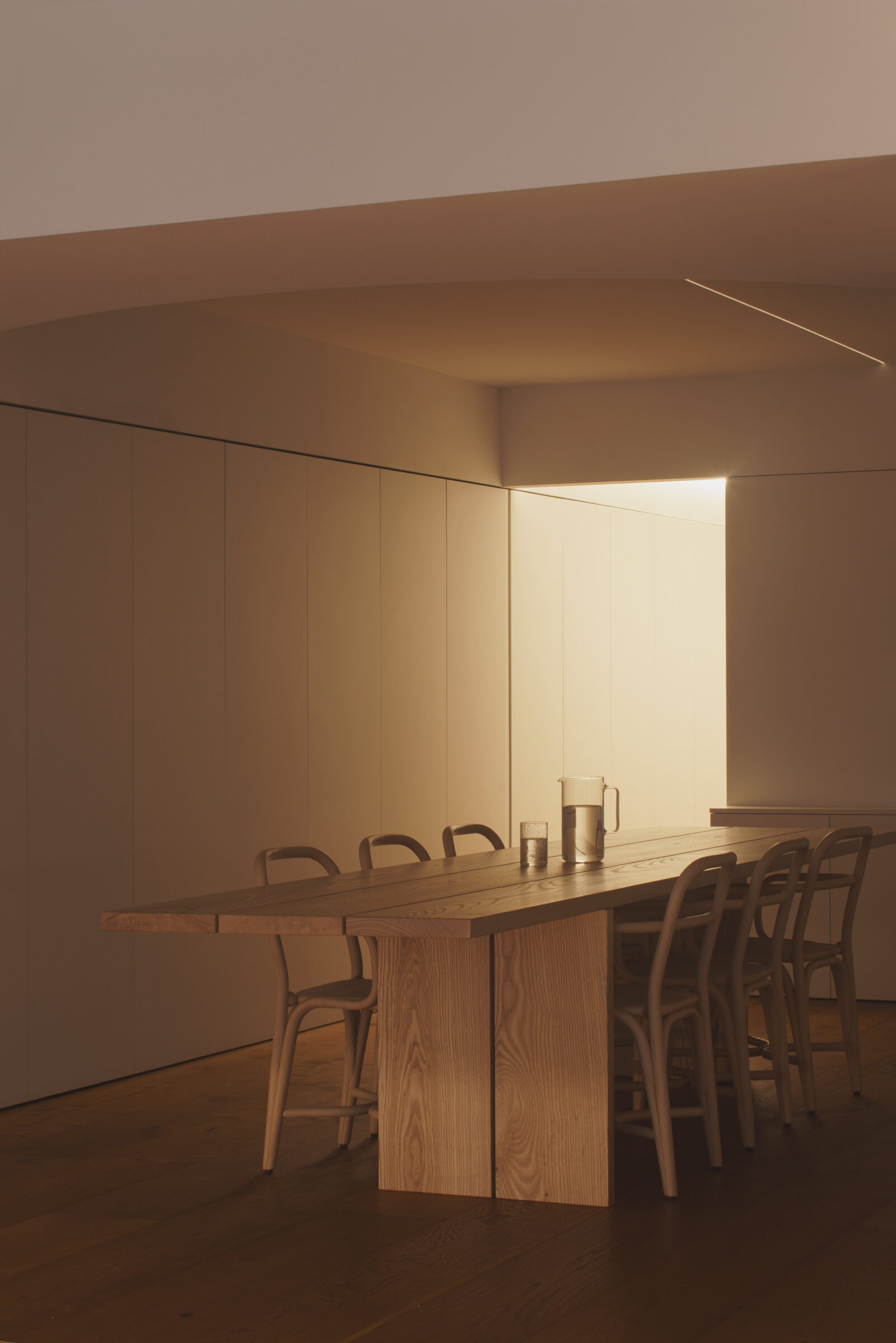
The ceilings are designed on the same principle — integrating the building’s structural beams and mechanical systems into composed volumes that divide the space visually while keeping the plan continuous and open. The curved ceiling in the dining room gives that room its own spatial identity within the open layout: it is the heart of the apartment, distinguished from the adjacent zones by geometry rather than by wall.
The living room faces the Faculty of Philosophy, designed by Fernando Moreno Barberá. Its concrete brise-soleil facade — a strong, insistent vertical rhythm of light and shadow — is the dominant view from the apartment’s principal space. The material choices inside acknowledge this proximity: fossil limestone from the Alicante region clads the living room wall, carrying a geological texture that reads across the street against the Barberá facade’s aggregate concrete. Two different material logics, two different eras, in direct and considered dialogue.
The plan separates day and night along a north-south axis. The living and dining areas face north toward the Barberá building; the bedrooms are to the south, opening onto a rear courtyard that brings natural light and vegetation into the quieter part of the plan.
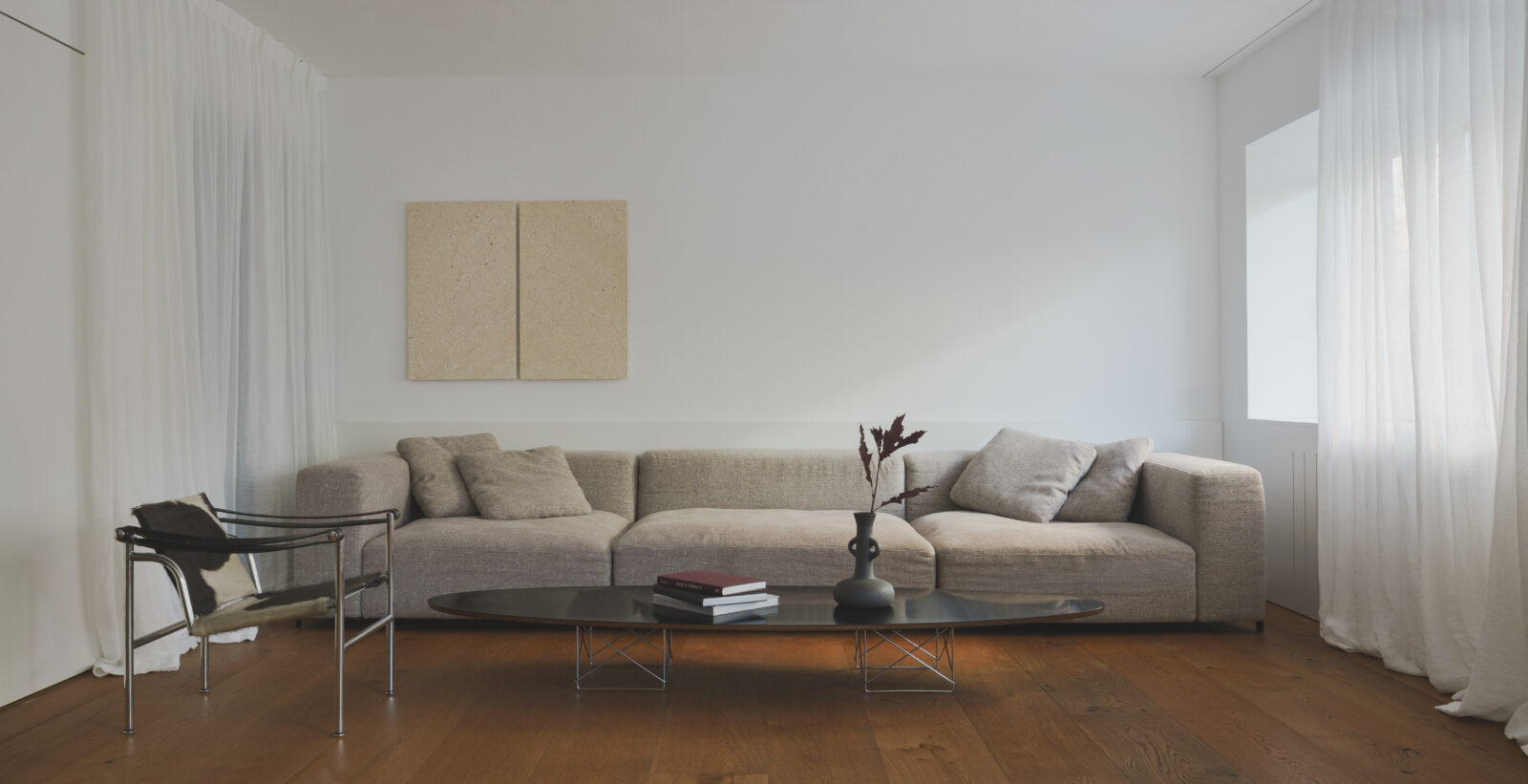
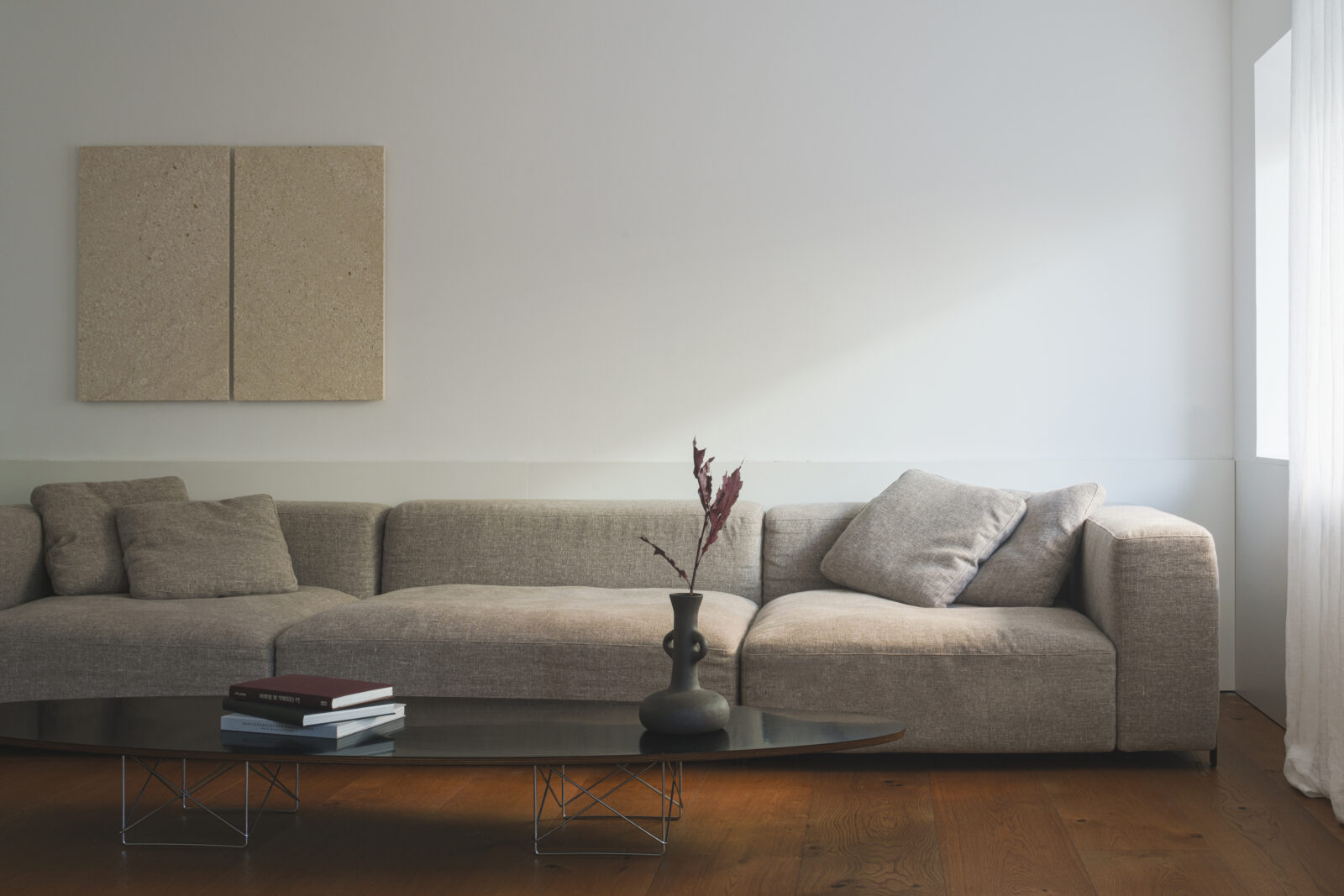
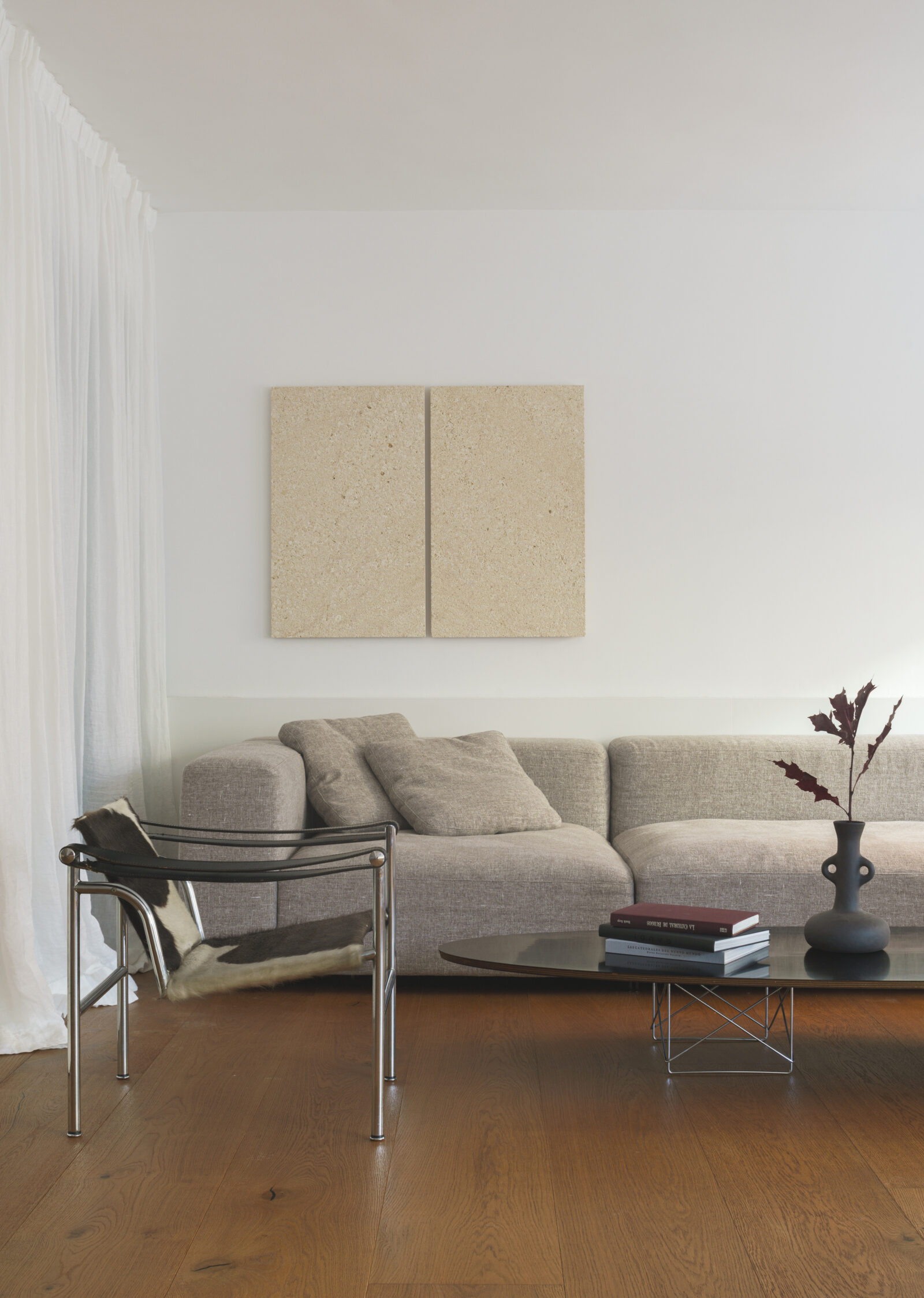
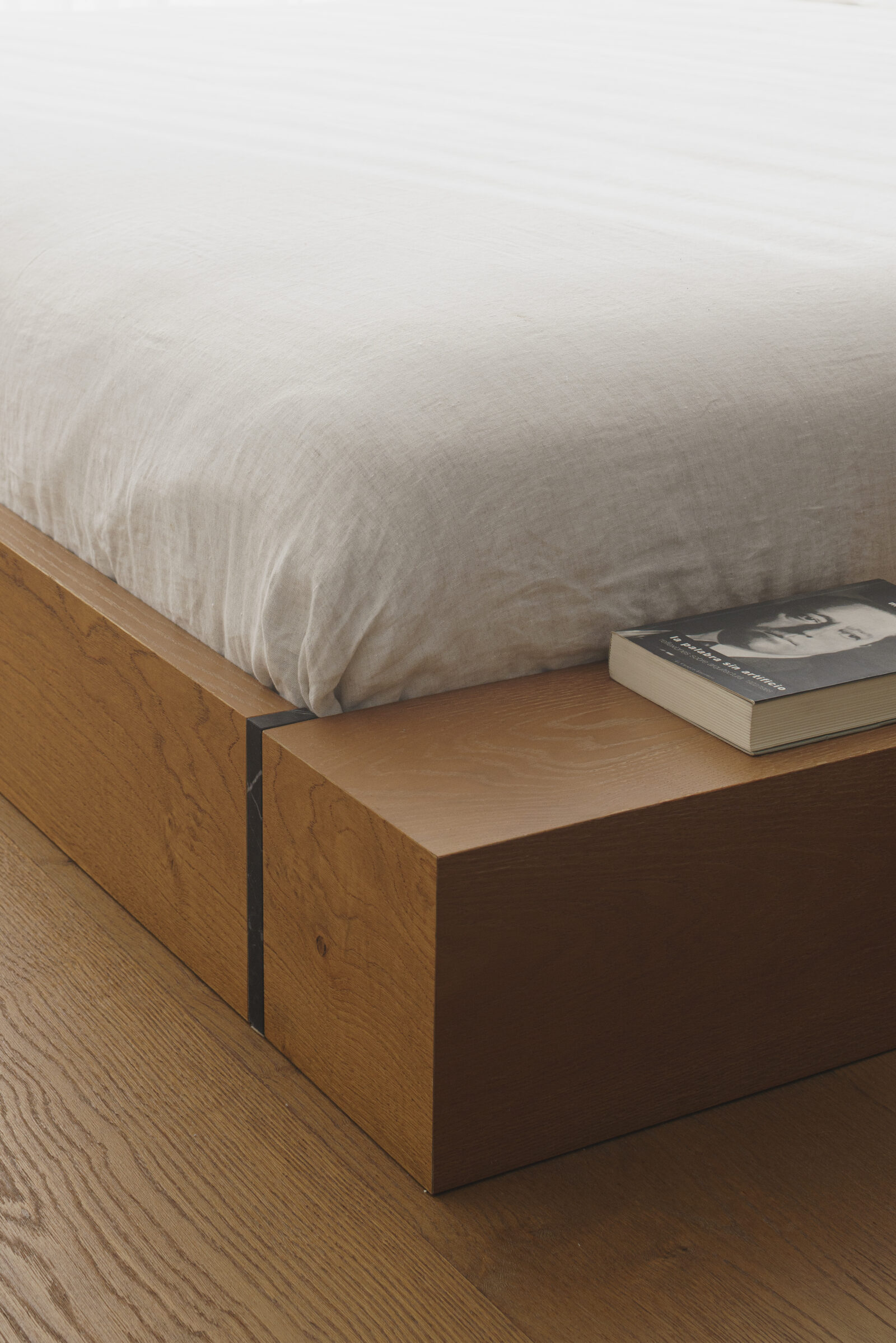
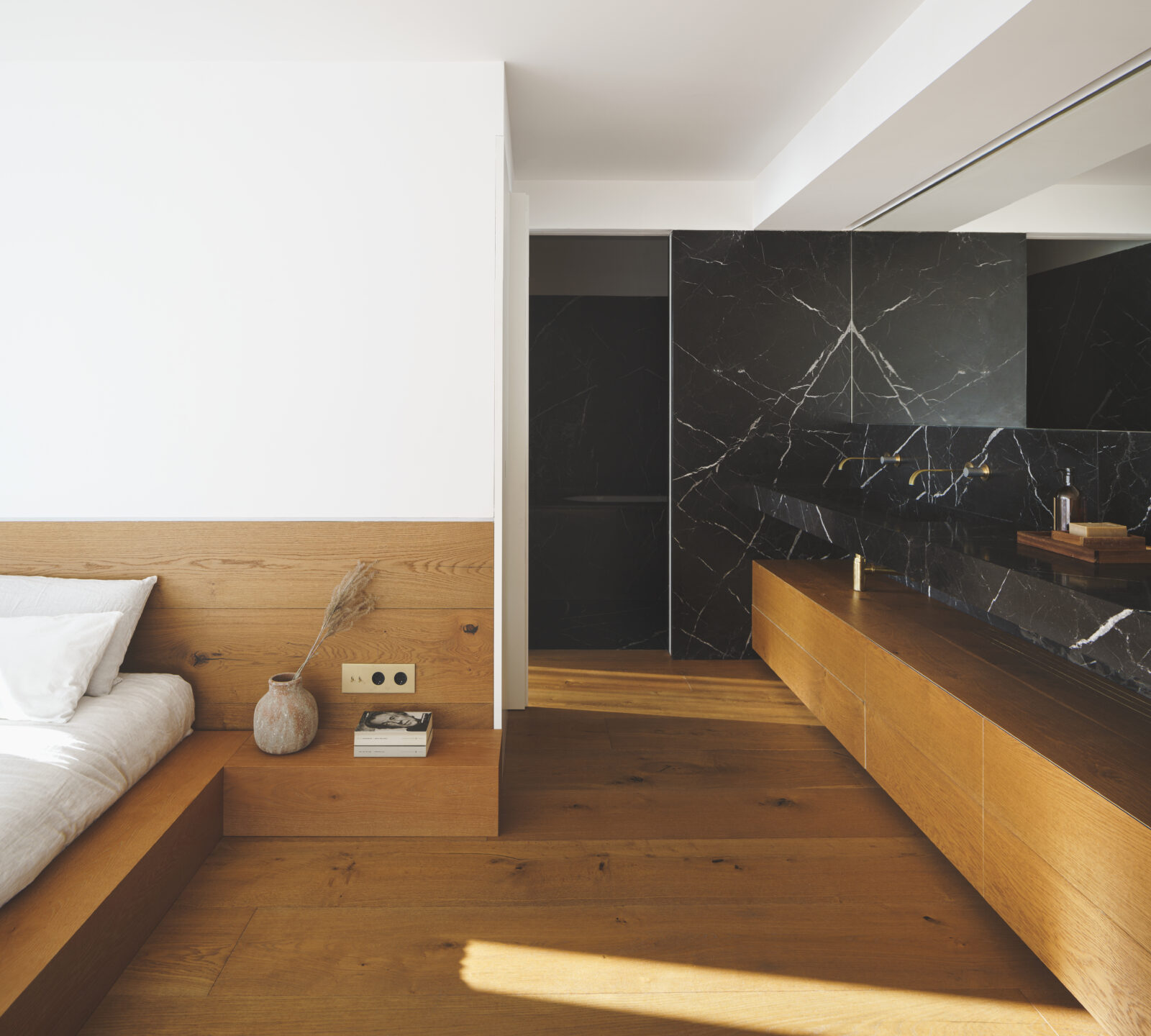
Five natural stones are used across the apartment, each assigned to a specific location and use: Indian granite in the kitchen, Carrara marble in the guest bathroom, Marquina black in the master suite, Ibiza white marble in the courtyard bench and planter, Alicante fossil limestone on the living room wall. Each stone is chosen for its specific material character in its specific context — not as a palette applied uniformly but as a series of precise material decisions.
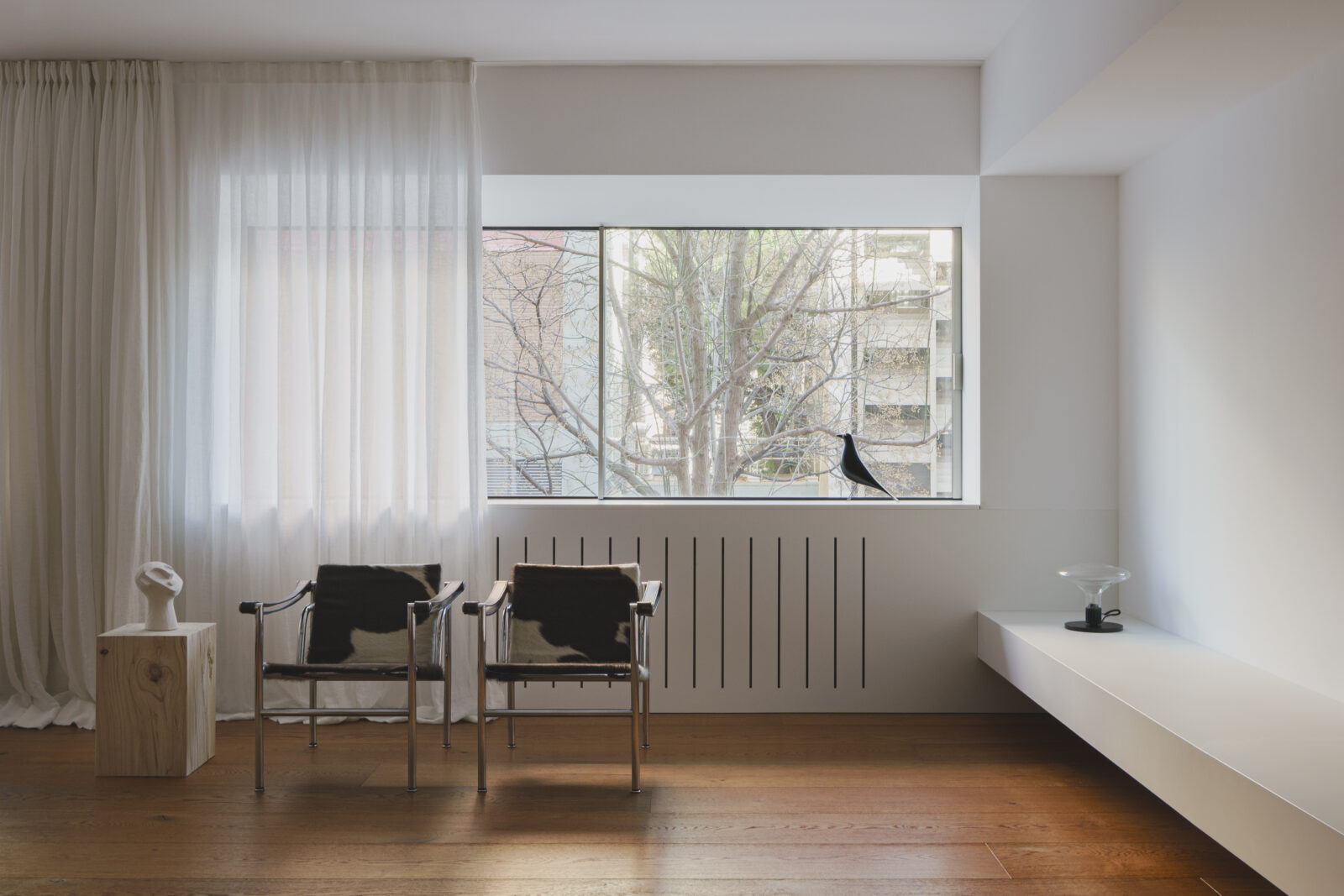
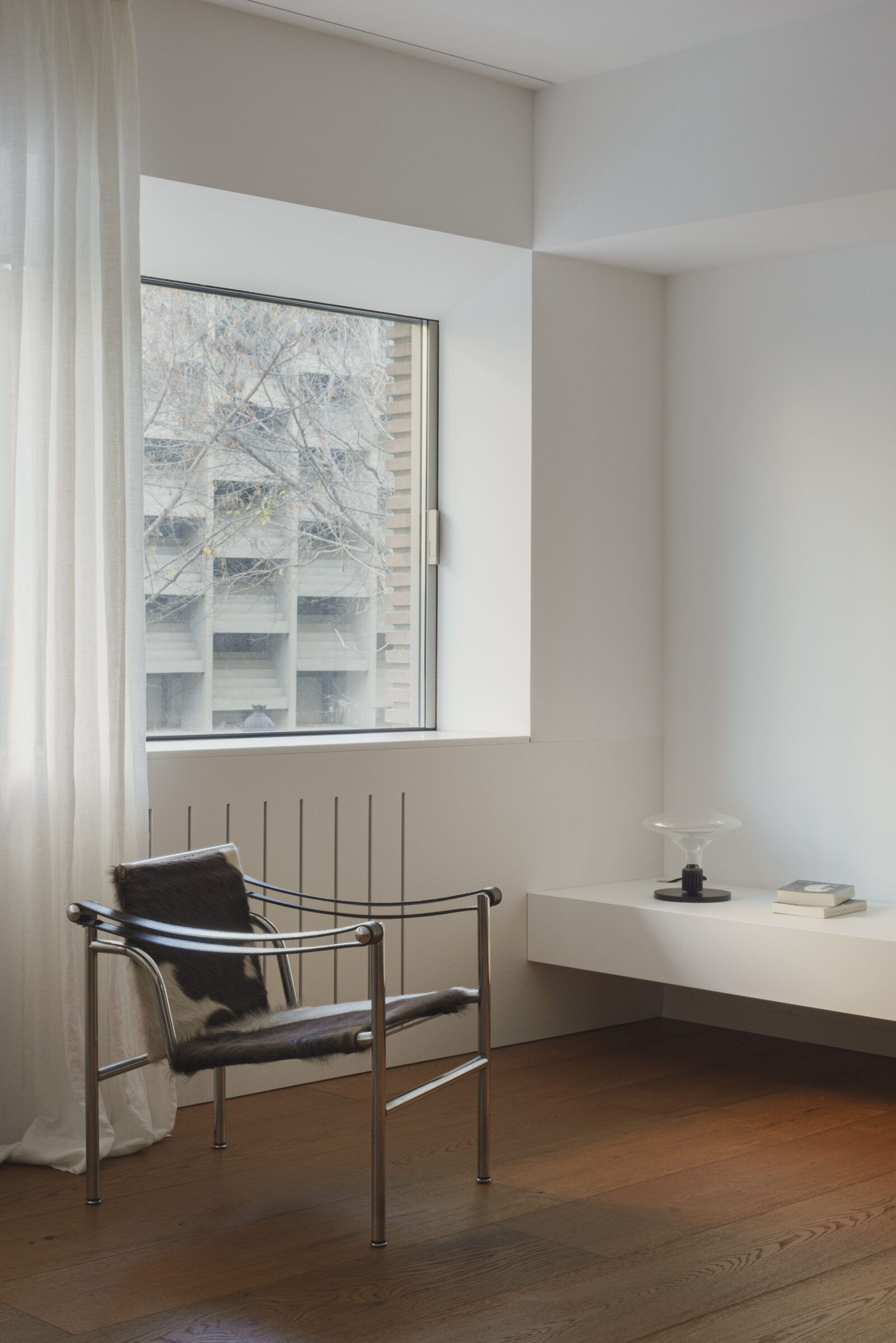
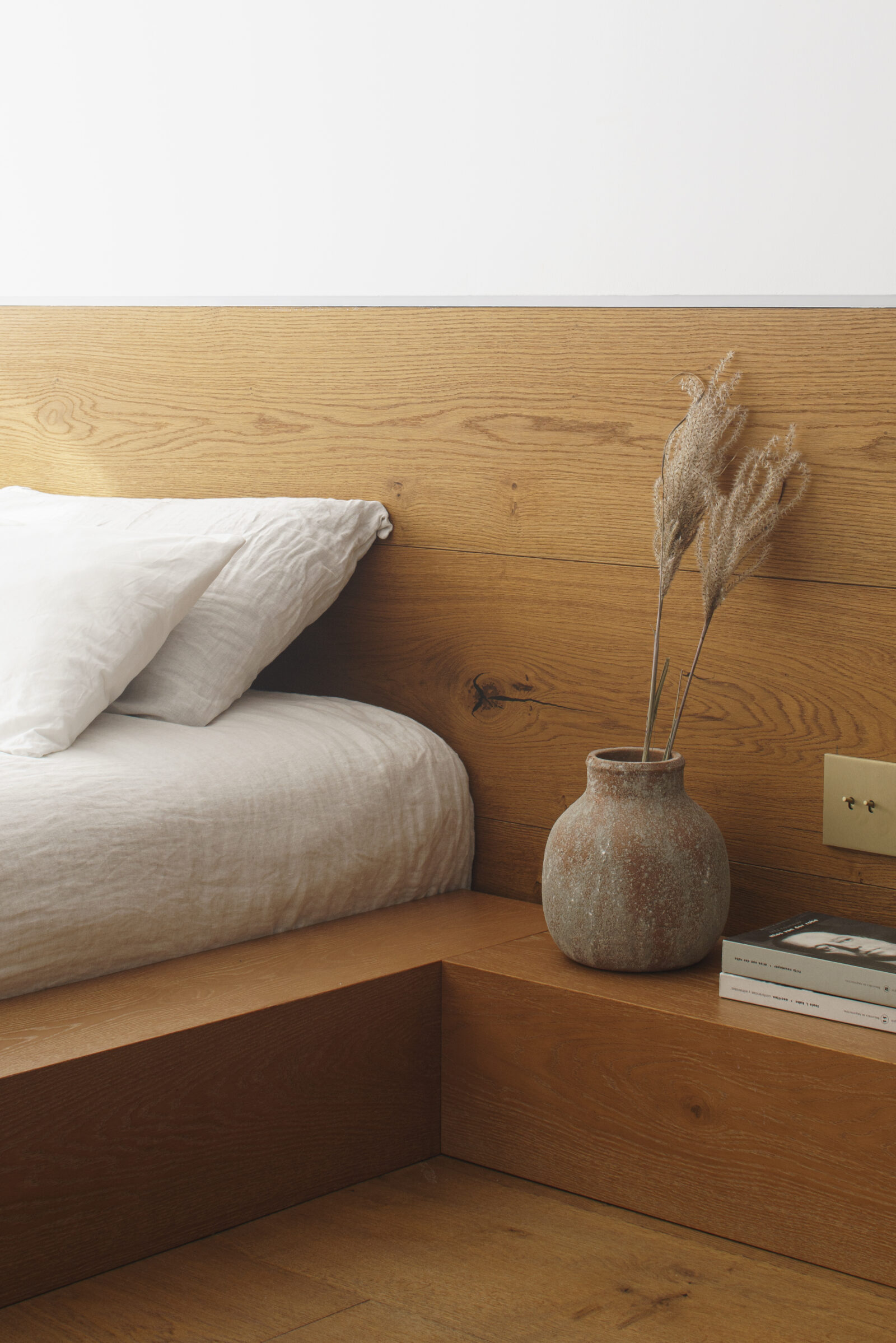
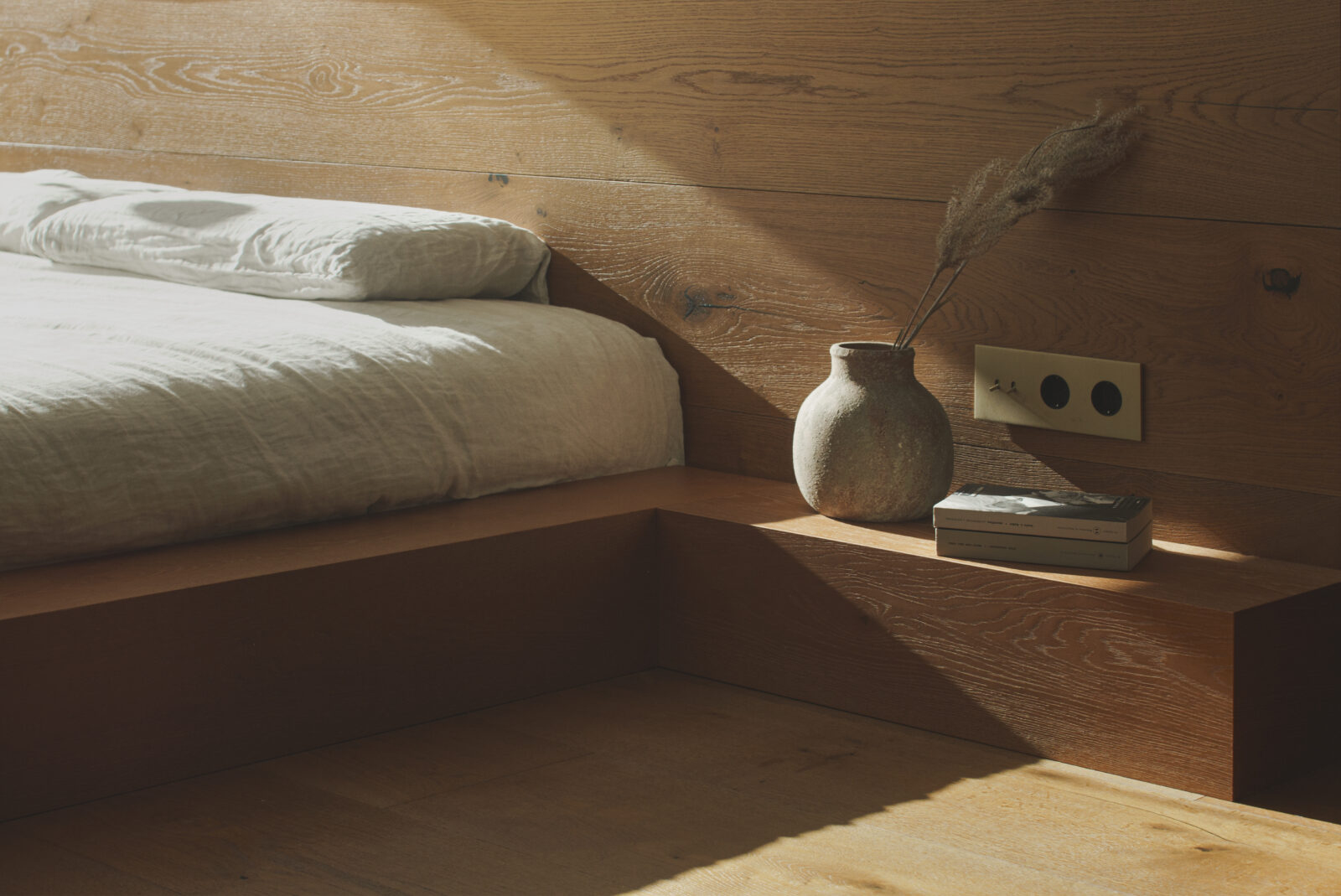
French oak flooring in 4-metre boards, 30 centimetres wide, runs throughout. The bespoke furniture — an American ash dining table, a bed built from the same floor boards — extends this material logic from the architecture into the objects. Alongside them: 1984 LC1 chairs in pony skin, an Eames elliptical table, rattan chairs by Oscar Tusquets. The apartment is furnished as it is built: each element chosen with the same criteria, at the same level of attention.
More on how the studio approaches work of this kind:
Commissioning a private house with Balzar Architects