Ciscar Apartment
Valencia
2016
Interior
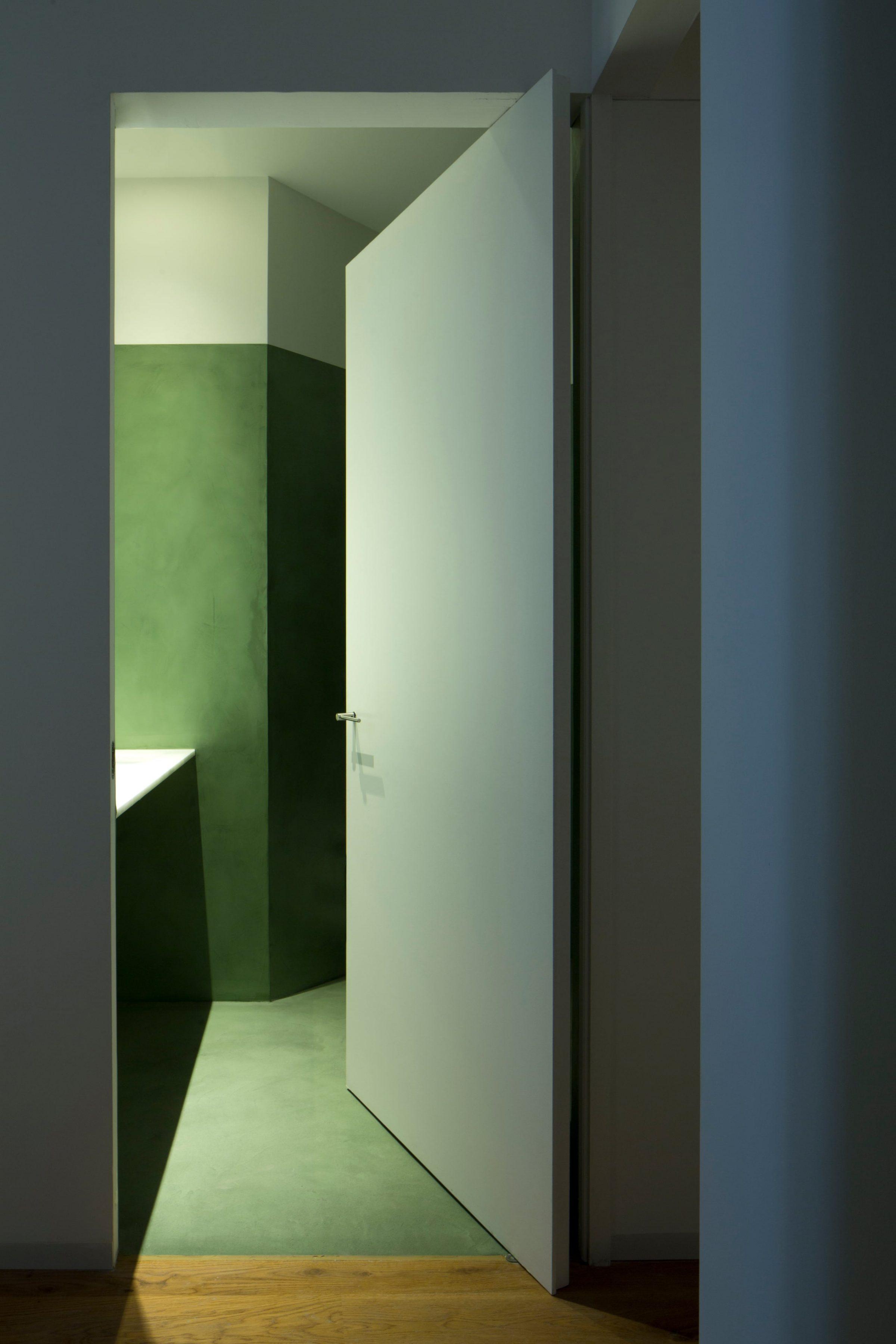
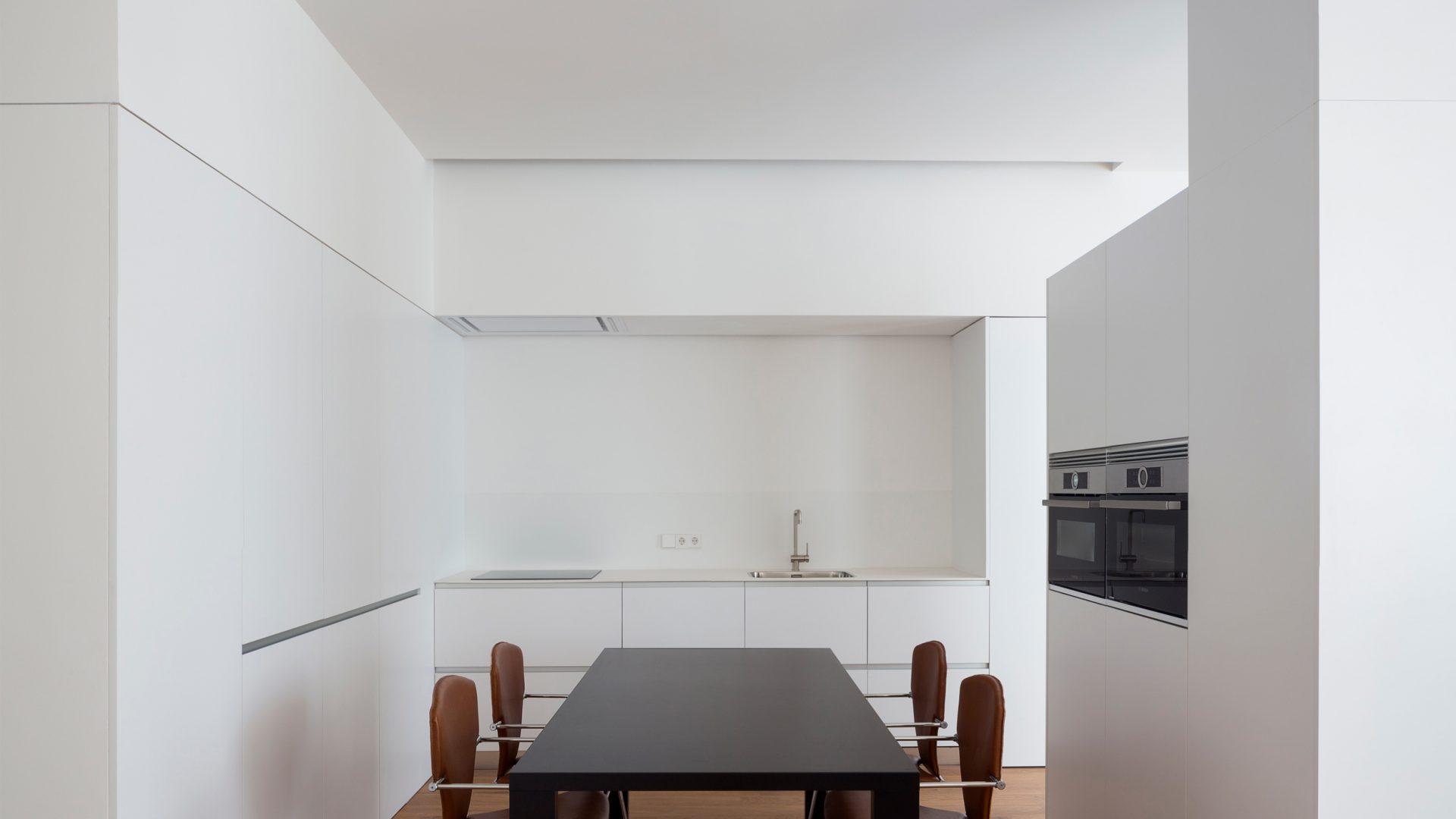
An apartment renovation in the historic Eixample district of Valencia, on the chamfered corner of an early twentieth-century block. The original plan placed the bedrooms on the principal facade and the living room facing the interior courtyard; the project inverts this. An open living area now sits beside the entry, and the bedrooms move to the rear, lit and ventilated through the courtyard. Walls, ceilings and joinery are white; the floor is natural oak. A single chromatic shift, a green bathroom, registers an ongoing studio inquiry into the relationship between space and material.
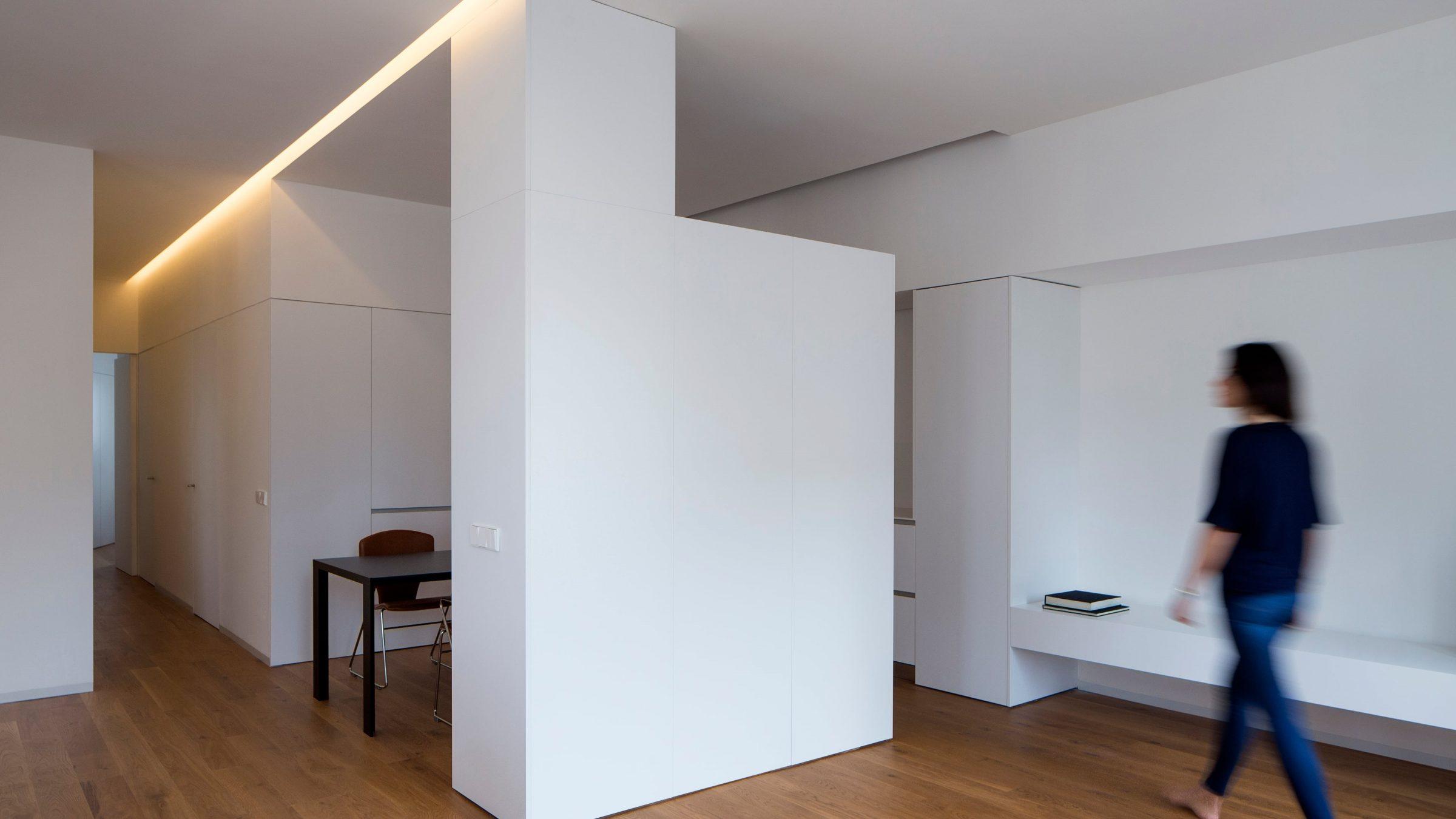
The complex geometry of the corner remains intact. The plan does not correct it; it reads it differently, organising the inverted distribution around the angle rather than against it.
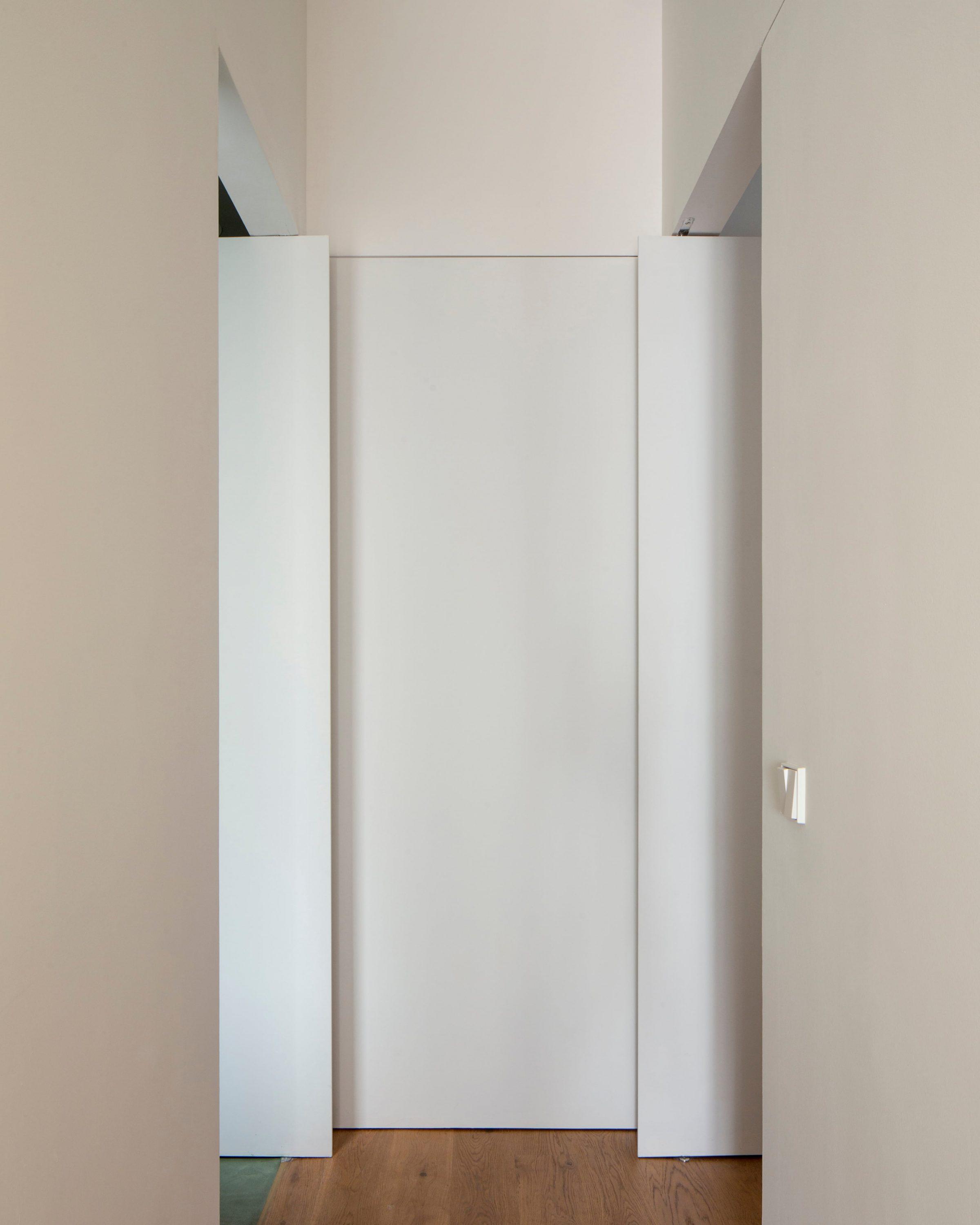
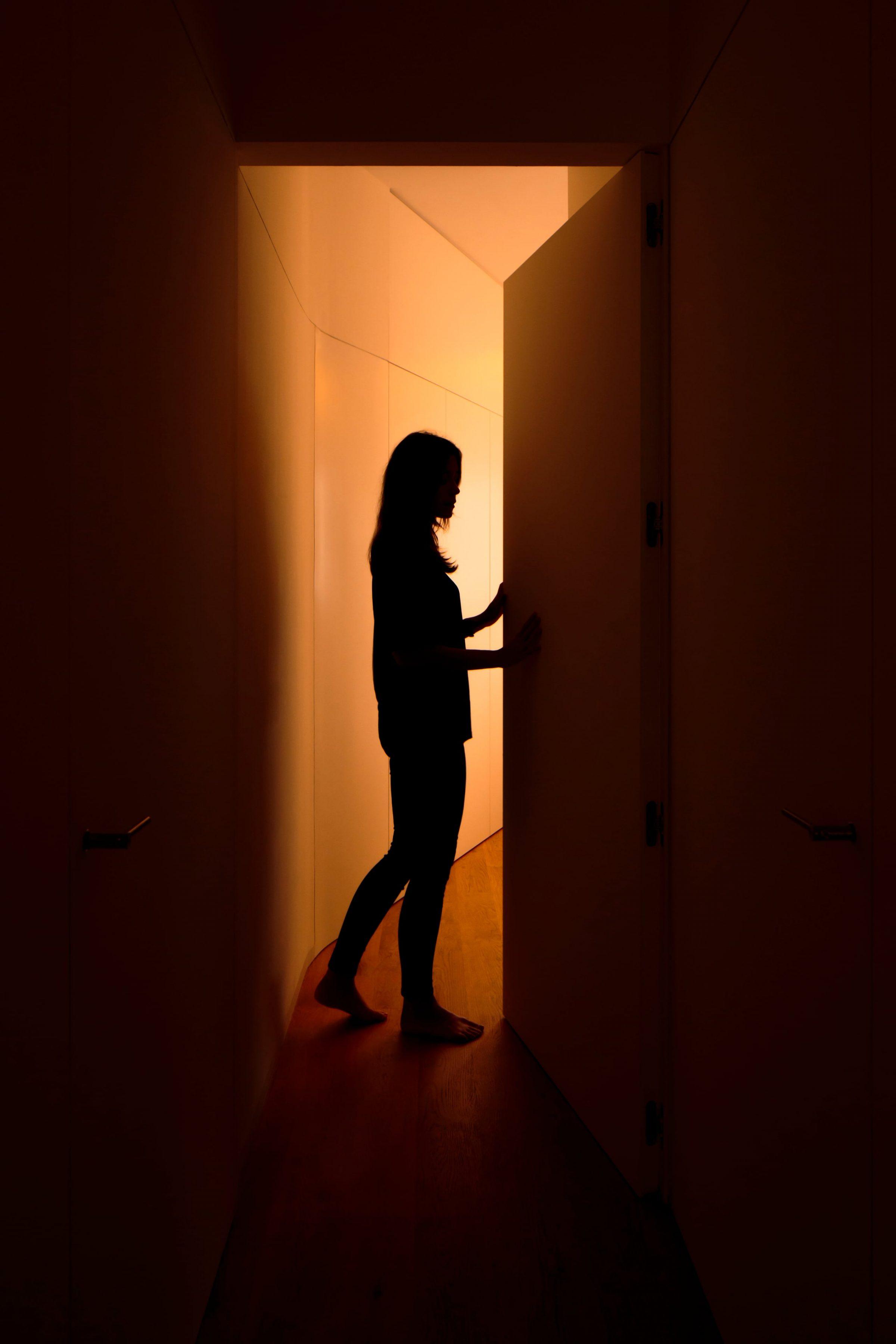
The new distribution works toward visual continuity. Rooms are organised with the smallest possible number of elements so that sight lines extend across the whole depth of the apartment. A continuous line of light running through the hallway accentuates this reading, marking the principal axis without interrupting it. The intention is not to dissolve the rooms but to release the visual relationship between them, recovering the spatial generosity that the original compartmentalised plan obscured.
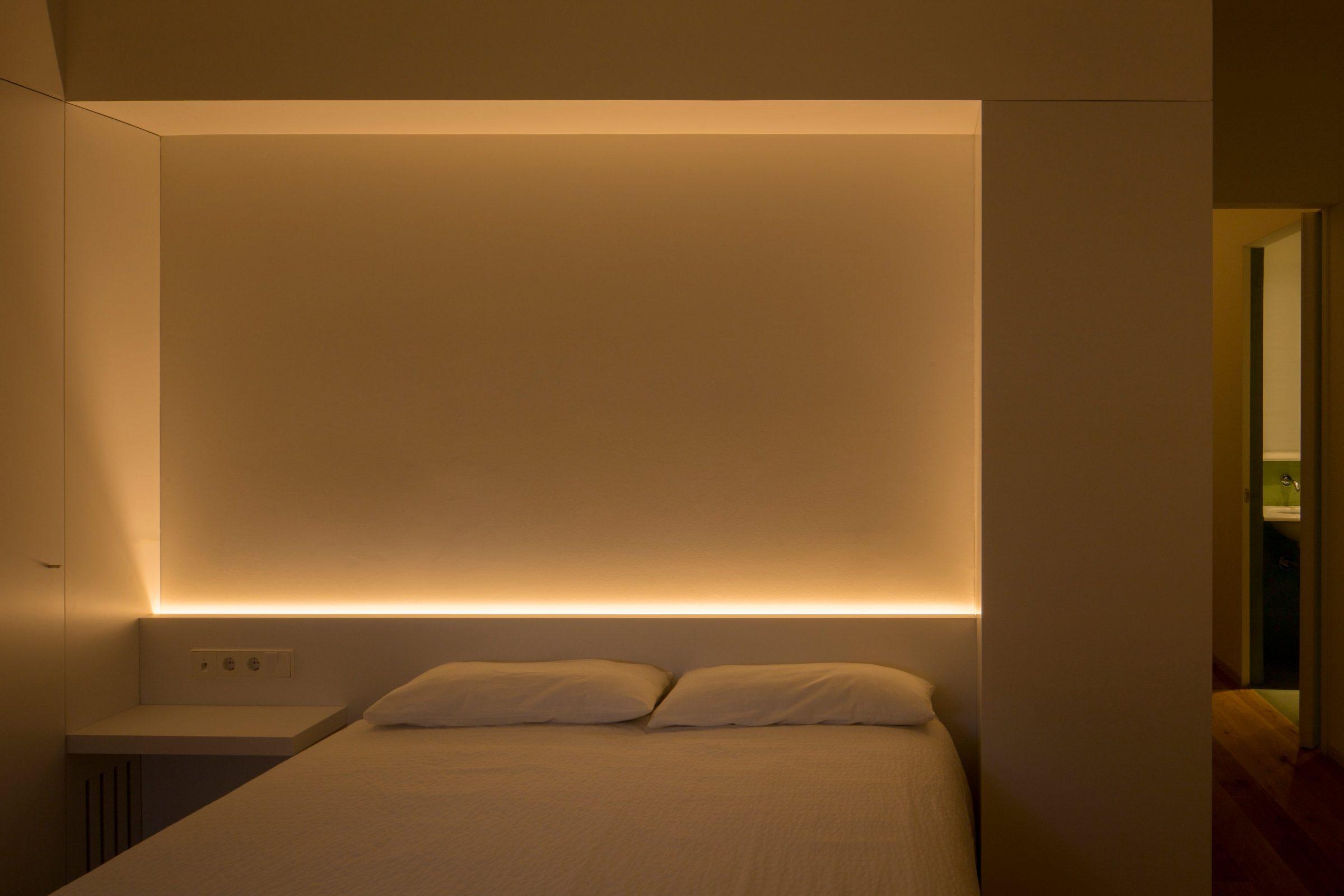
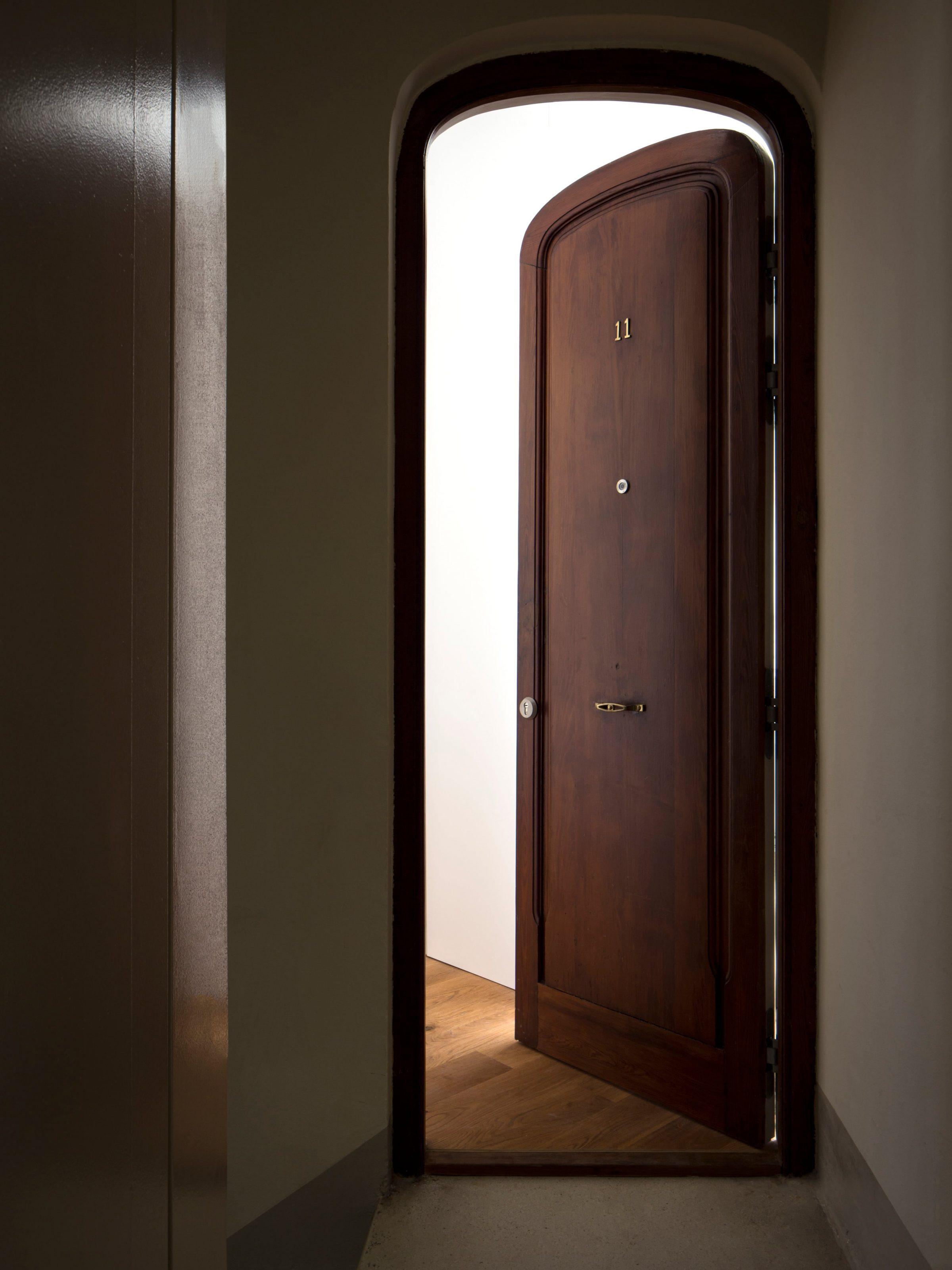
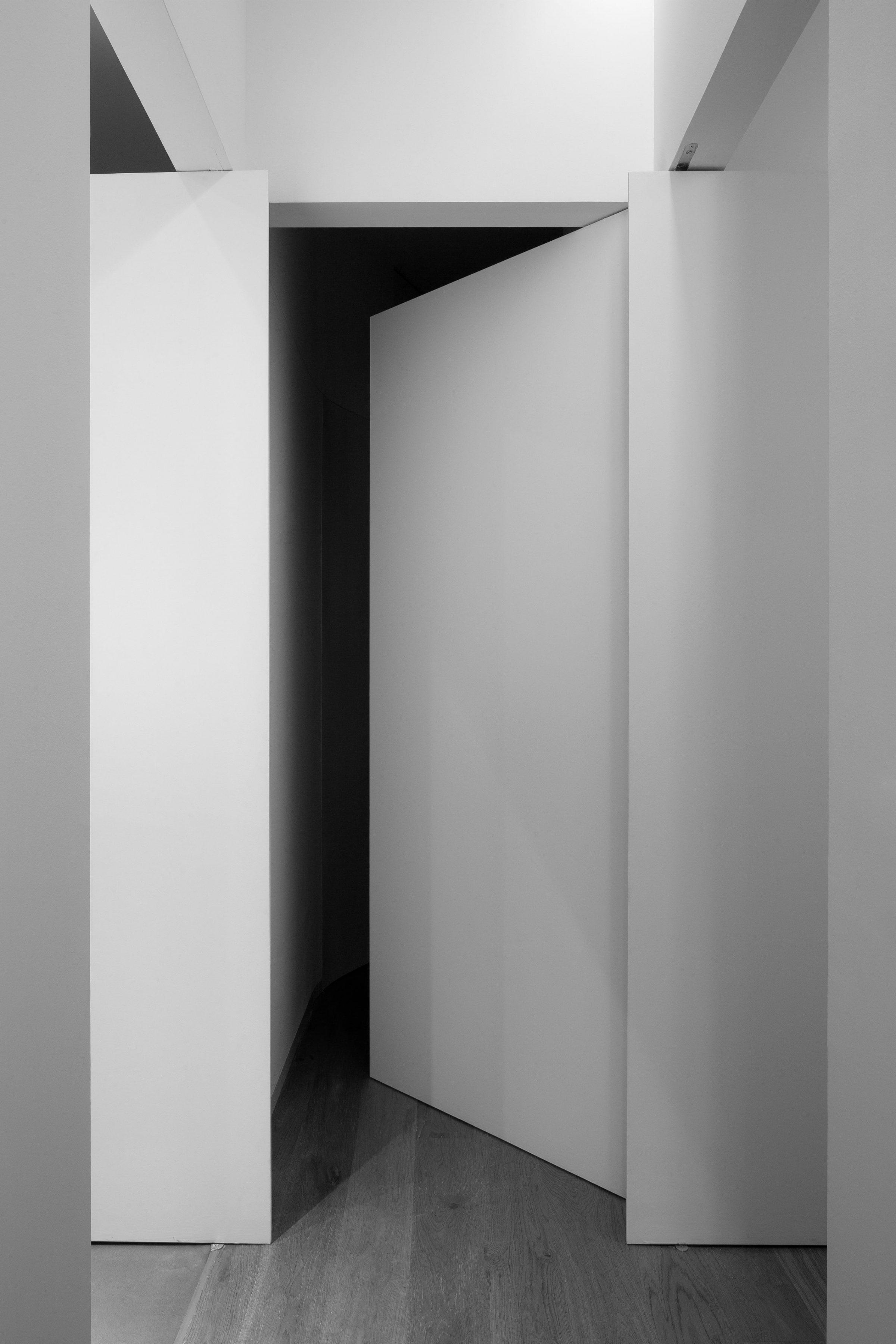
The atmosphere is reduced to a small number of decisions held consistently. Walls, ceilings and fixed joinery are white; floors are natural oak, warm under artificial light. The palette is calibrated to make the apartment a place of rest and quiet, with no surface drawing attention to itself. The single exception is the main bathroom, finished in green. The shift is not decorative. It marks a deliberate inquiry, ongoing in the studio at the time, into the relationship between space, material and chromatic register.