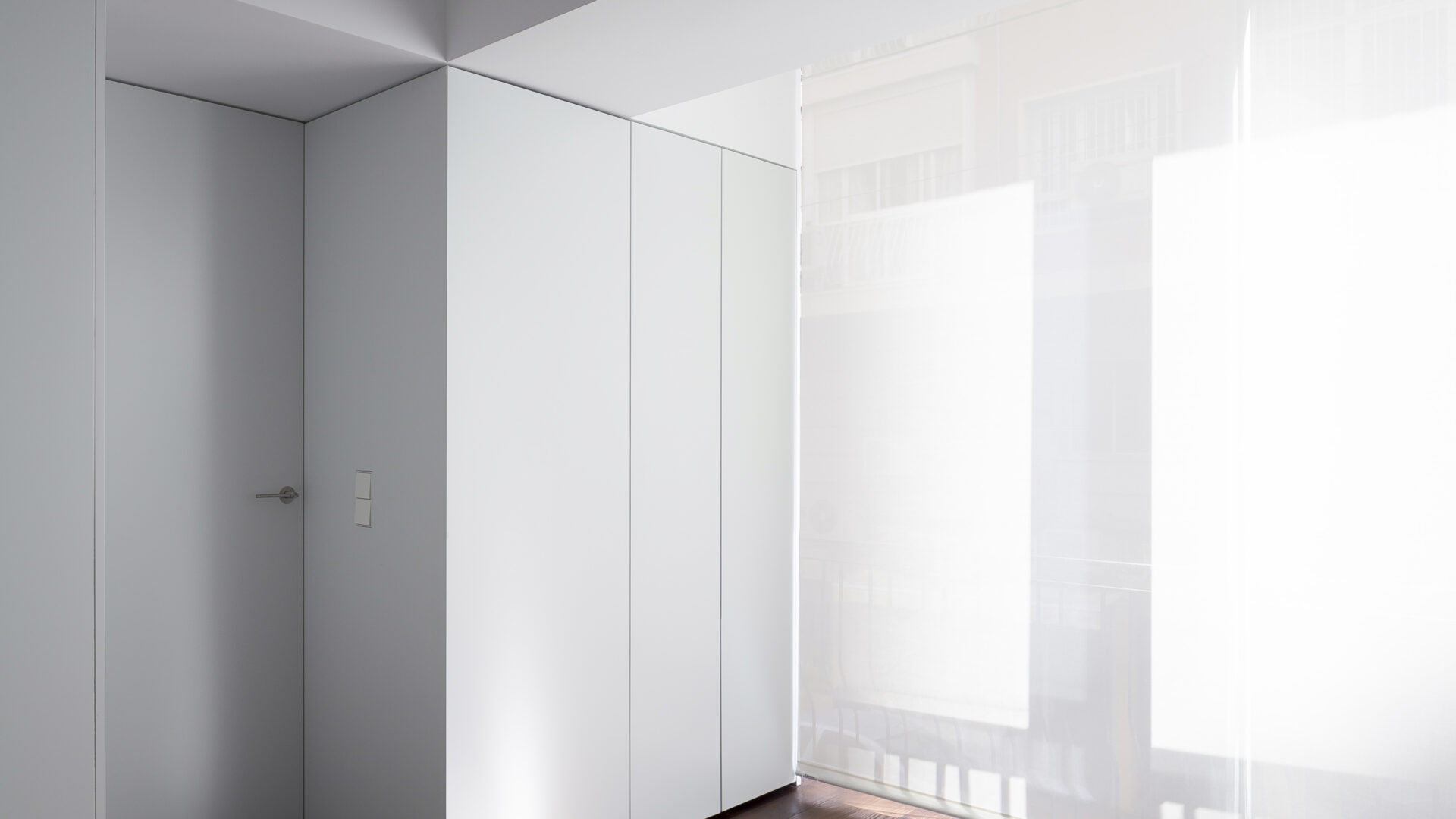
Murcia Apartment
Murcia
2013
Interior
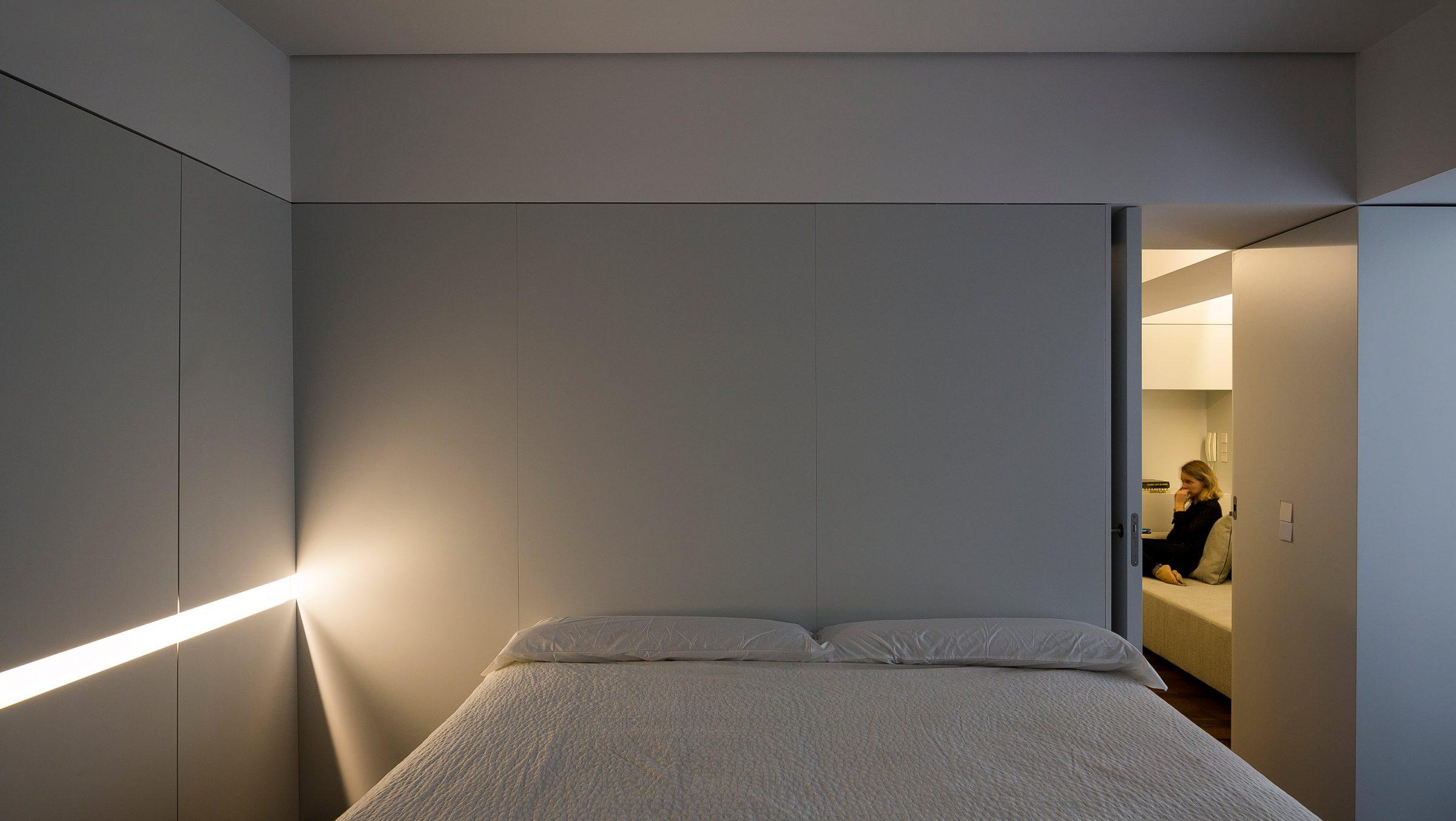
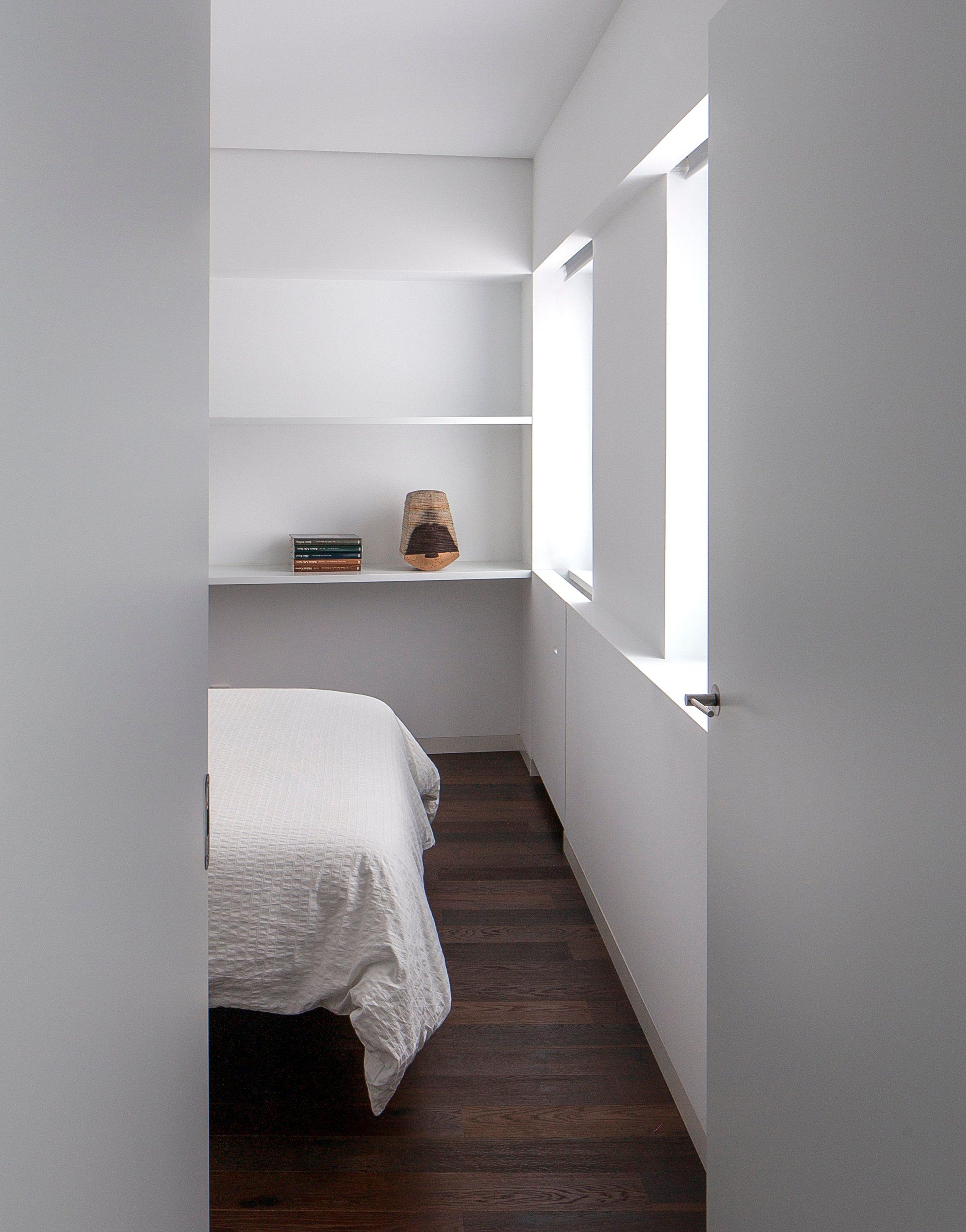
A first-floor apartment in a nineteen-sixties rationalist building is reorganised as a single continuous space. The existing partition walls are removed and the programme is held in place only by pivoting and sliding panels and by built-in furniture, which also corrects the irregular geometry of the original plan. A reduced palette holds it together: dark smoked oak underfoot, white painted walls and white lacquered joinery above. At dusk, the artificial light turns those white planes gold.

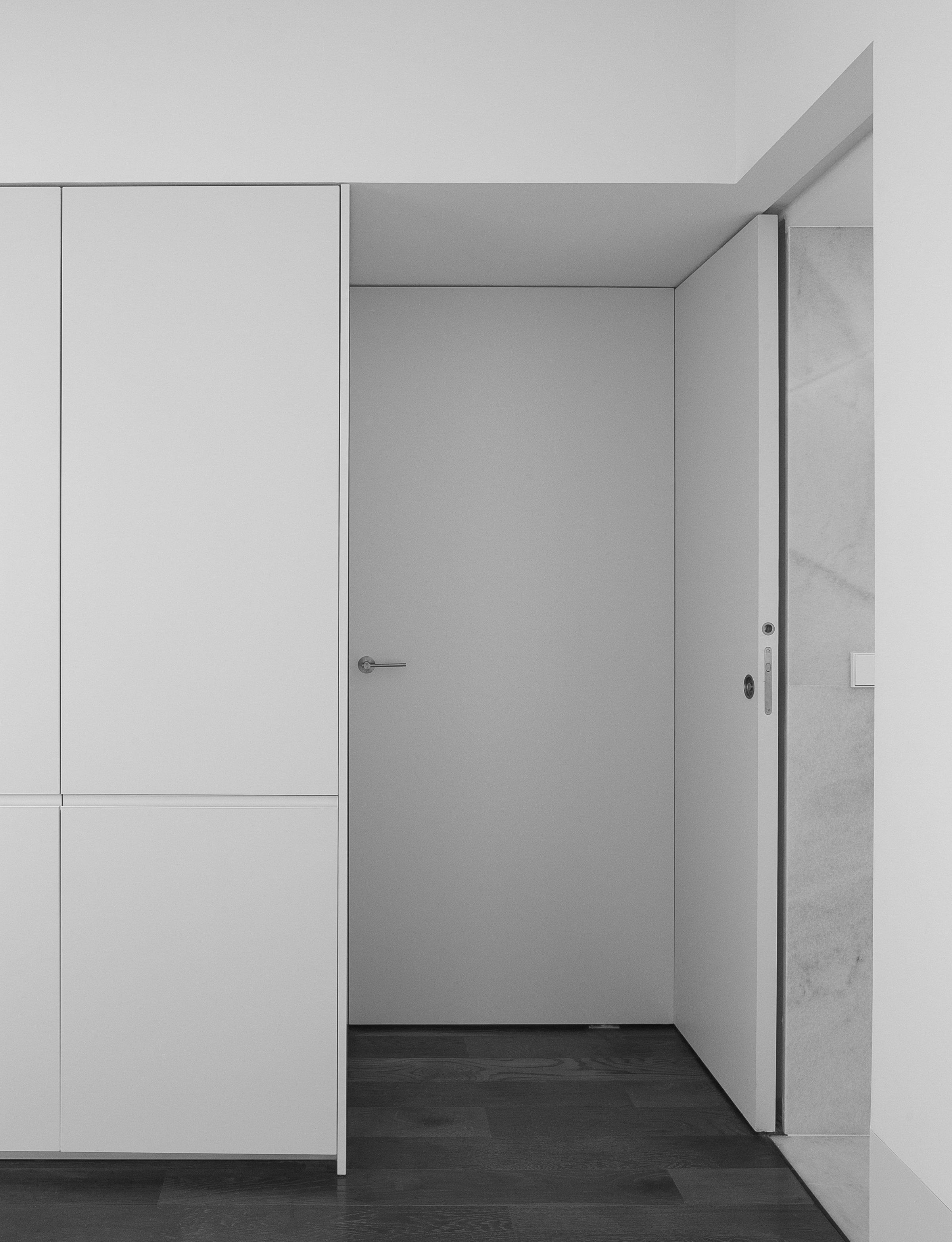
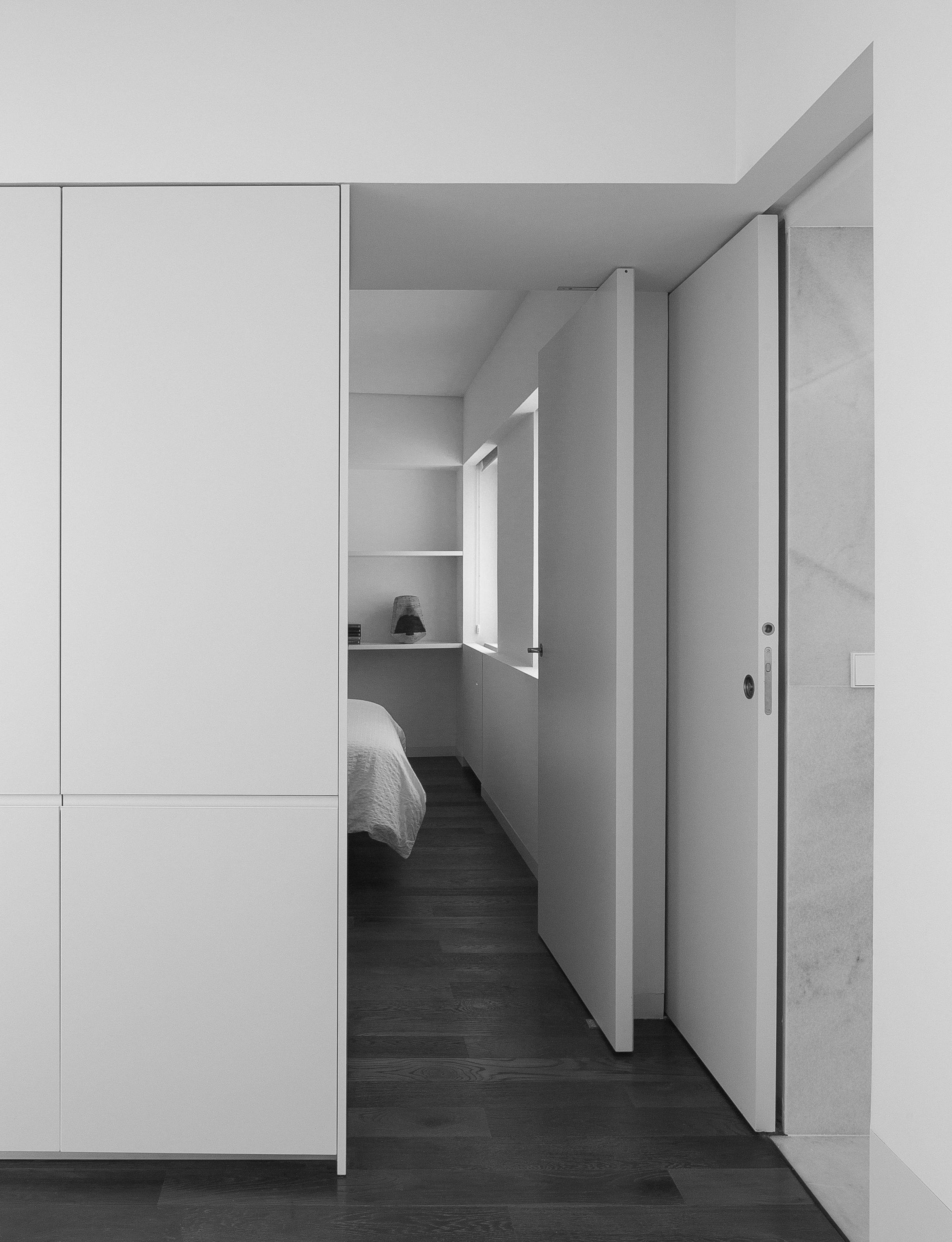
The building sits on a central commercial street of Murcia. With the masonry partitions gone, programme is drawn instead by the careful placement of pivoting panels, cabinets and furniture against the existing structure. The plan reads as one continuous space, divided only when use requires it.
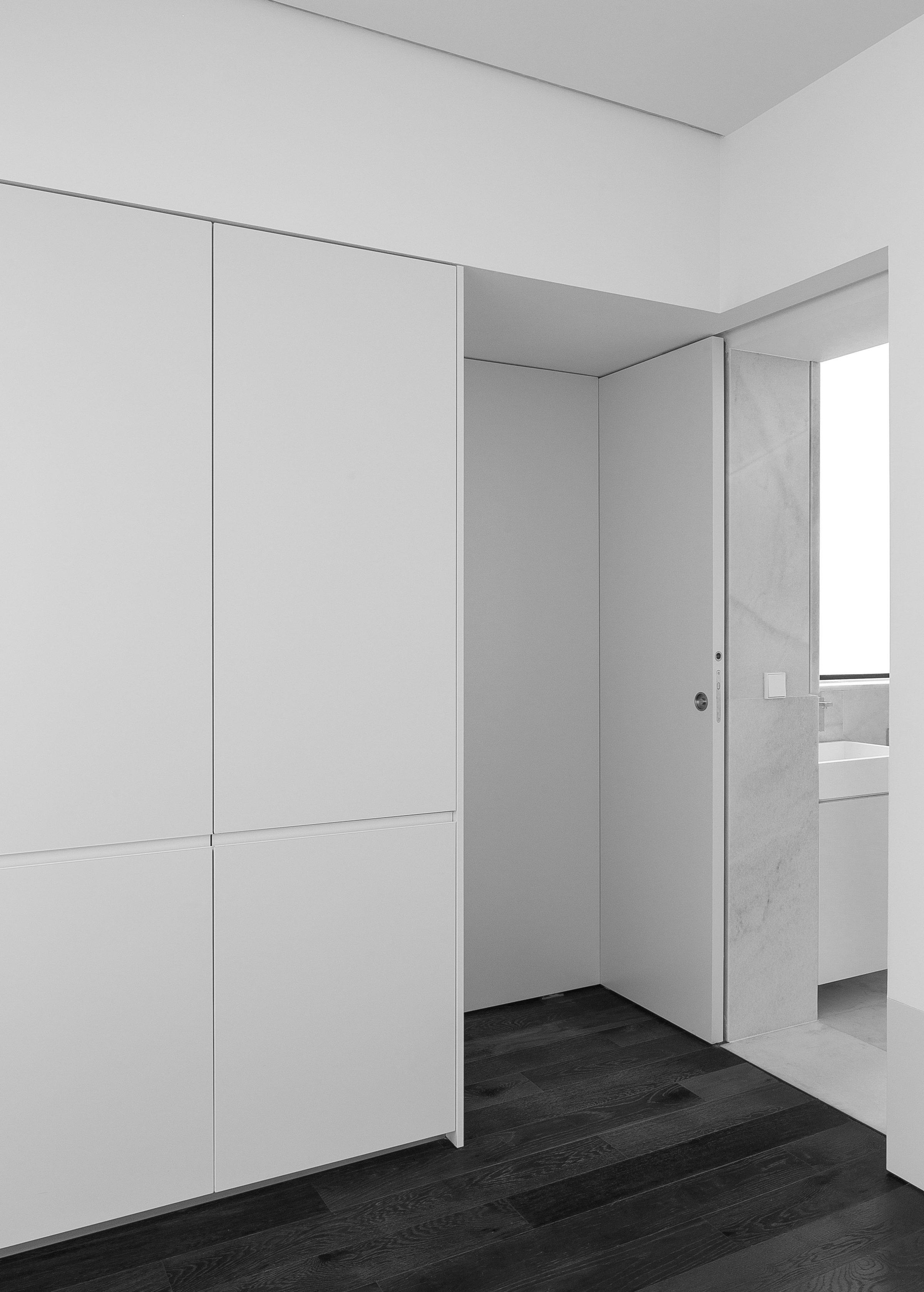
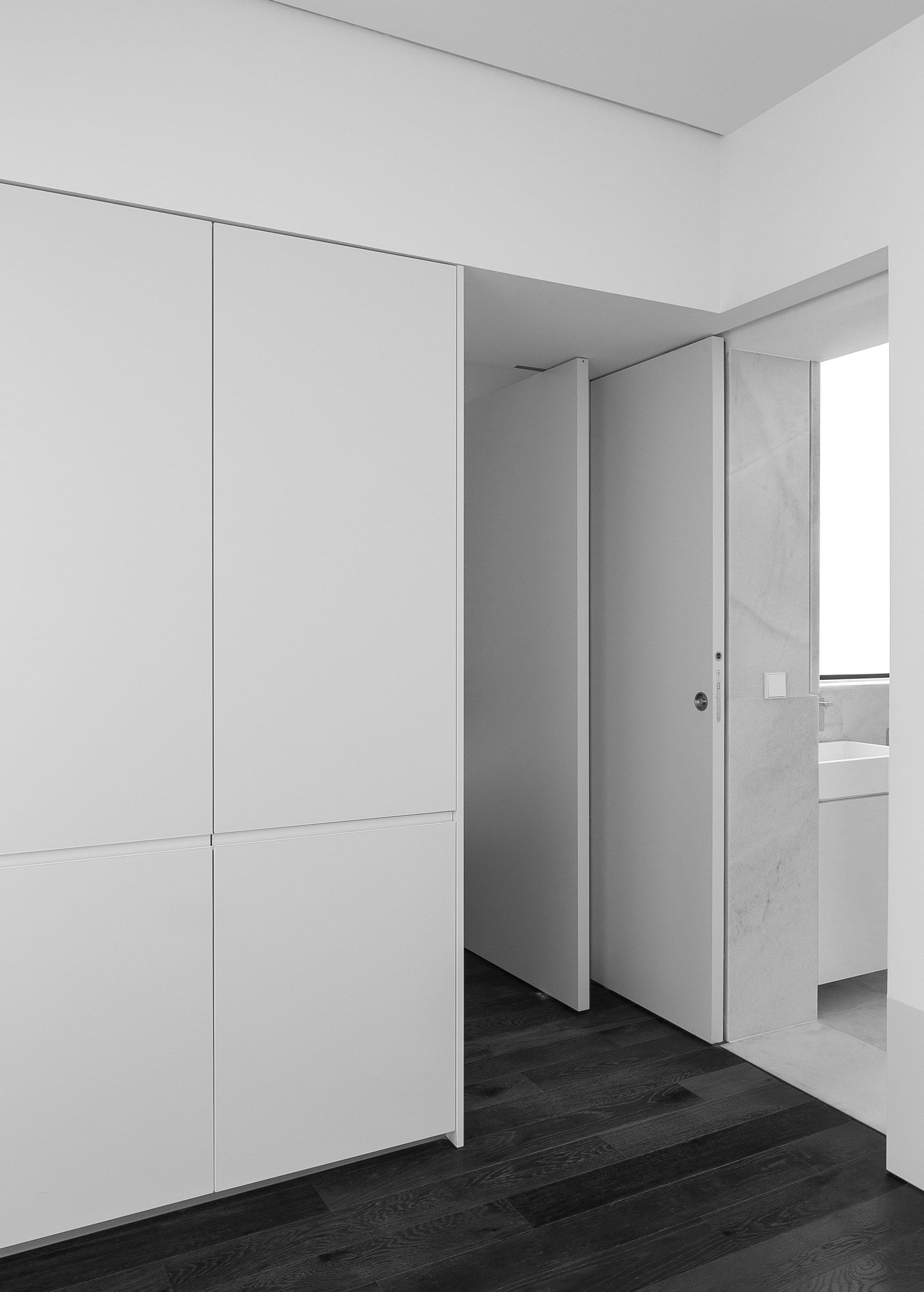
Every element is integrated into a single composition: installations, the existing structure, artificial light, the fitted furniture, the doors. Nothing is added as a finish; everything is part of the same construction. The cabinets correct the irregular geometry inherited from the old layout, regularising the perimeter of each room and absorbing the depth needed for storage. What reads as a clean wall is, in most cases, a piece of joinery doing the work that a partition used to do.
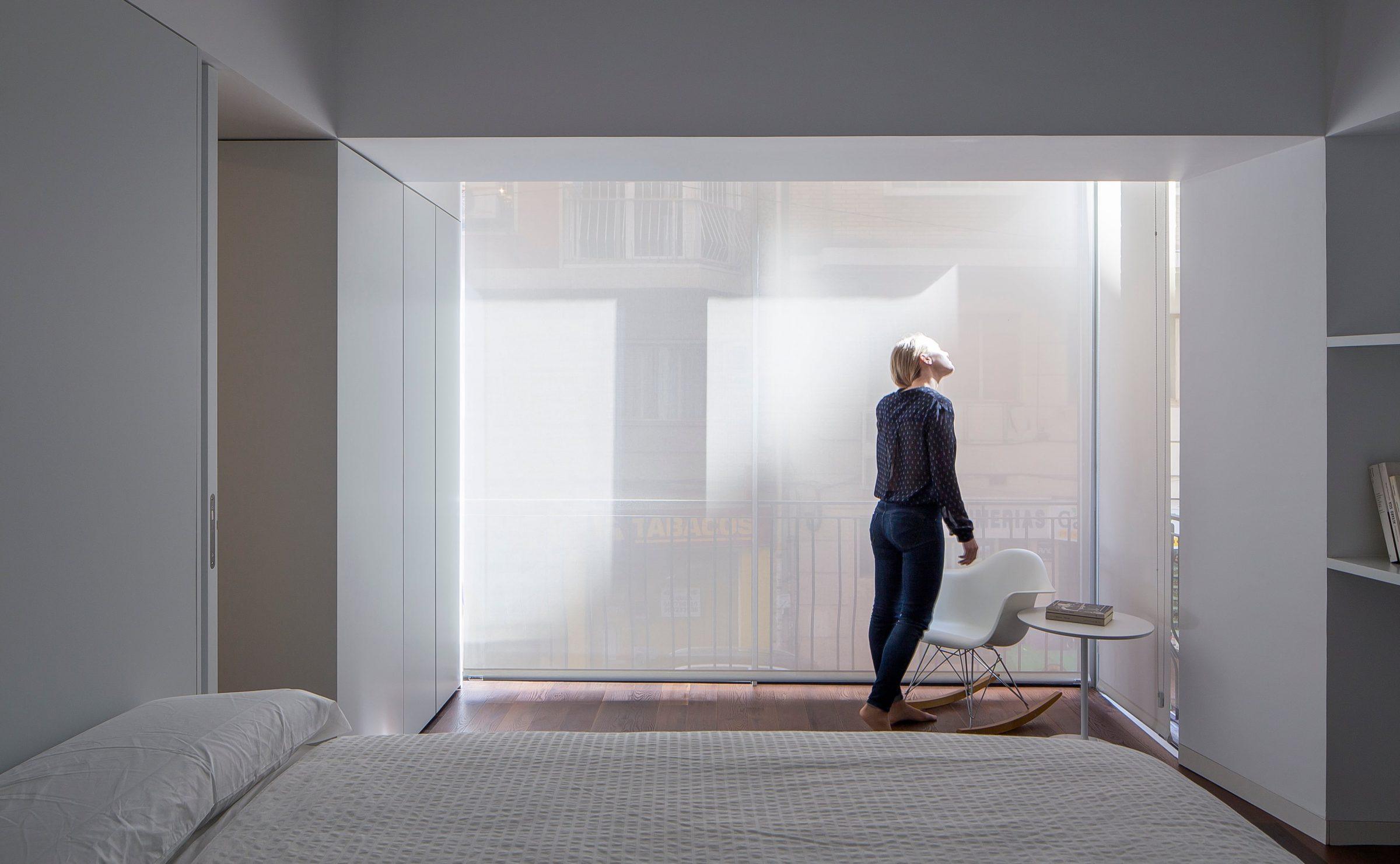
The smoked oak floor sets the contrast that holds the apartment together. Against it, the white painted walls and the white lacquered joinery read as a single bright plane. The palette is reduced on purpose: two values, one warm wood. At dusk the artificial light tints those white planes gold and the room reveals a second character, quieter and warmer than the daylit one.
More on how the studio approaches work of this kind:
Commissioning a private house with Balzar Architects