Moraleja CH40 House
La Moraleja
Residential
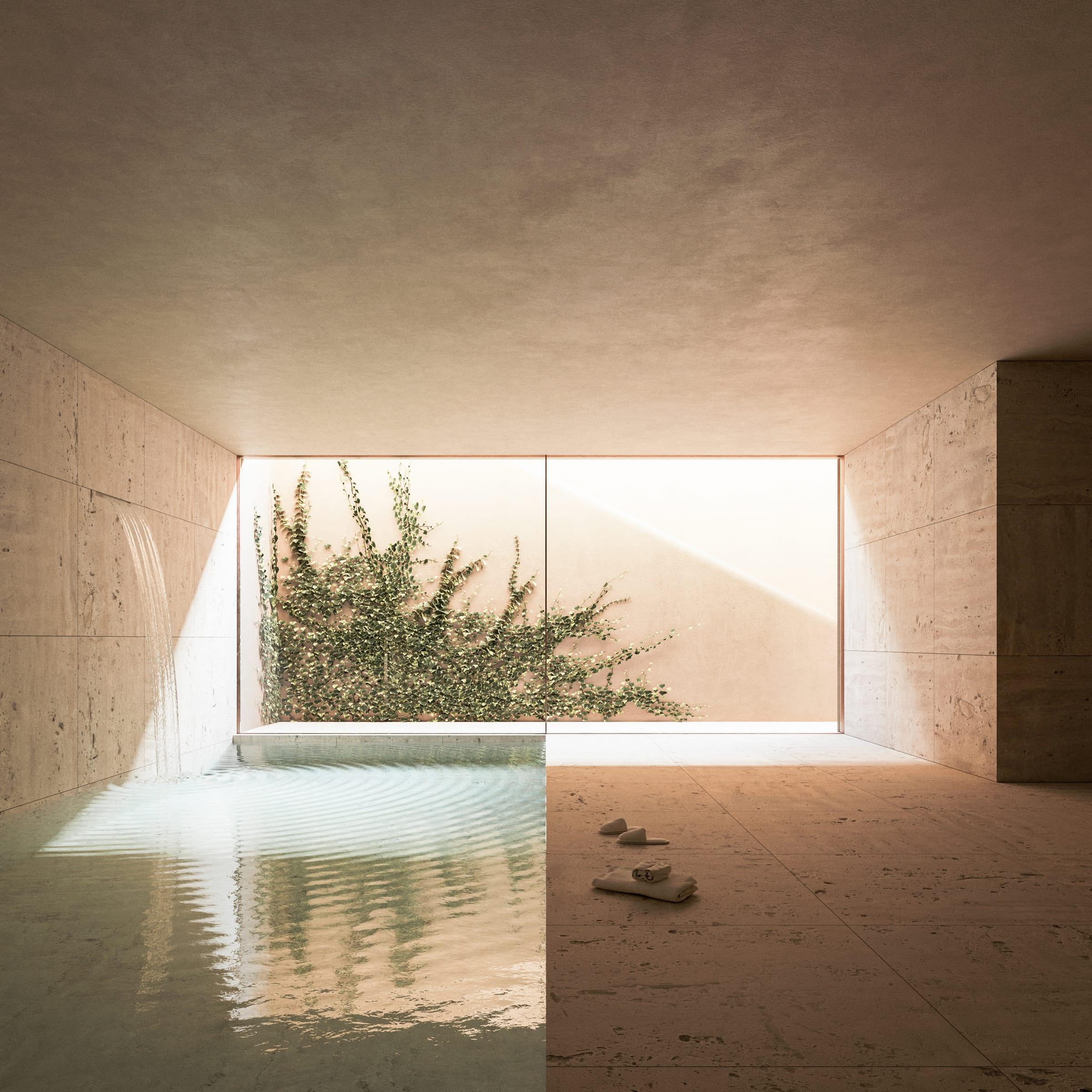
The plot in La Moraleja arrives already complete: a dense stand of mature trees that the house is built to serve rather than to displace. The architecture begins by withdrawing. Pale, continuous surfaces within are calibrated to recede before the light the trees let fall.
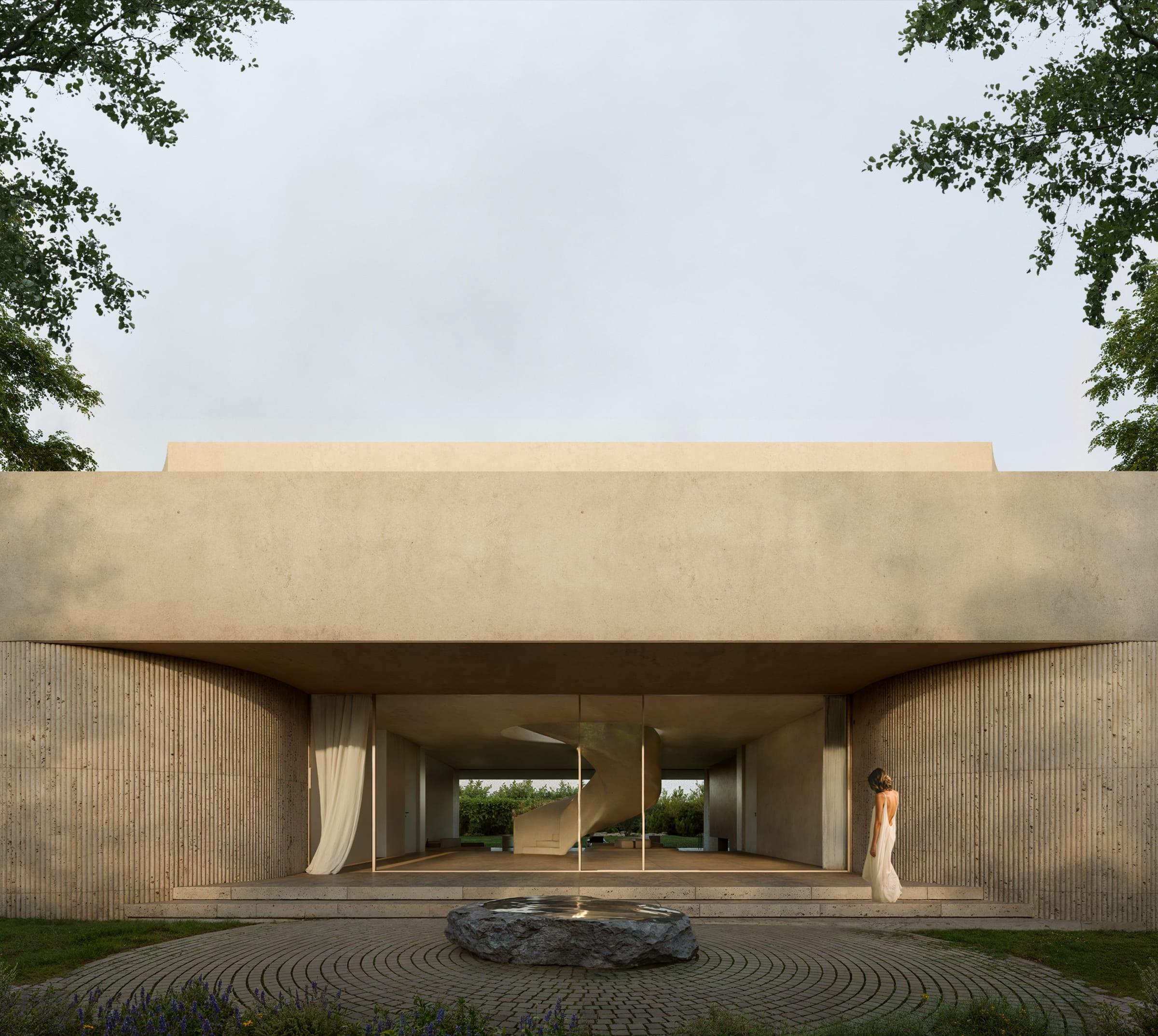
The shape of the house is not invented; it is derived. The building regulations of La Moraleja — their setbacks, heights and limits — are worked until they yield a single low volume set transverse to the plot. Rather than close that volume, the project cuts a deep opening through its centre: a recessed threshold that crosses the full depth of the house and frames the garden to the south. The entrance is read through this void before the house is entered. The solid masses to either side hold the private rooms; the opening between them holds the shared life of the house and its relation to the trees.
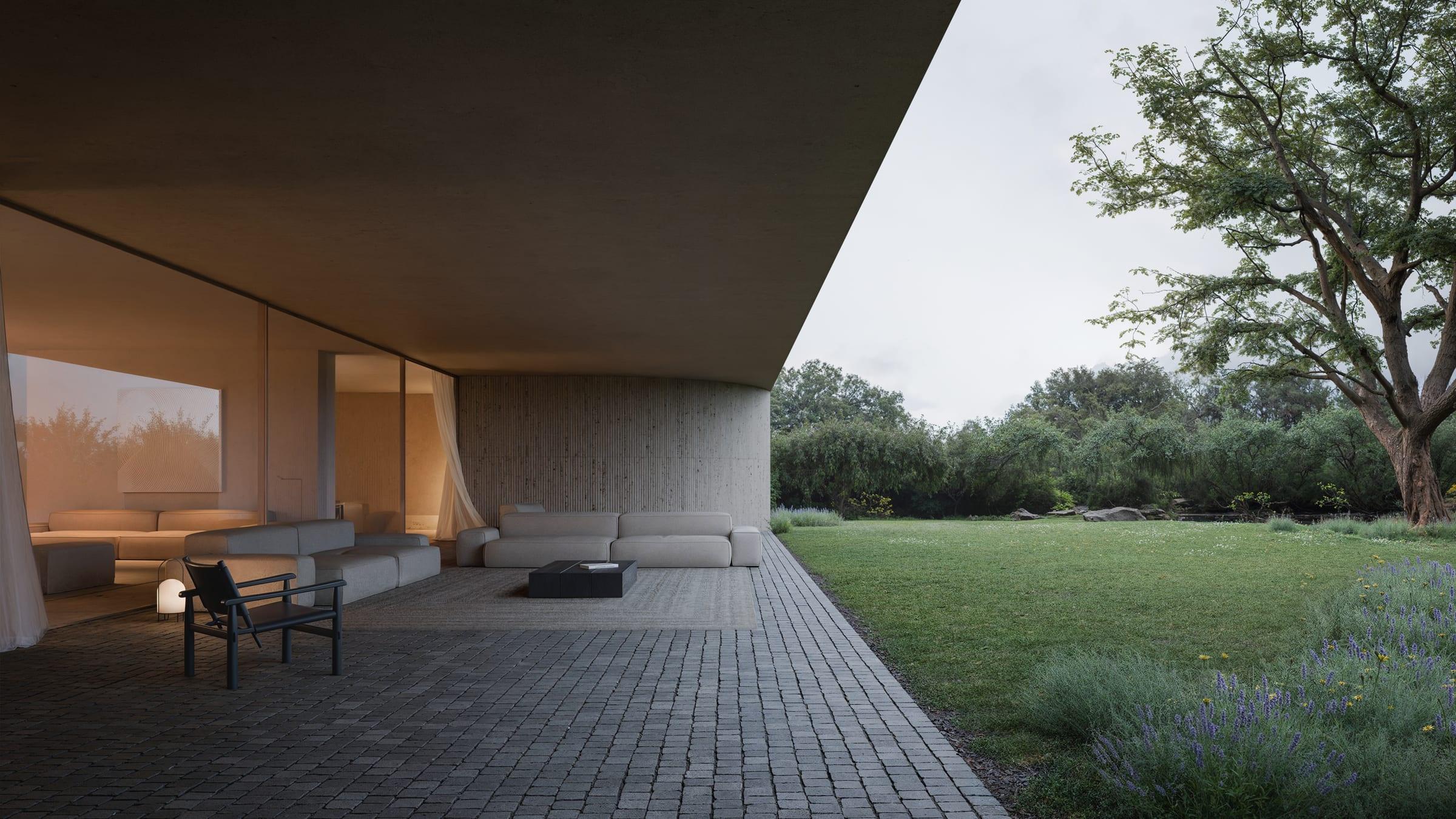
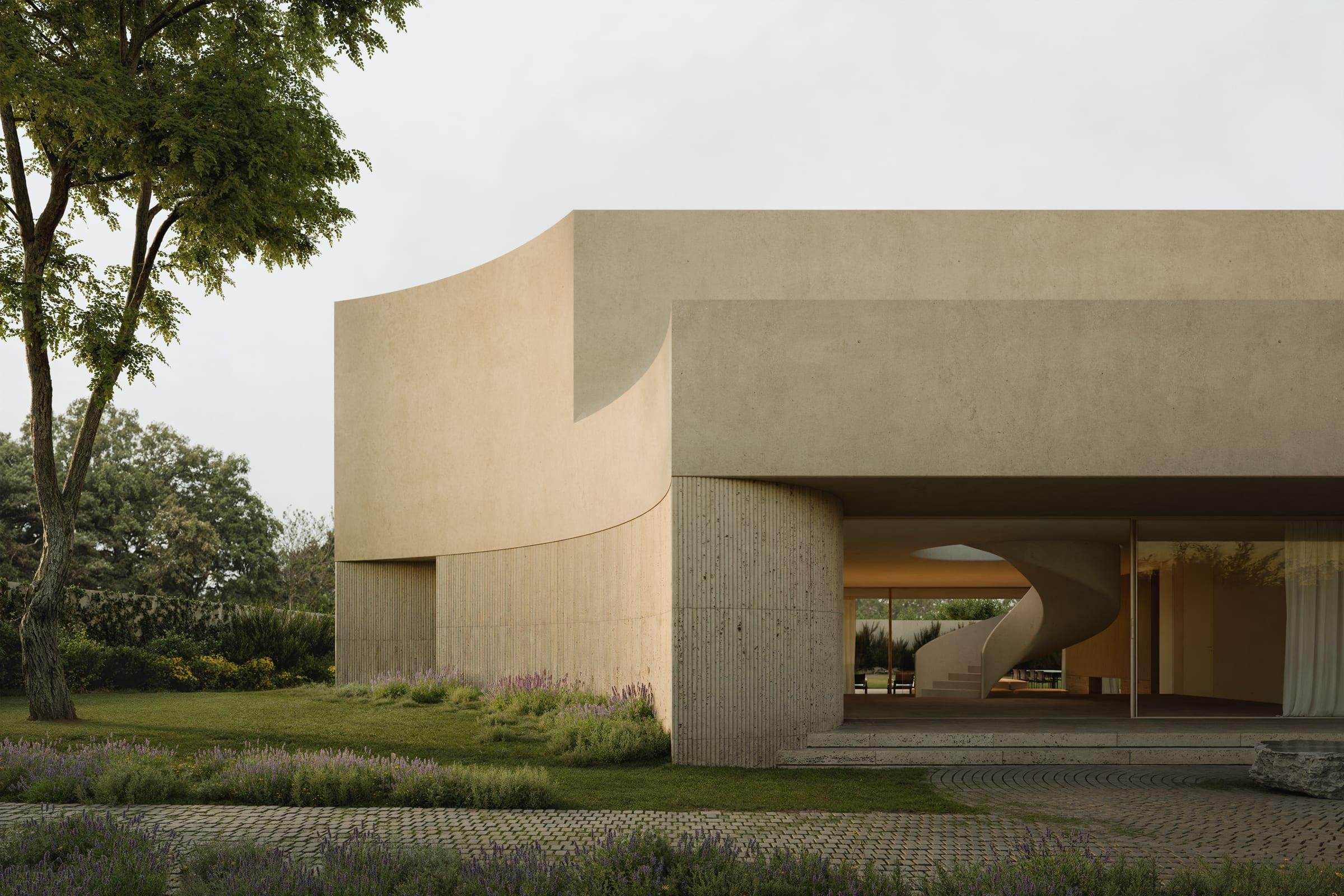
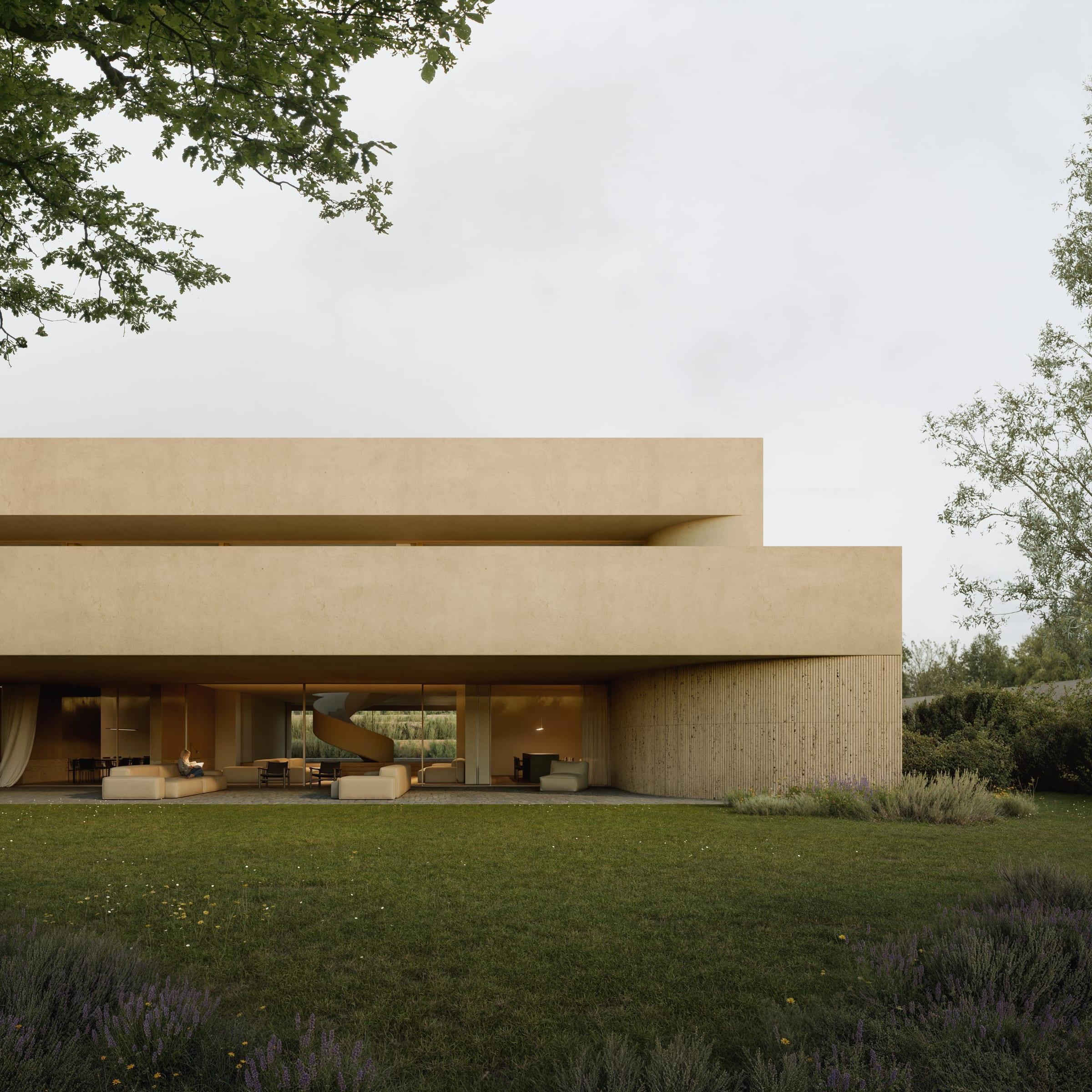
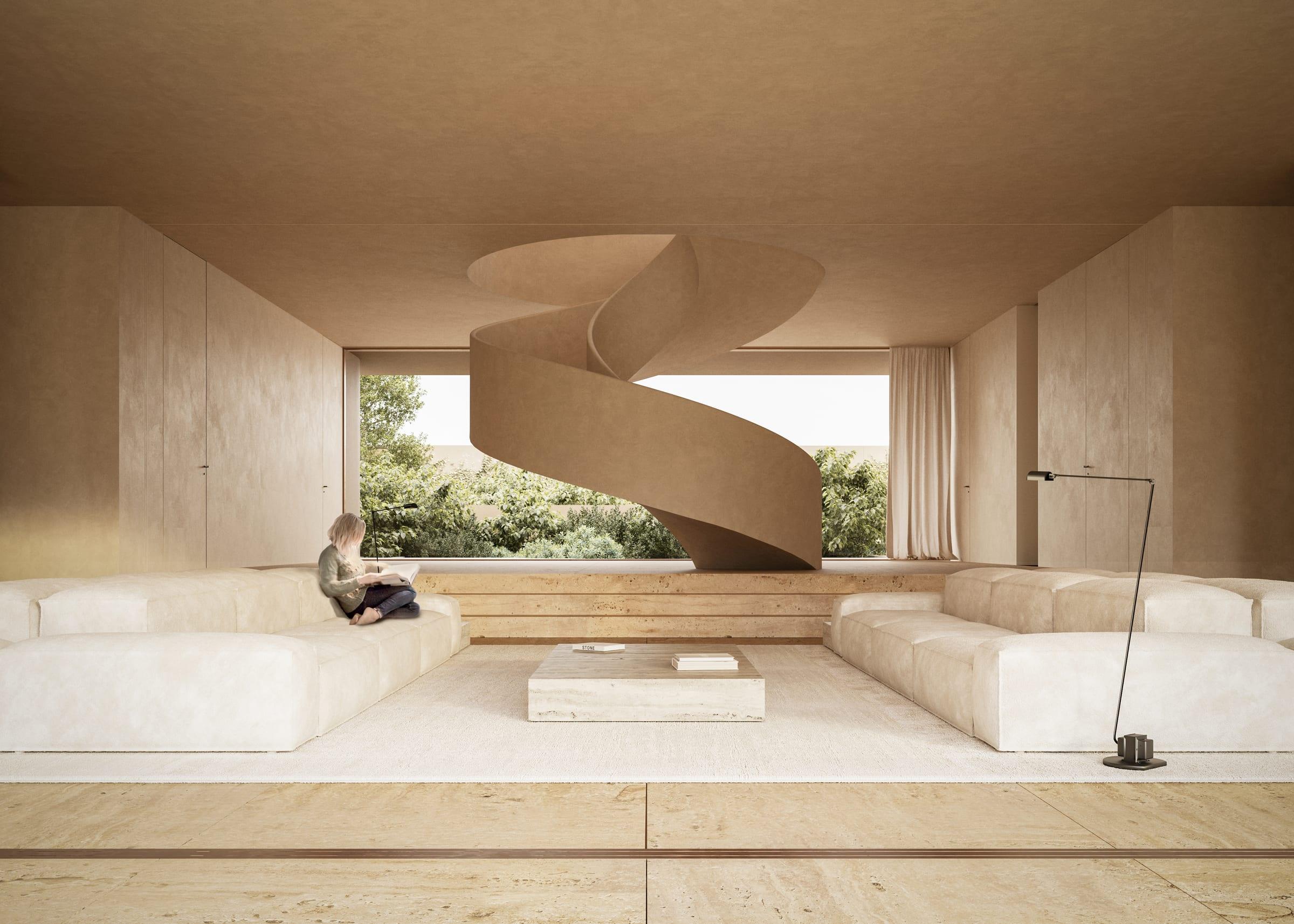
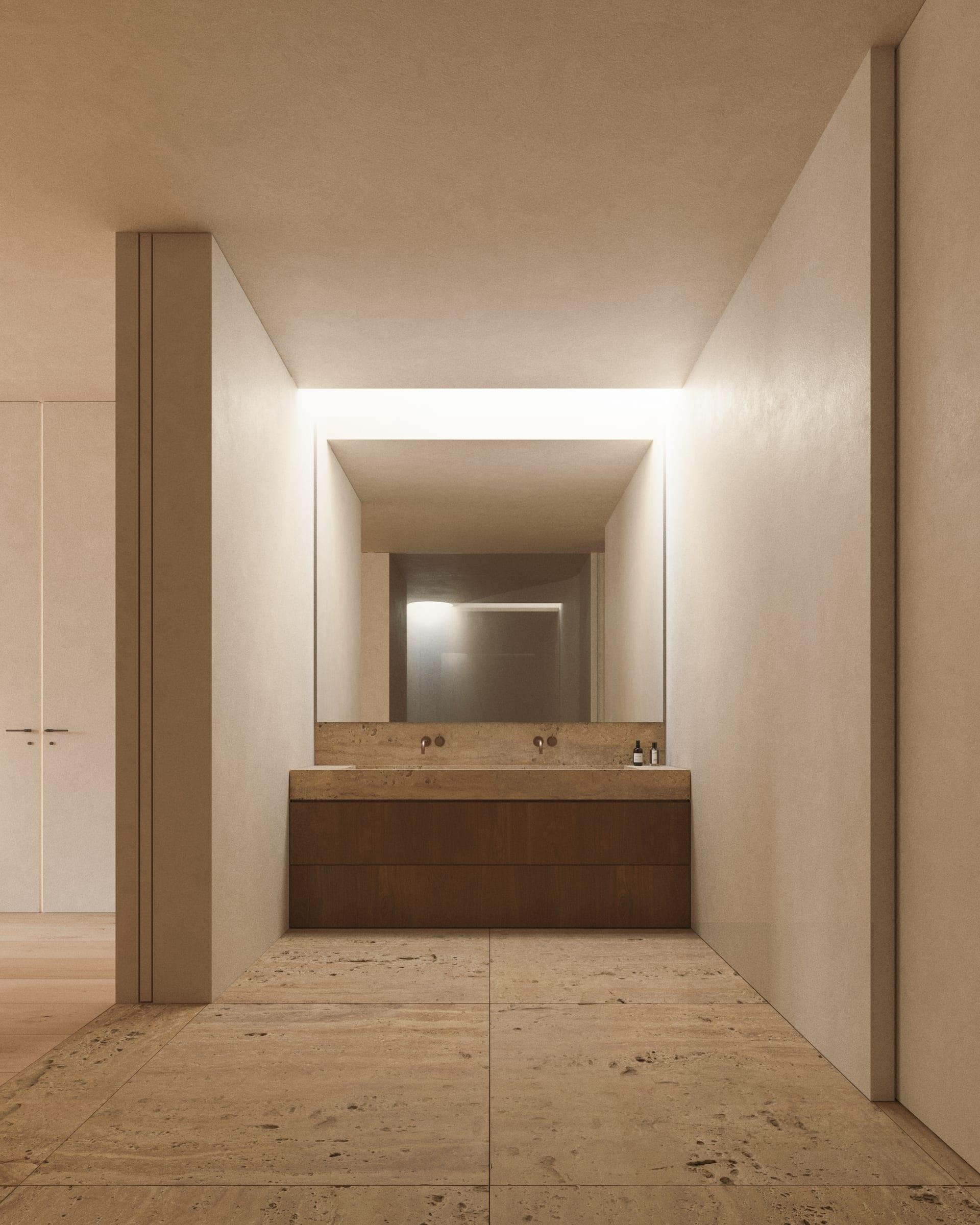
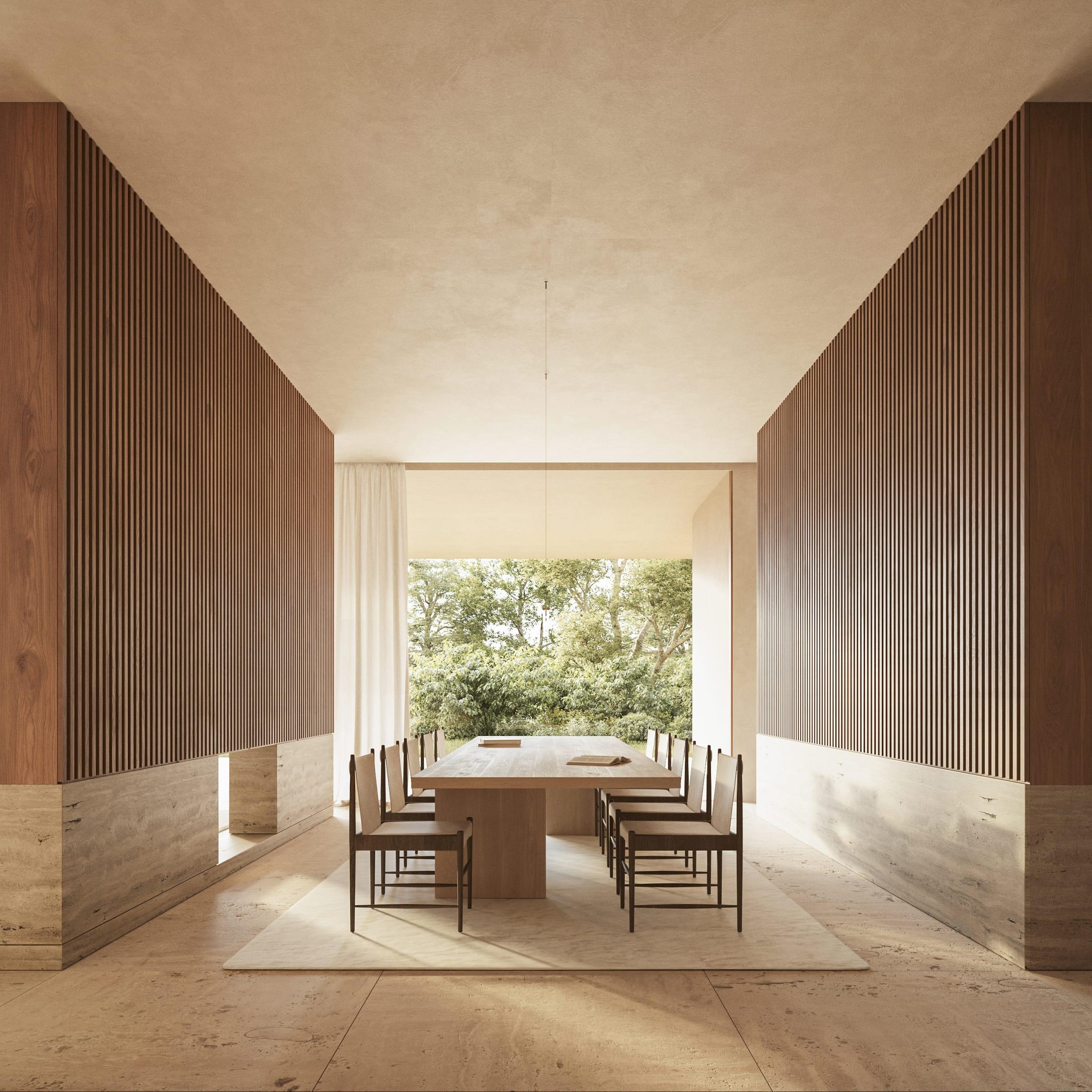
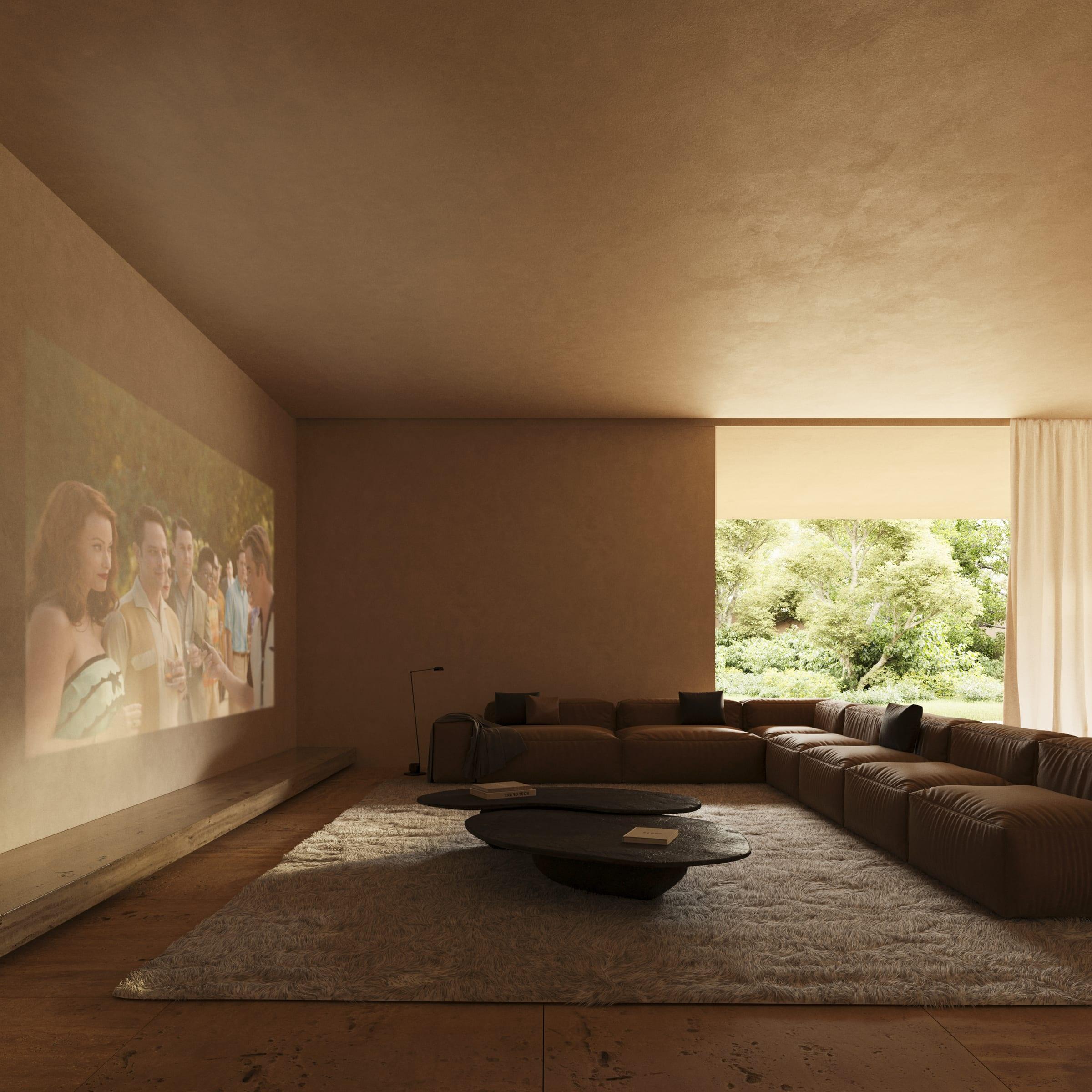
The principal space occupies the centre of the house, set a little below the entrance and open on both faces to the garden. A single curved stair turns within it, the one free gesture in an otherwise orthogonal plan, present as a form to move around more than a route to climb. Travertine, lime render and pale timber hold the interior in one quiet register. Nothing on the surfaces asks to be looked at, so the gaze passes through the house, from one garden to the other, without resistance.
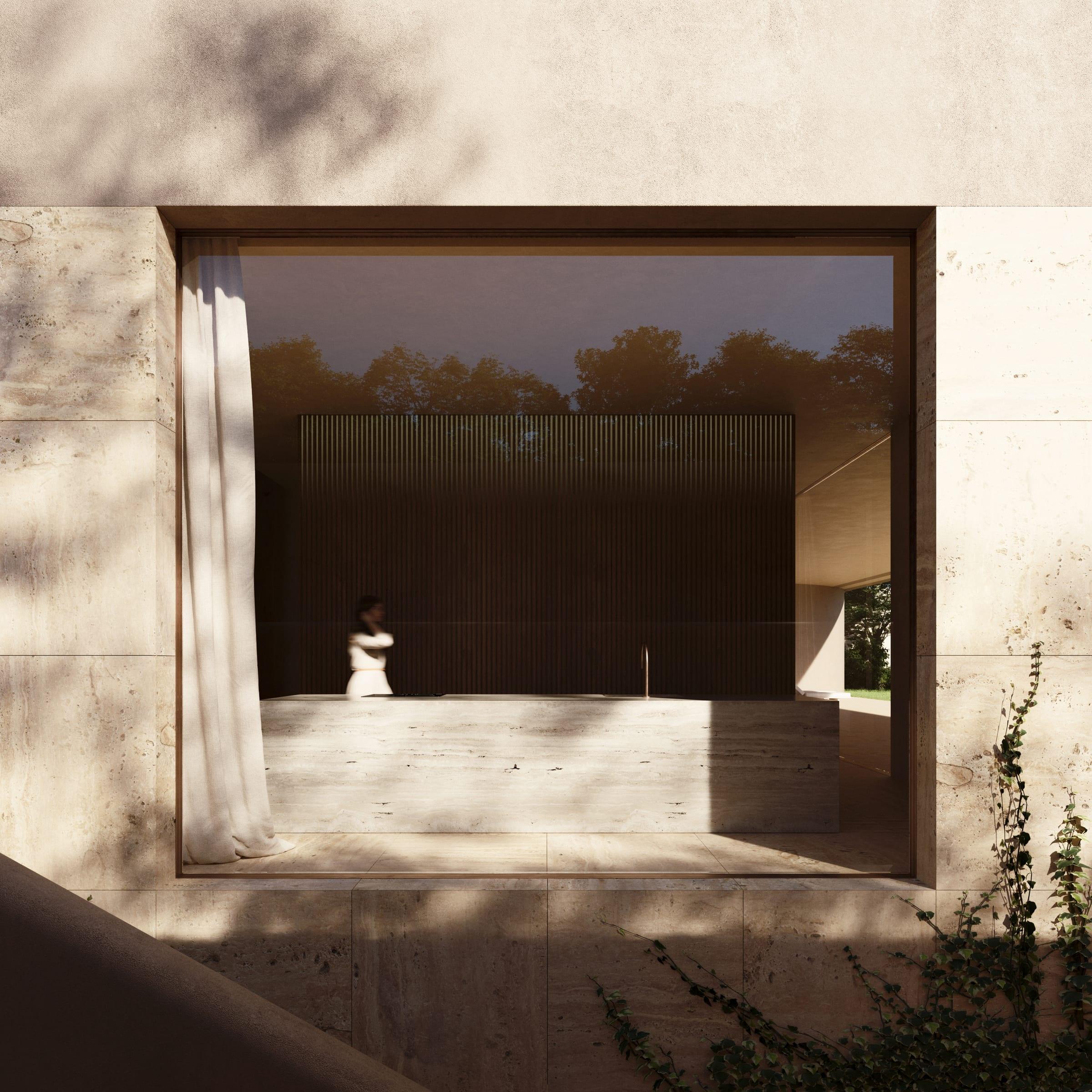
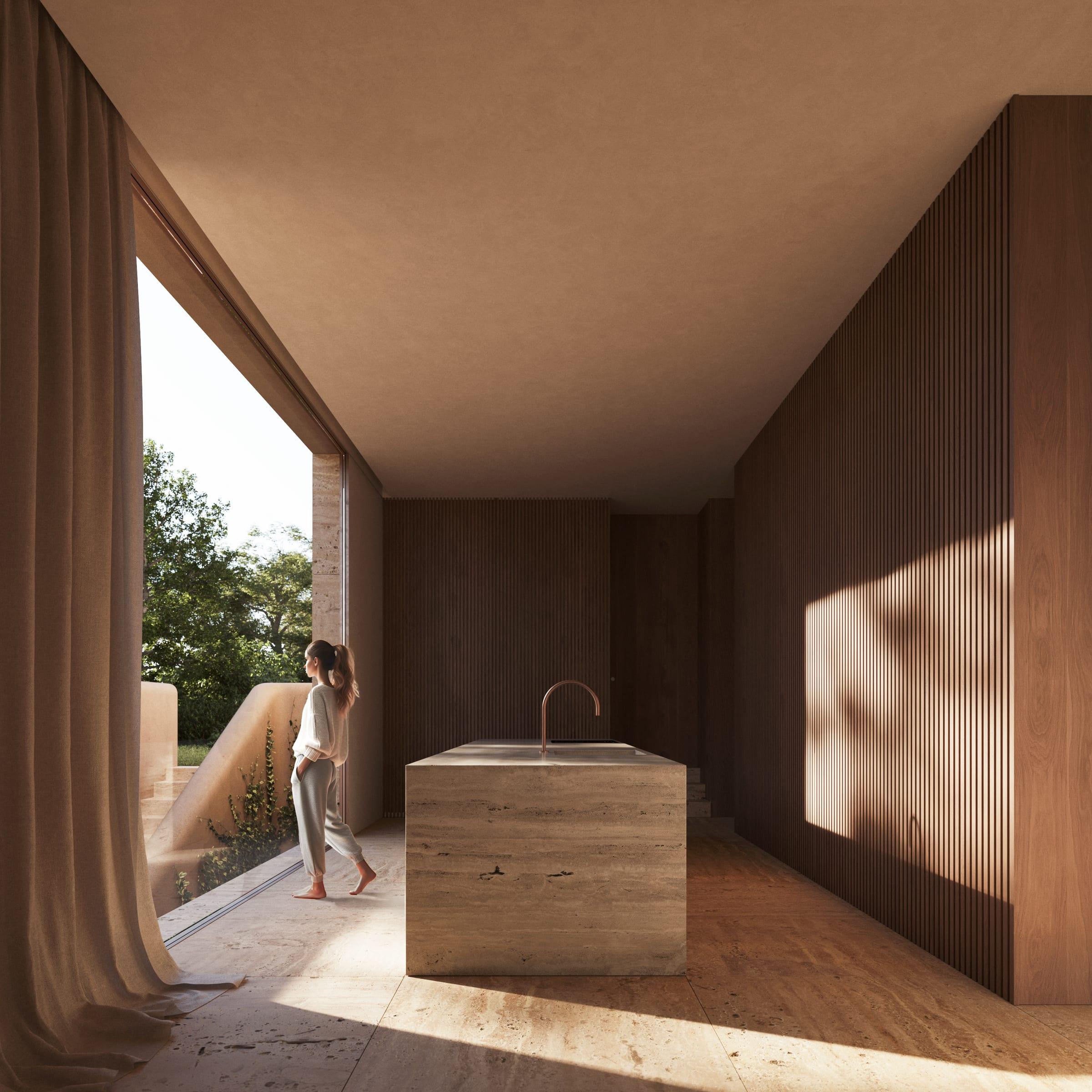
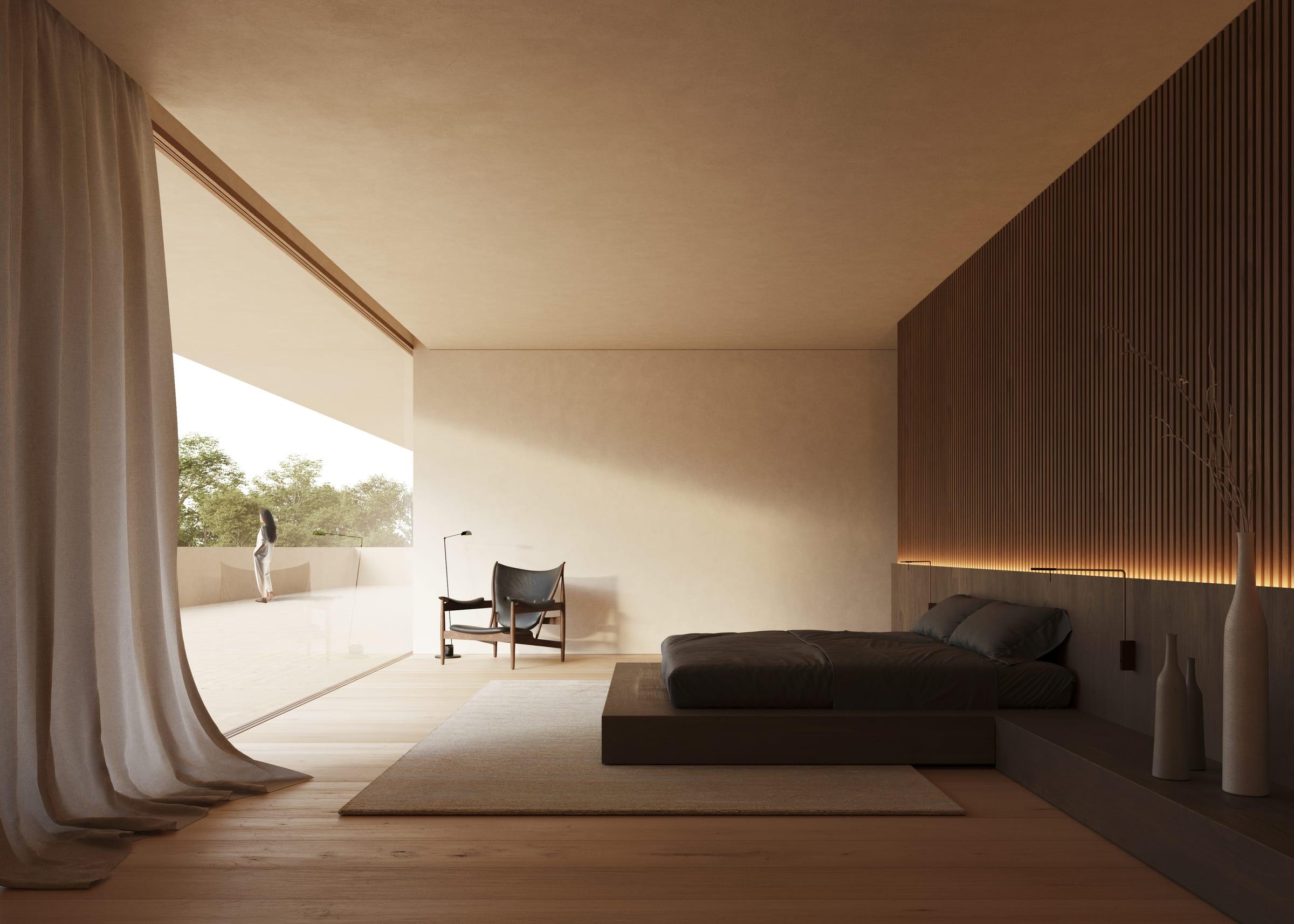
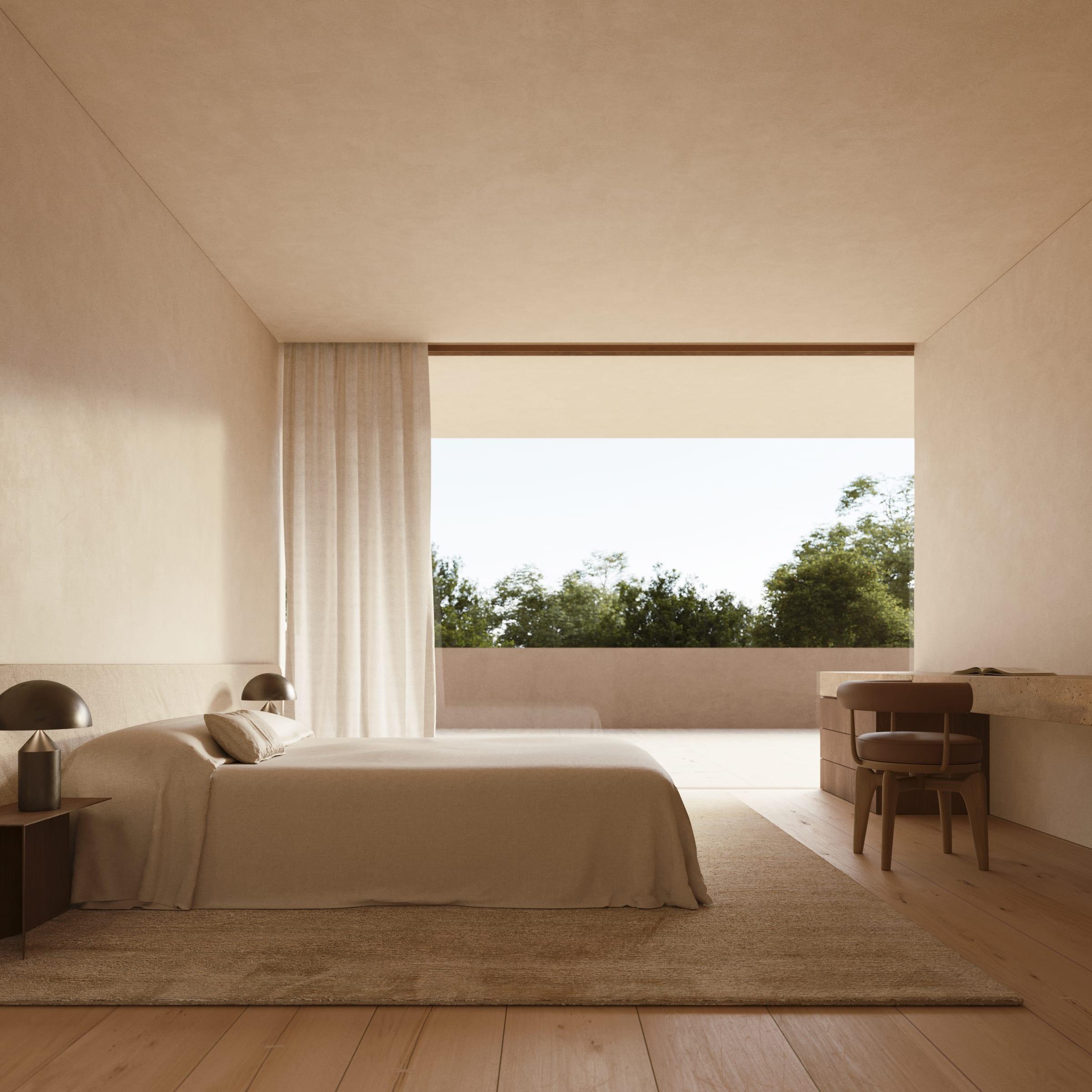
The orientation of the house is decided by the vegetation. The principal glazing faces south into the densest part of the canopy, and the foliage filters the light before it reaches the rooms, changing its quality through the day and the year. The trees do the work a screen or a system would otherwise perform. Bedrooms and service spaces are held within the solid flanks; the living spaces, the stair and the pool are given to the green. The house is built so that the landscape, and not the architecture, is the first and the last thing seen from within.
More on how the studio approaches work of this kind:
Commissioning a private house with Balzar Architects