Round House
Kuwait
On going
Residential
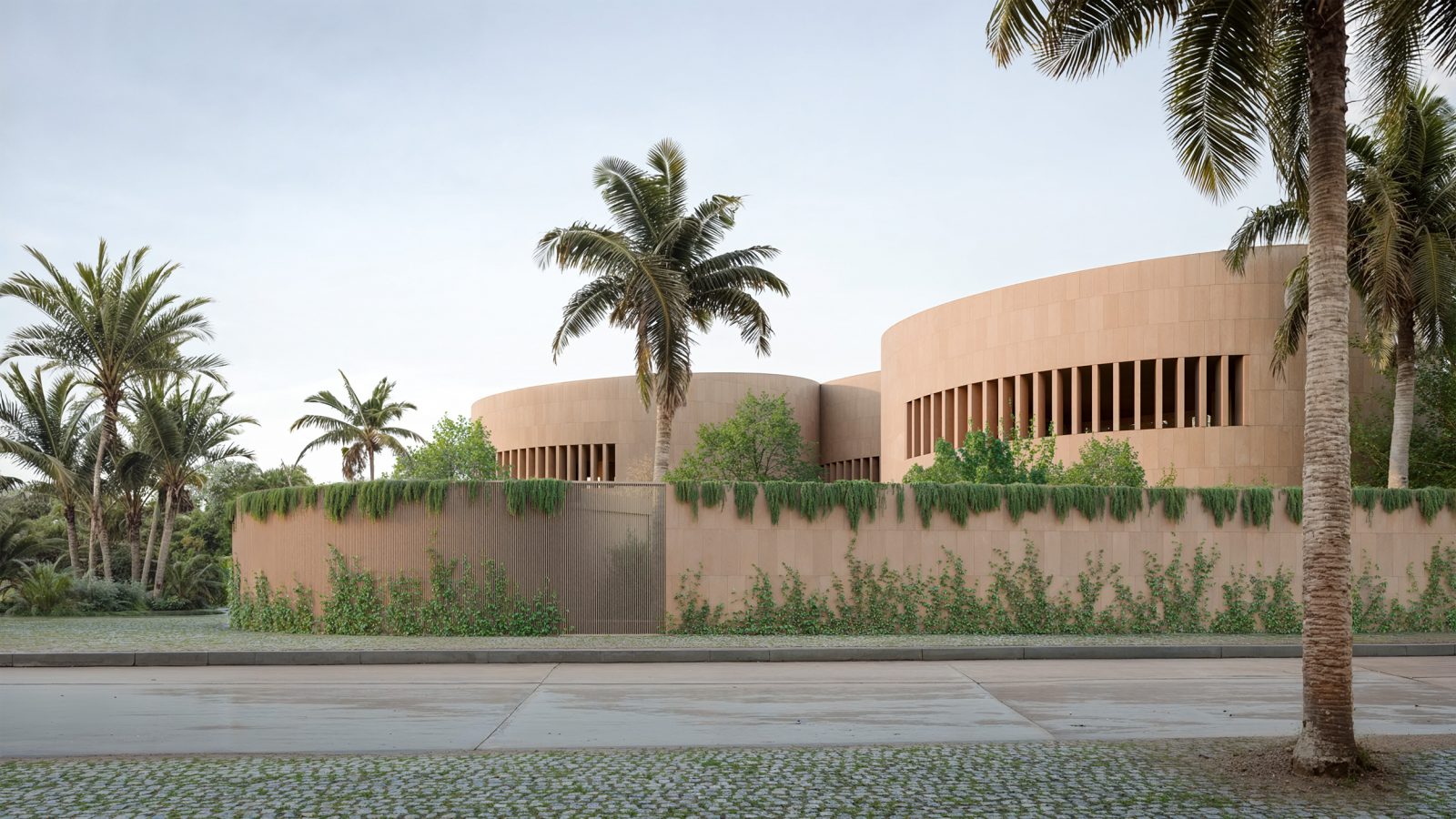
The plot is in Messilah, on the coast east of Kuwait City. It is flat, open on three sides to the street, with sea views from the upper level to the east. There is no topography to respond to, no existing vegetation, no natural enclosure. The house provides all of this for itself.
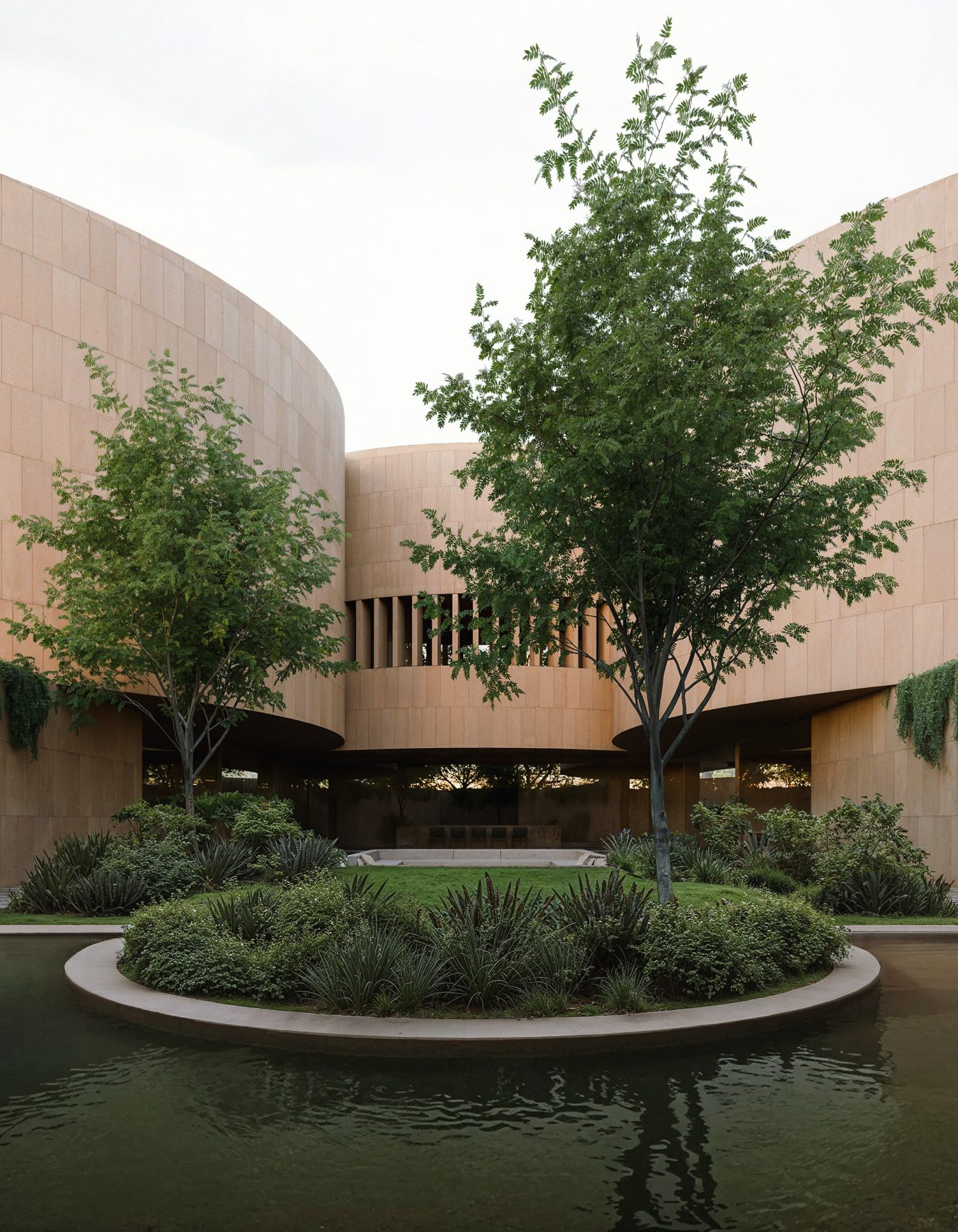
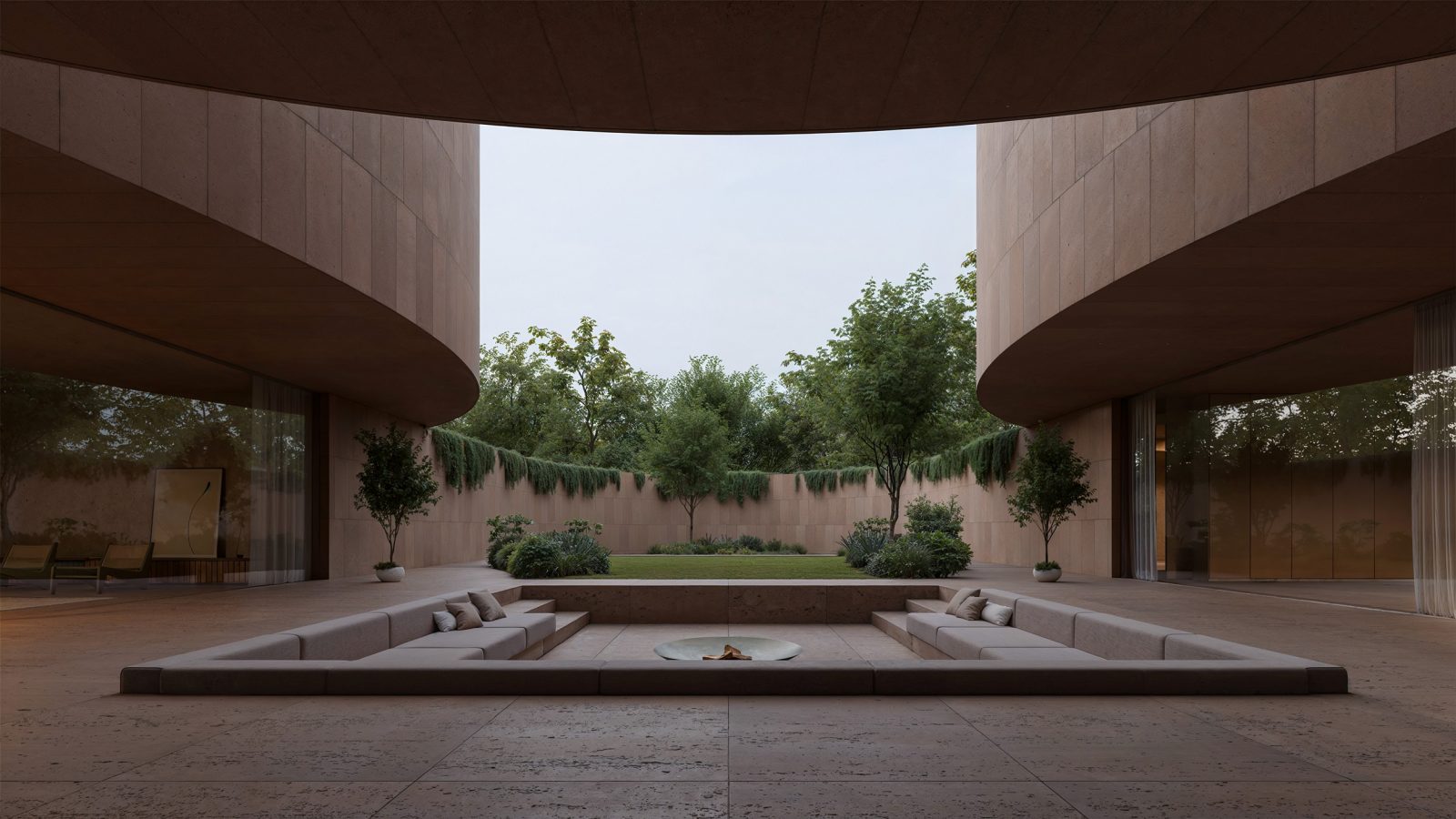
Three circular volumes are arranged around a central courtyard garden. The volumes touch at their perimeters, connecting at threshold points that become the transitions between one zone of the house and the next. The courtyard sits at the centre of the composition, surrounded on all sides by the principal rooms. It is not a garden attached to the house. It is the spatial nucleus from which the house is organised.
The courtyard is not a garden attached to the house. It is the spatial nucleus from which the house is organised.
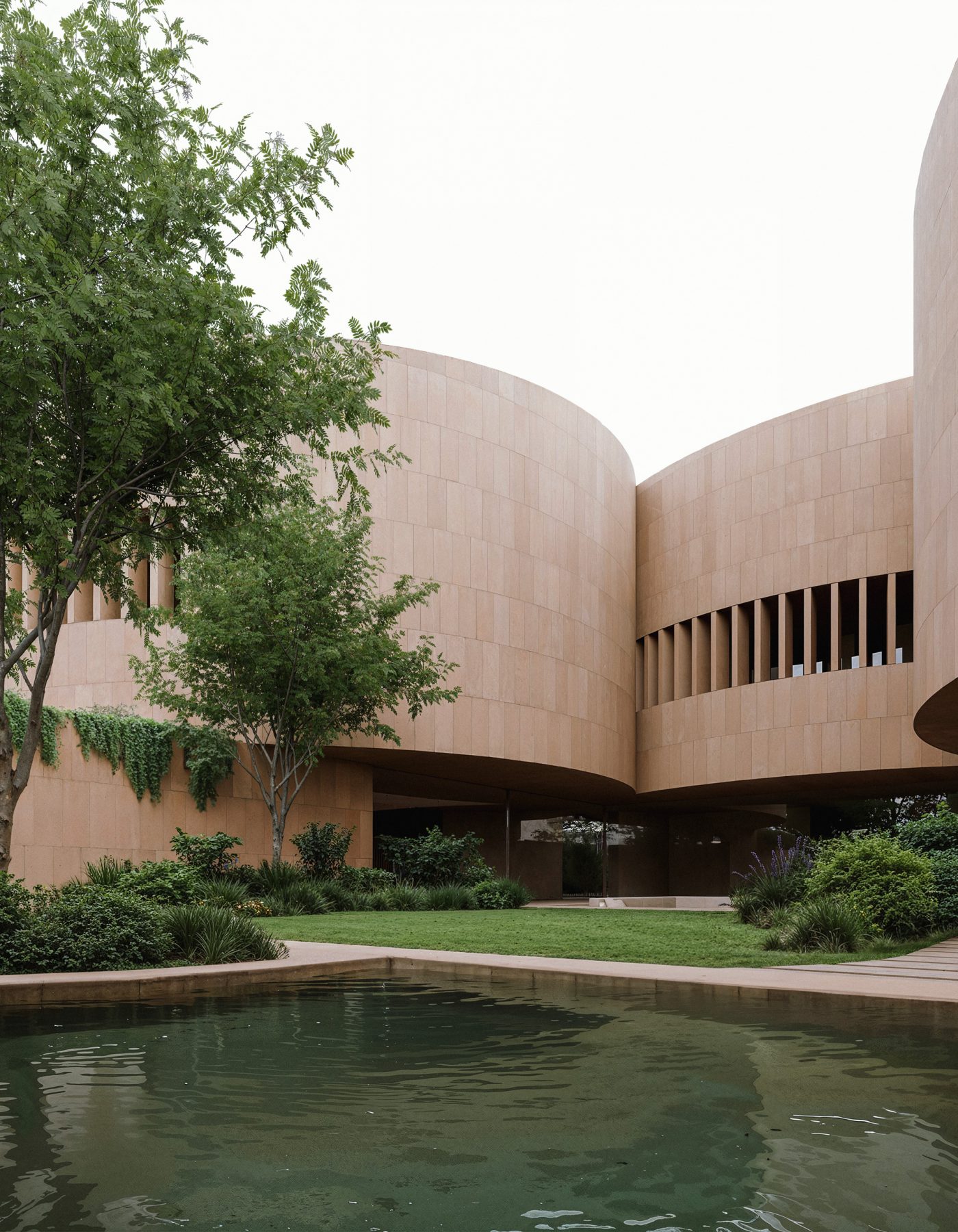
Each circular volume contains a distinct cluster of programme. The family living spaces — kitchen, dining, informal reception — occupy the central and south volumes, opening directly onto the courtyard through large openings that dissolve the boundary between interior and garden. The formal reception and office occupy the east volume, with its own garden zone and separate entry for guests. The bedroom wing is organised vertically: the ground floor holds a guest suite; the upper floor distributes three suite clusters — master, son, daughters — each as an independent circular unit with its own terrace and garden.
The basement level inverts the logic of the upper floors. Here the curved walls give way to orthogonal geometry: the programme is service-oriented — gym, sauna, staff quarters, laundry, machine room, speakeasy — and the construction is straightforward. The formal complexity of the floors above is earned by the efficiency of the floor below.

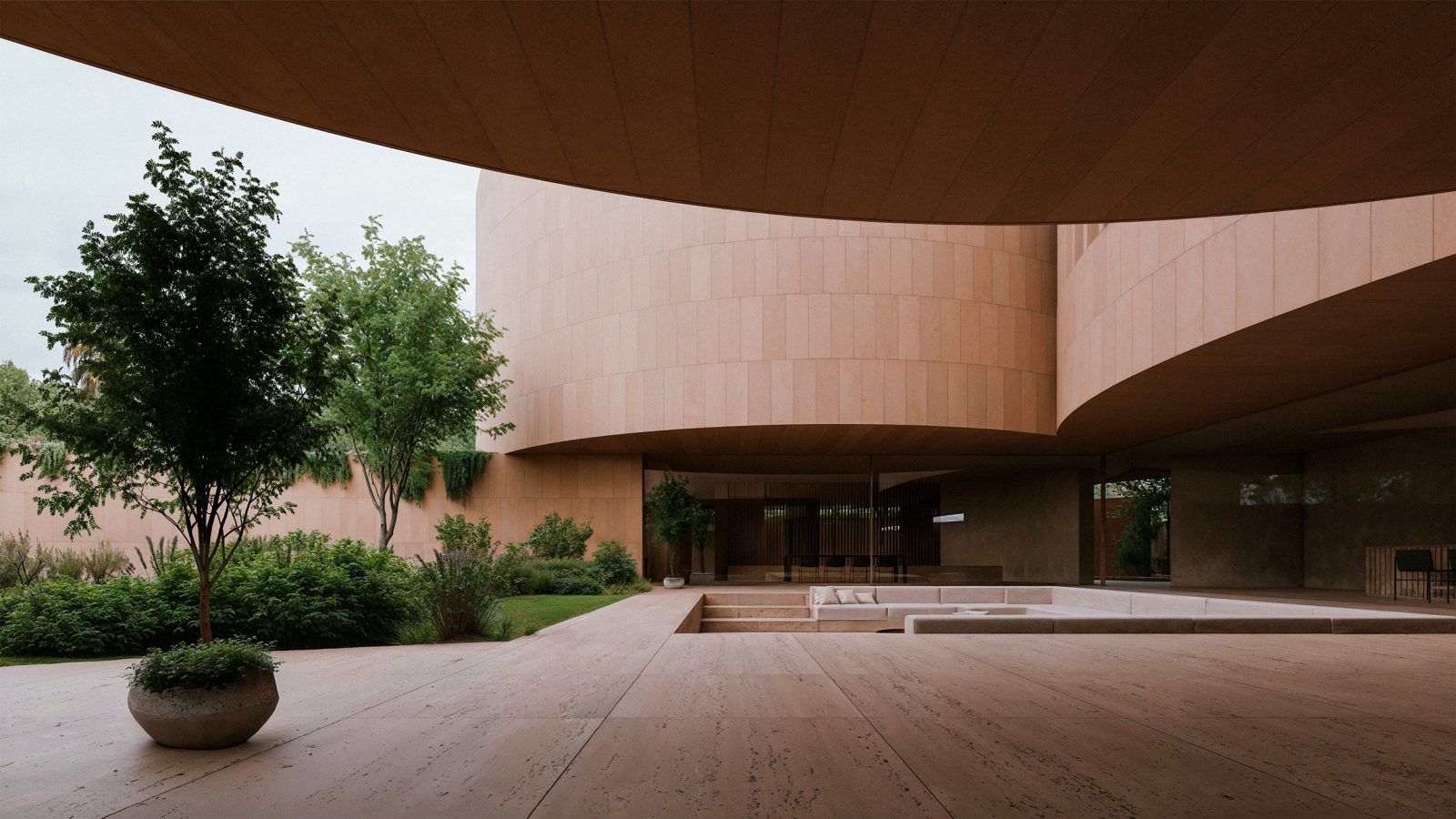
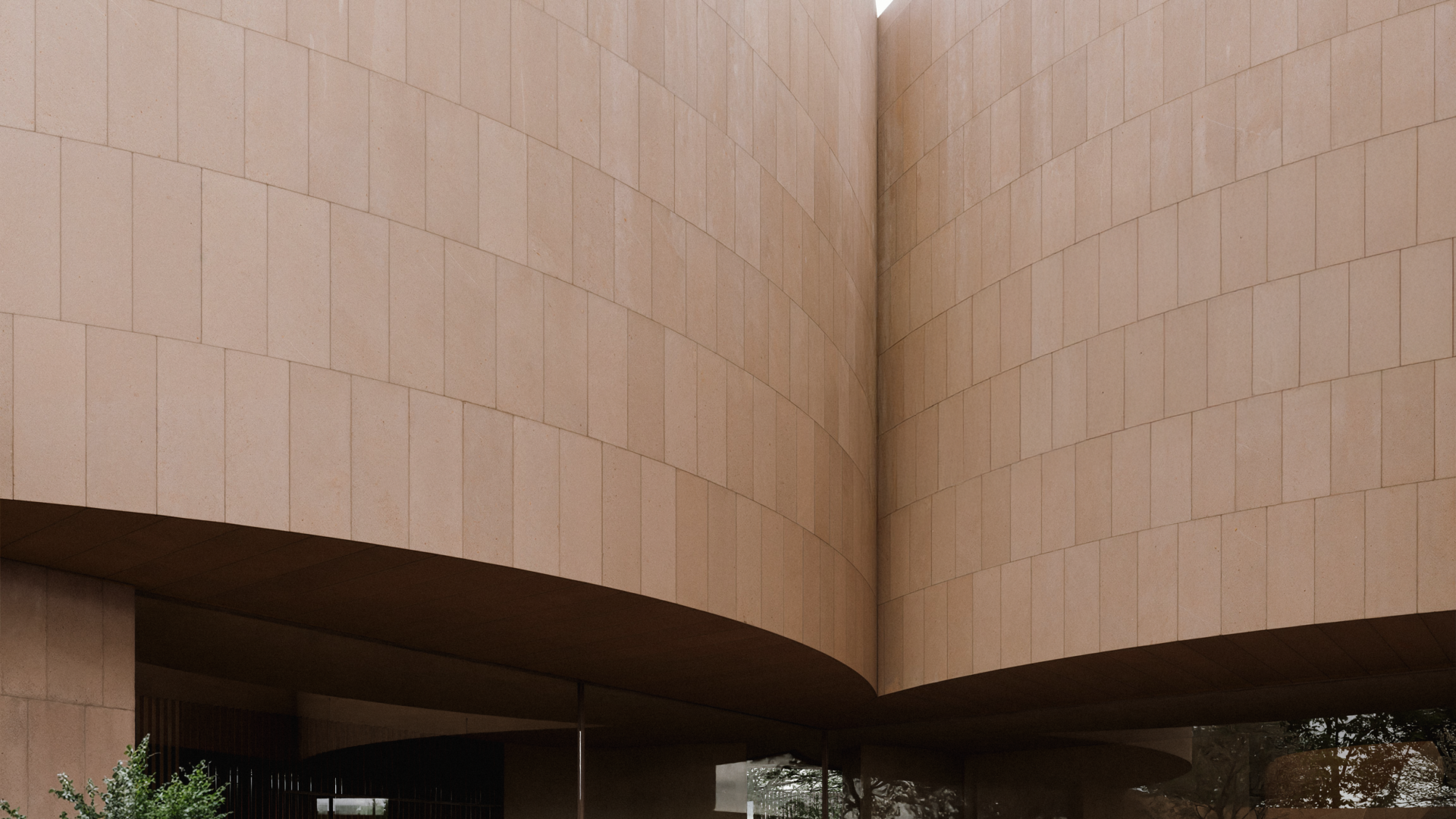
The interior language is consistent across every level. Walls curve continuously without corners; corridors are vaulted; thresholds are arched. The curved surface is not decorative — it is the spatial logic of the circular plan expressed in section. A room without corners reads as larger than its dimensions; a corridor without a visible end point extends perception beyond what the plan contains.
Lighting is designed for the curvature. Sources are indirect throughout, positioned to graze the wall surfaces and make the curve visible through shadow. The palette is warm and continuous: lime plaster, stone, natural timber, linen. These materials change character as the light moves across them through the day — the house is designed to be inhabited at dusk as much as at noon.
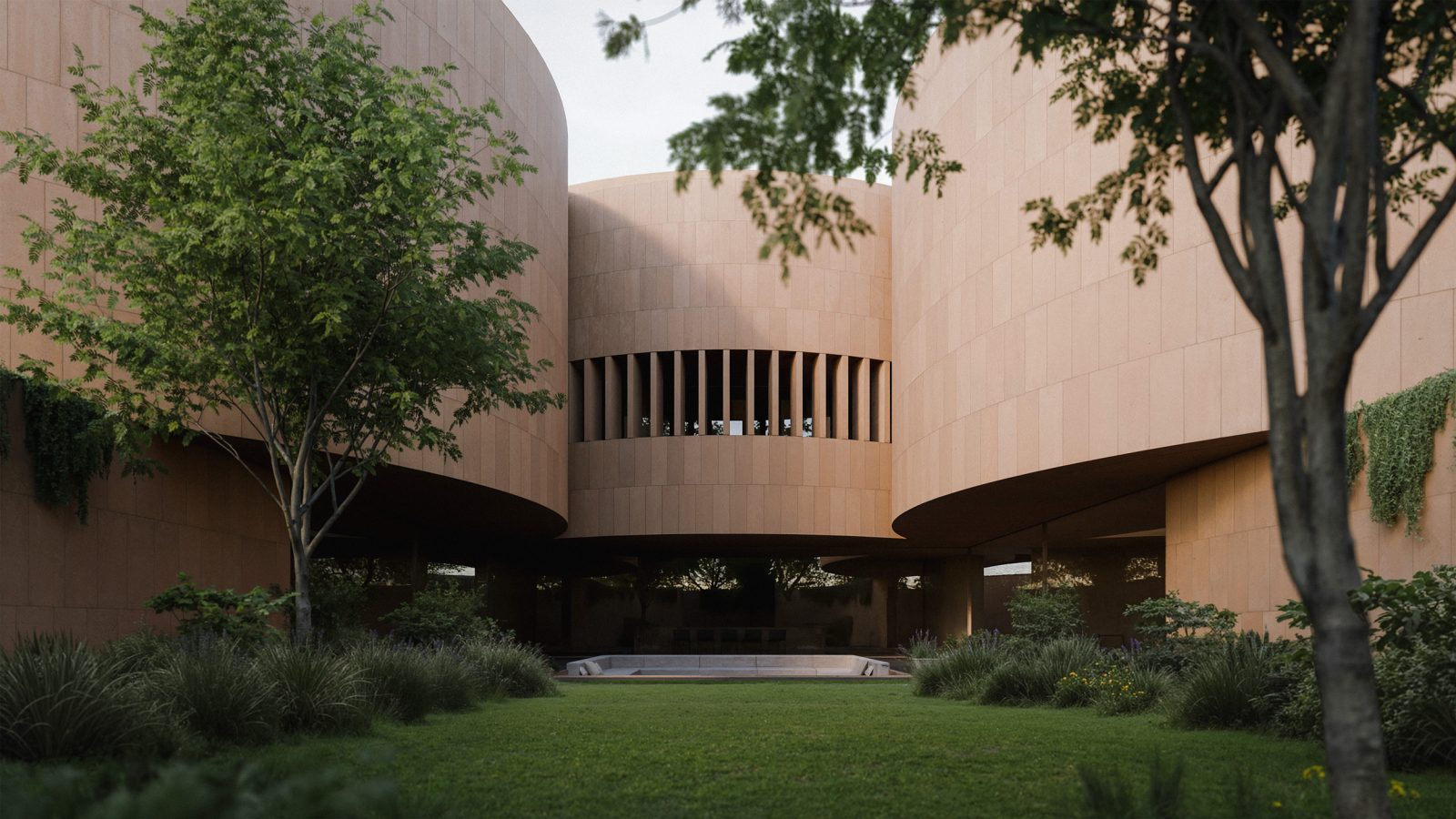
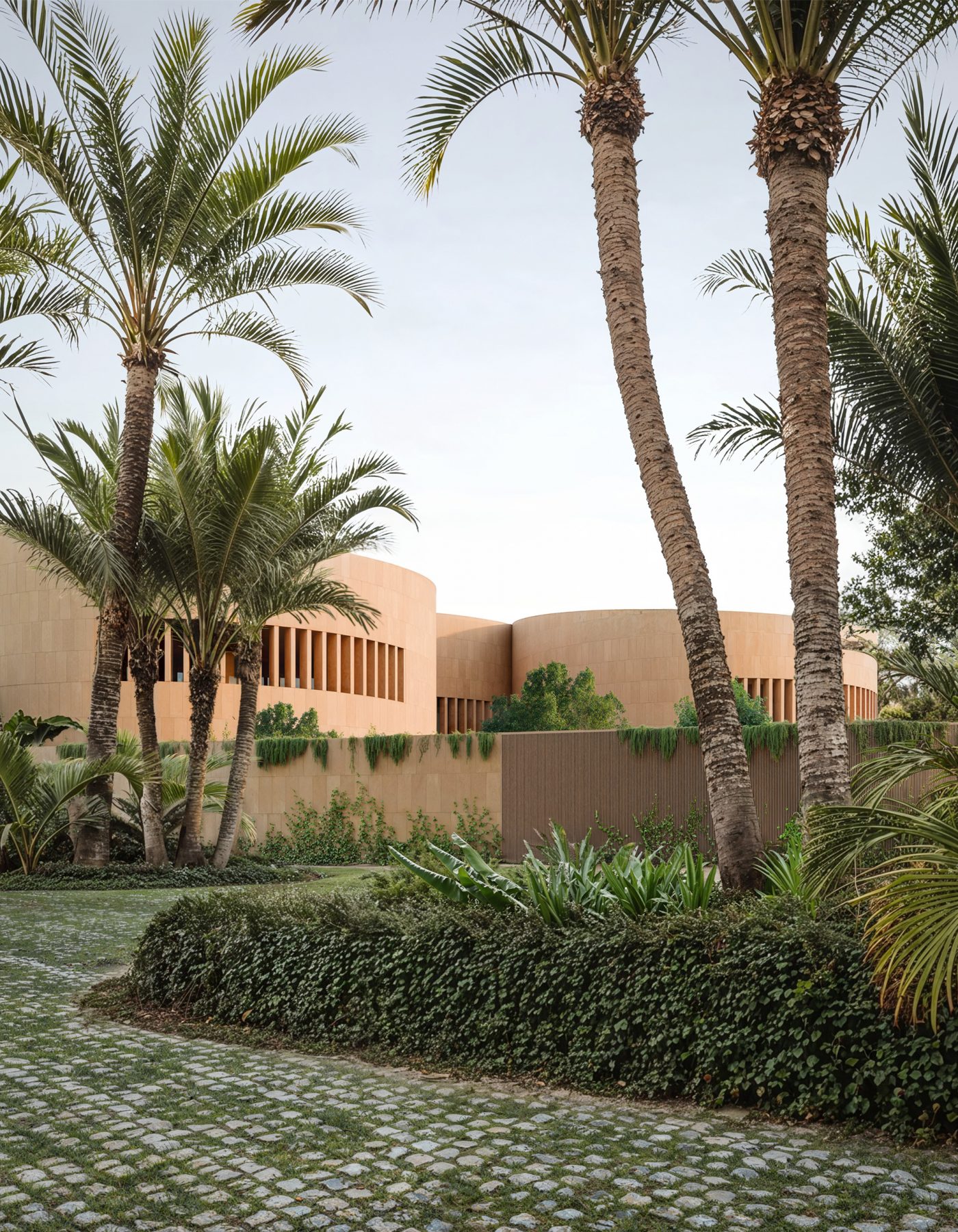
Kuwait’s climate is severe in summer: intense solar radiation, extreme heat, dust winds from the northwest. The circular plan responds to these conditions directly. A circular facade has no fully exposed elevation — no single wall receives the maximum solar load at any given hour. The curvature distributes incident radiation across the surface rather than concentrating it on a flat plane. Deep overhangs and planted balconies on the upper level shade the glazing below during the hottest months.
The central courtyard regulates the microclimate of the interior. Surrounded on all sides, sheltered from wind, planted with trees and a water feature, it produces cooler, more humid air than the exterior at the same hour. The rooms that open onto it benefit directly. The pool at the south end of the ground floor extends into this courtyard zone, reinforcing its role as the thermal and spatial heart of the house.
The sea lies to the east. From the master terrace on the upper floor, the view extends over the roofline of Messilah toward the water. The house is oriented inward by plan. It opens outward only at the top.