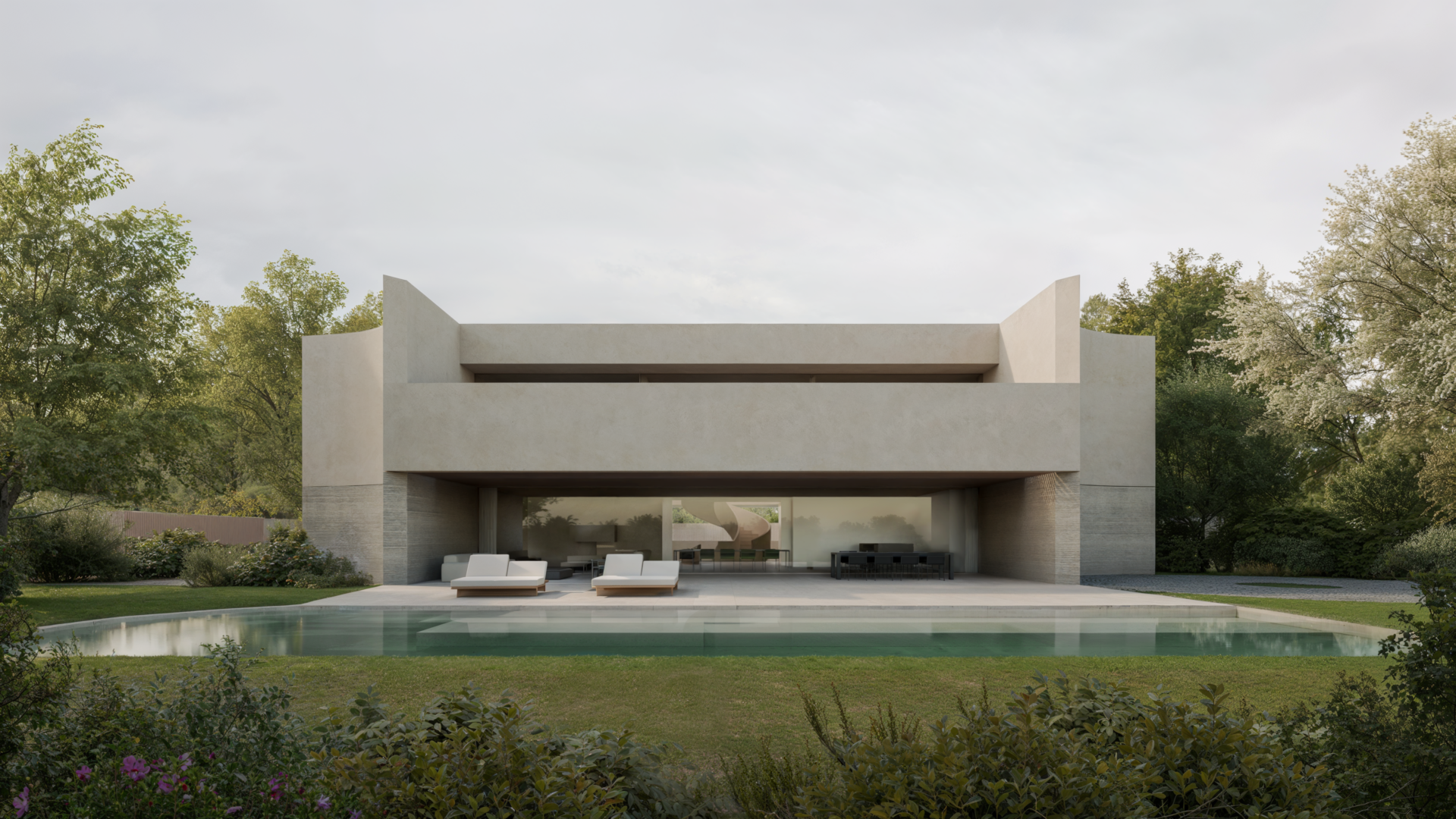
The plot is flat, large, and irregular in geometry, its boundary follows no orthogonal logic. Rather than treating this irregularity as a problem, the project takes it as the generative condition. A triangular module, derived from the residual angle between building mass and plot perimeter, becomes the organising element of the entire composition: repeated, scaled, rotated, it appears in the garden, the terrace geometry, the paving, the pavilion structure.
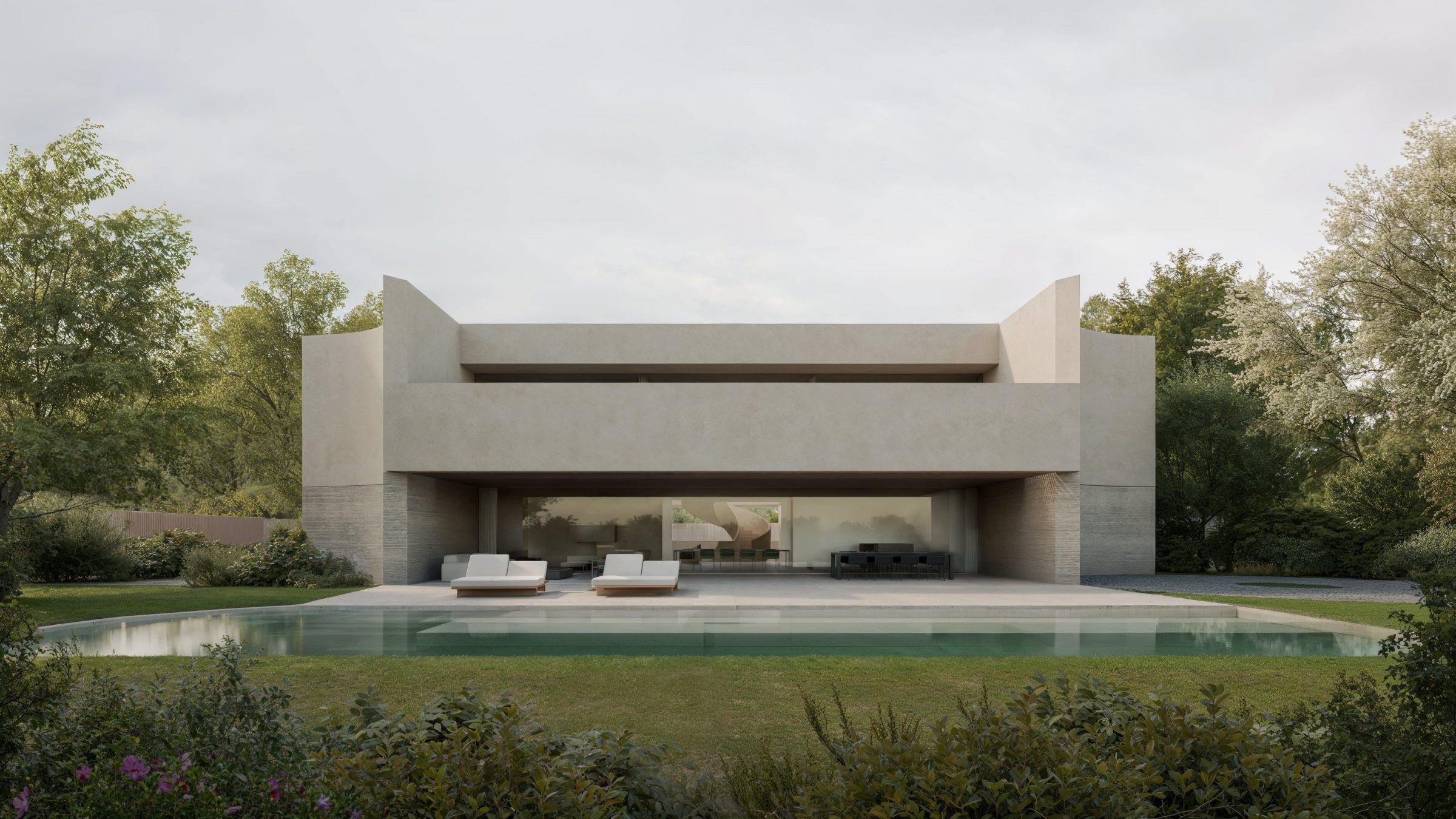
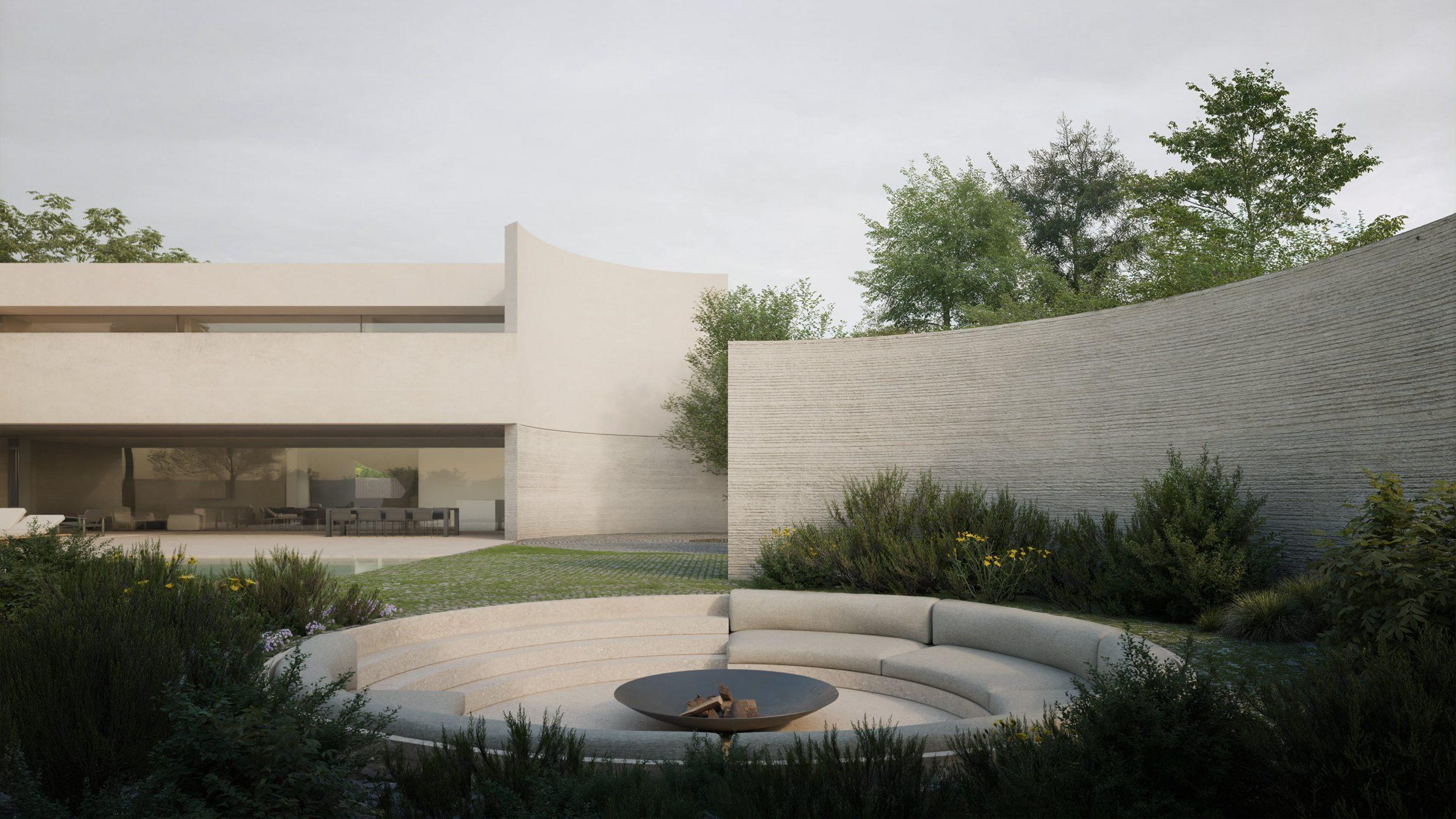
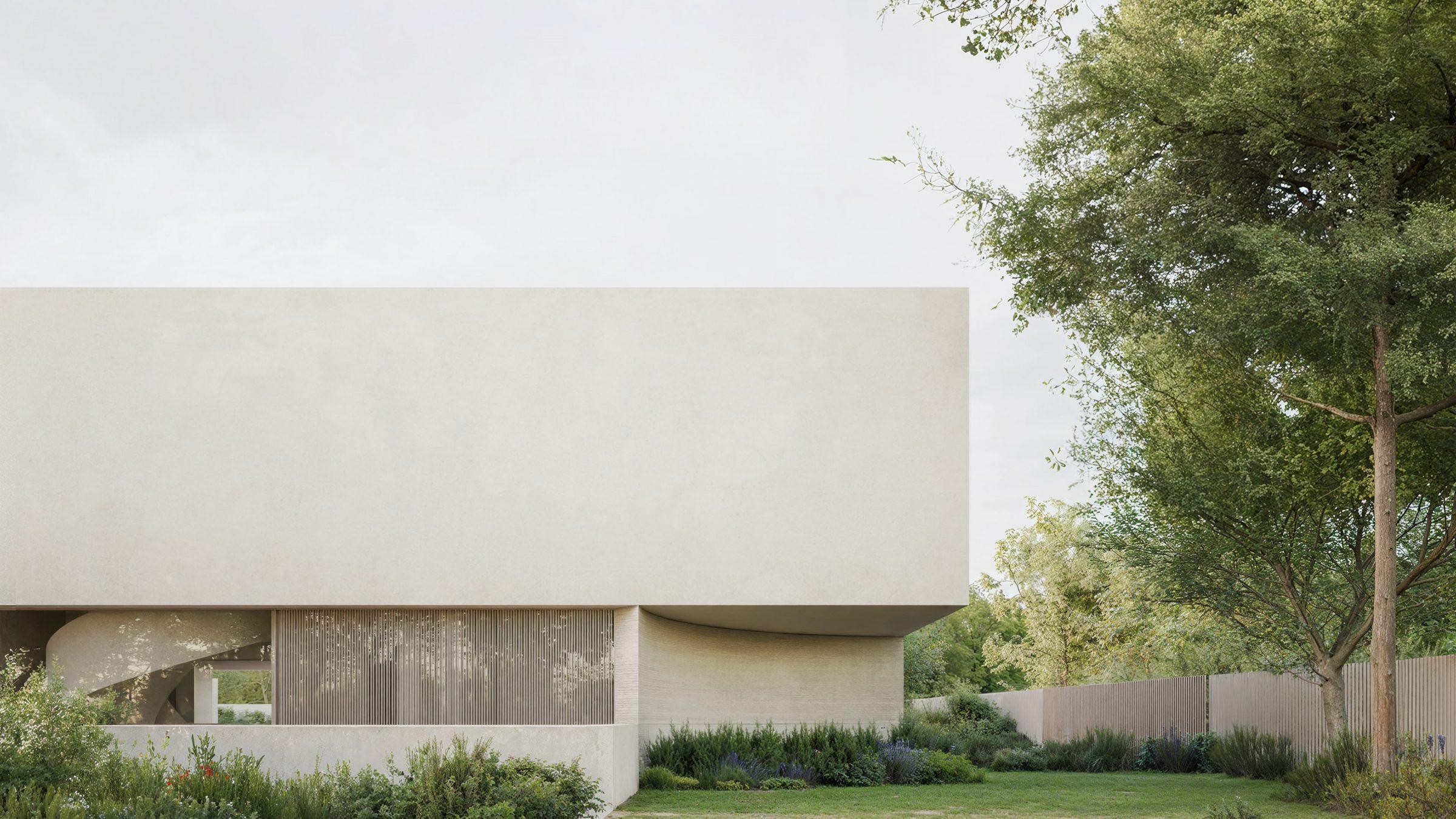
The main volume is oriented southeast, opening fully toward the pool and the sea beyond. This orientation determines the position of every principal room, every threshold, every view corridor. Curved edges along the building perimeter, derived from the same triangular logic, mediate the transition between interior and exterior, softening the meeting between built mass and planted ground. The module is the plan’s generating geometry, present at the scale of the site arrangement, of individual rooms, and of paving and detail; the project reads as unified because one geometric rule operates across every scale.
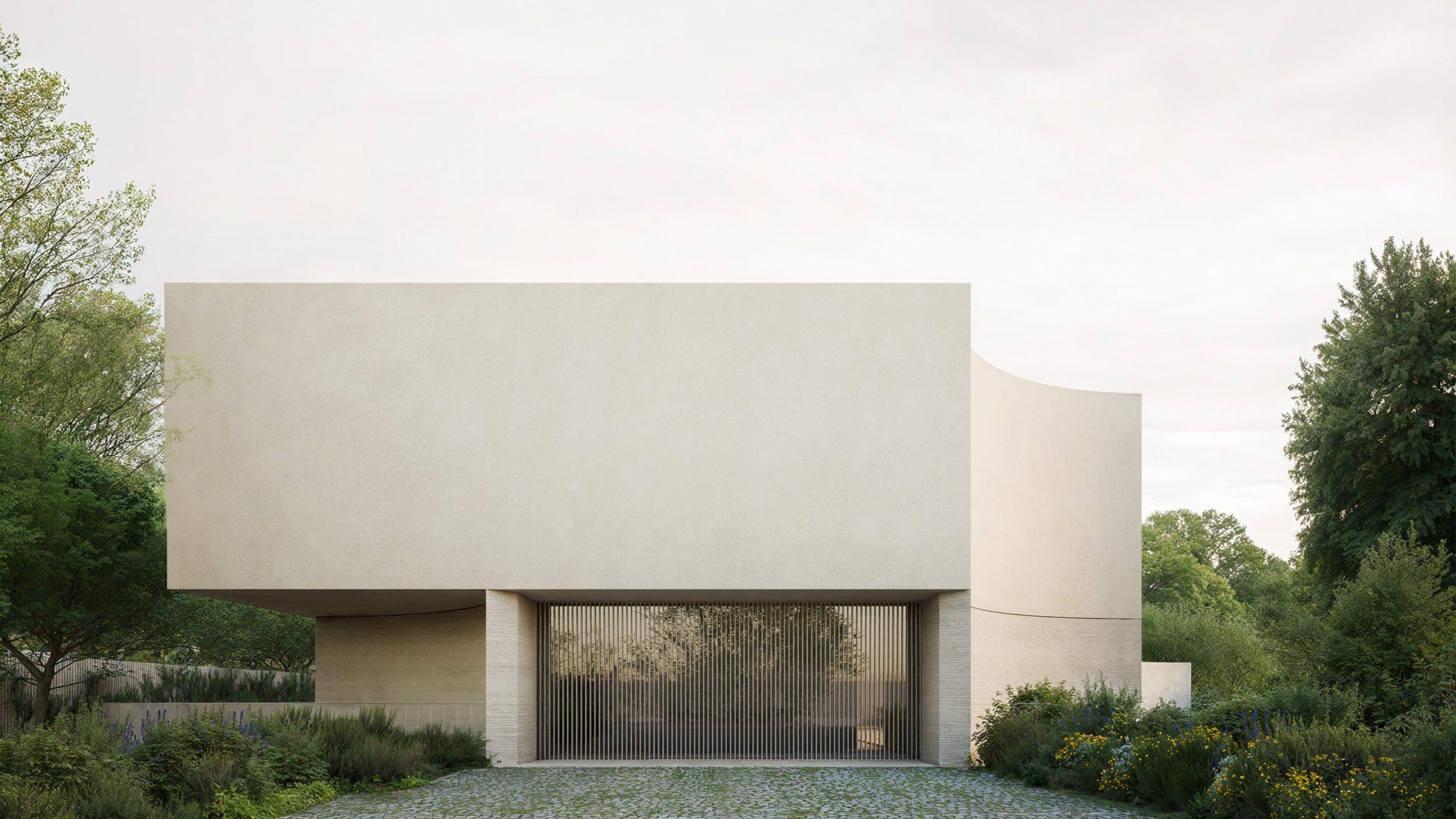
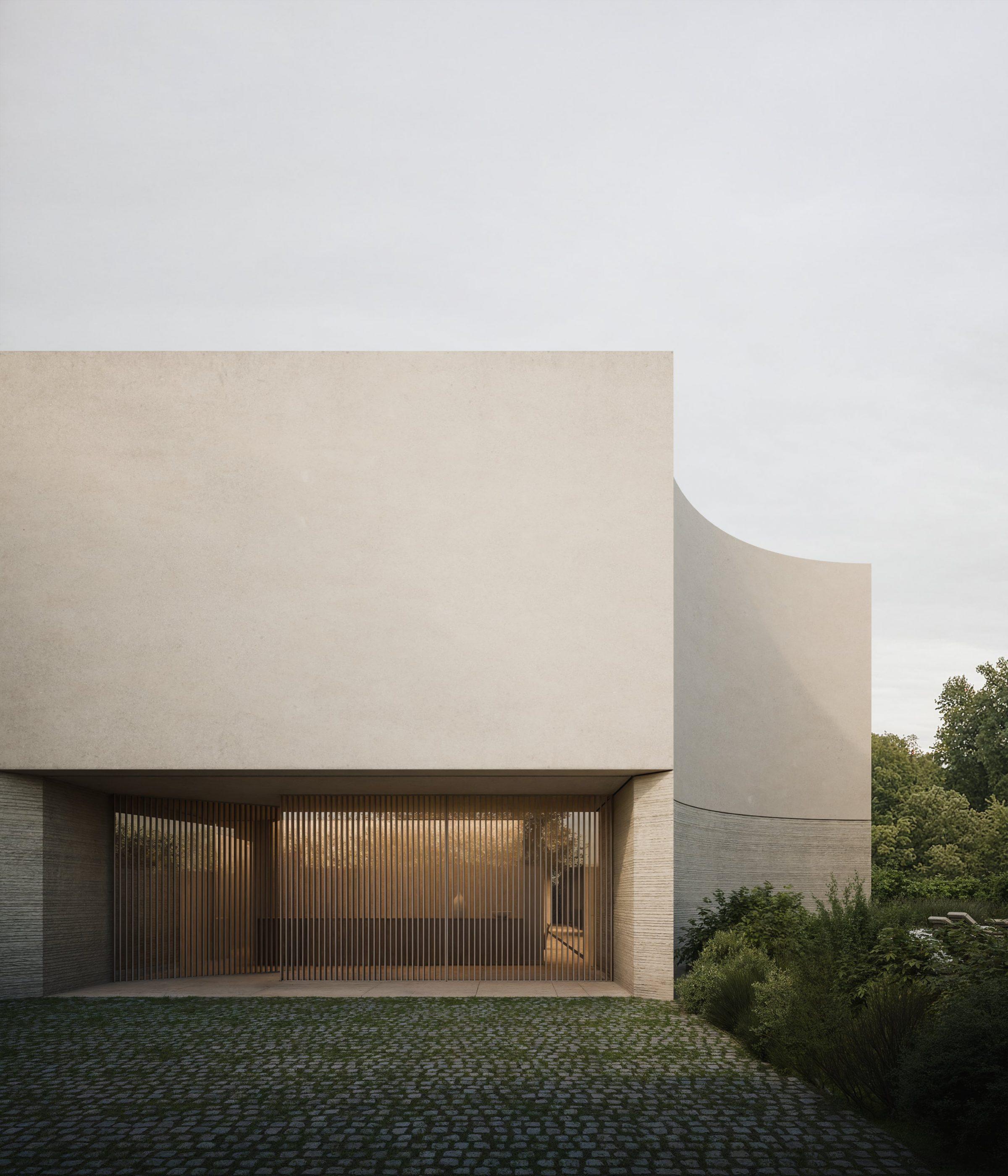
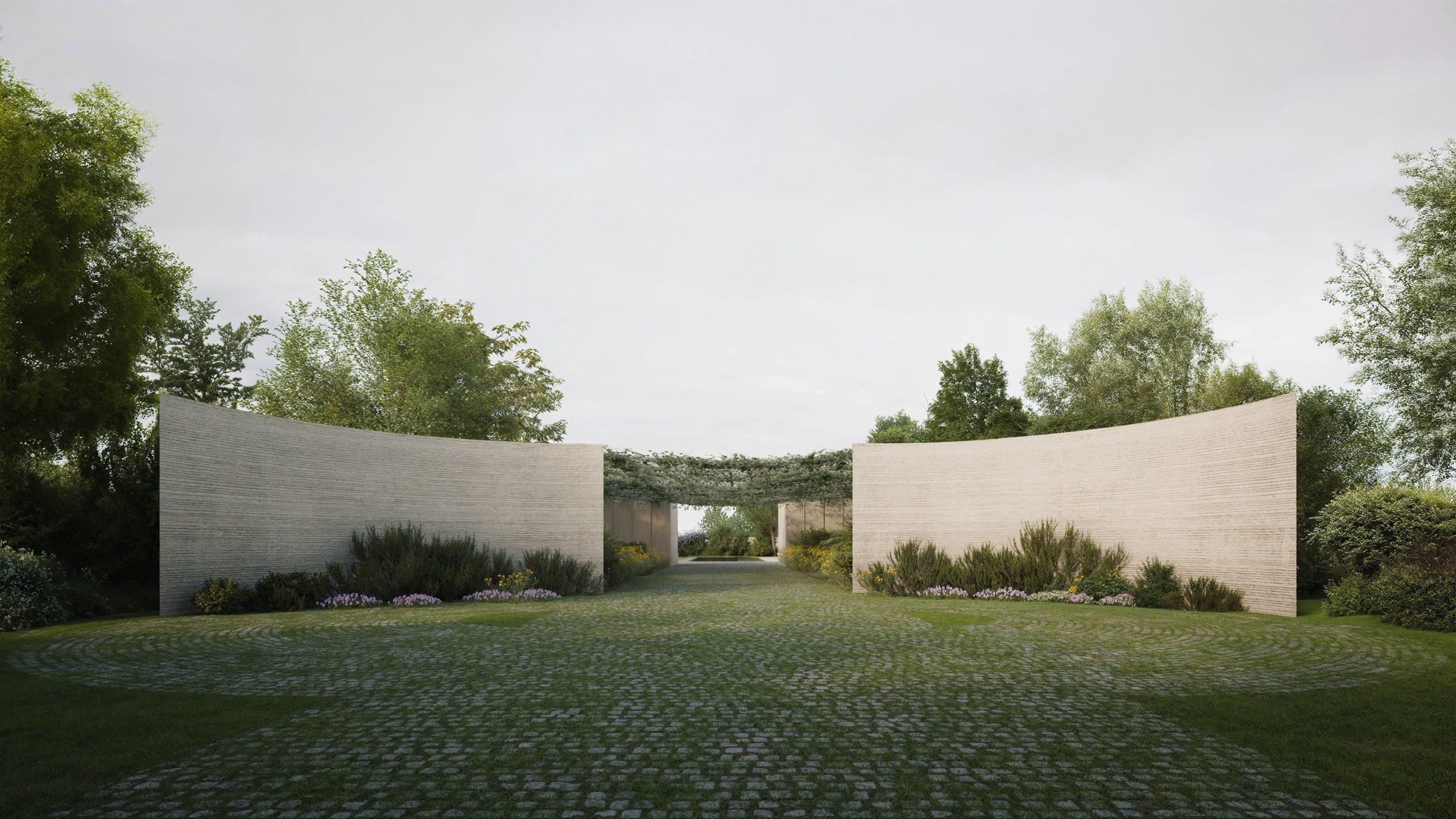
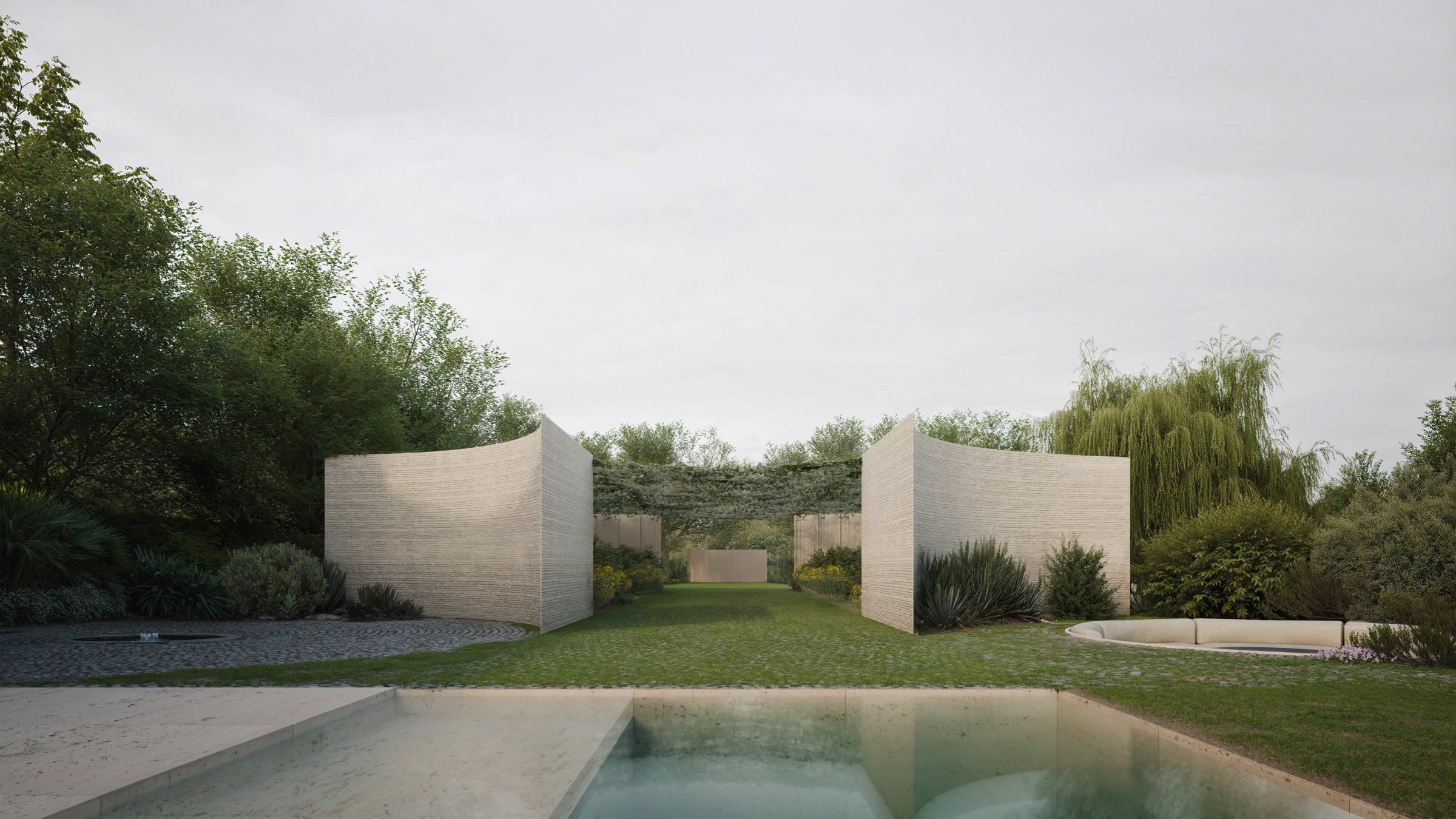
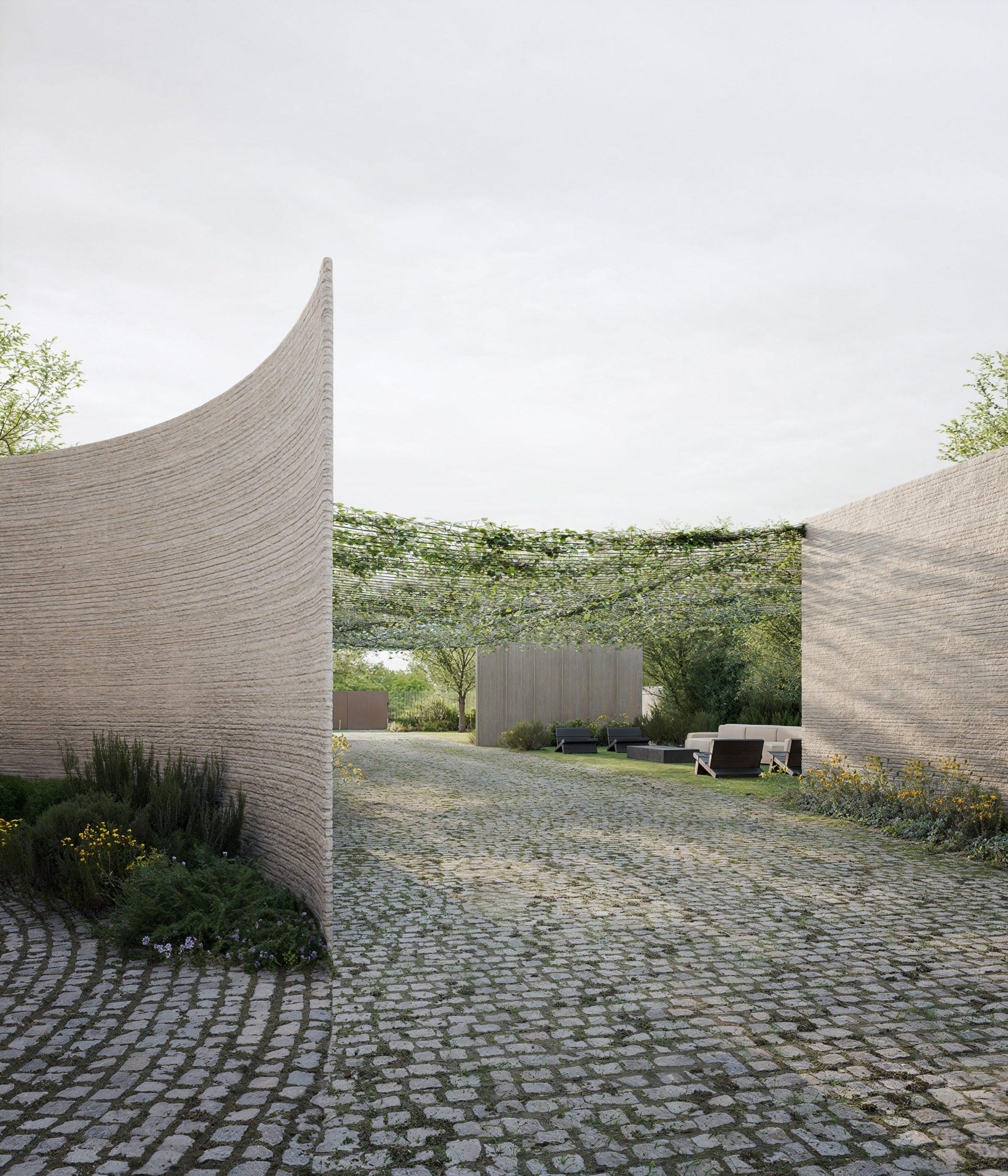
The covered entrance porch marks the threshold between public and private. From here, movement through the house unfolds naturally: the ground floor connects interior and exterior at every point along the southeast face. The garden develops as a sequence of distinct outdoor conditions rather than a single undifferentiated space: open lawn gives way to a shaded pergola, then to a sunken terrace, then to the pool that extends toward the property boundary.
Each of these outdoor zones has a different spatial character, exposed or sheltered, open or enclosed, for movement or for rest. The triangular module gives them formal coherence while allowing each its own atmosphere.
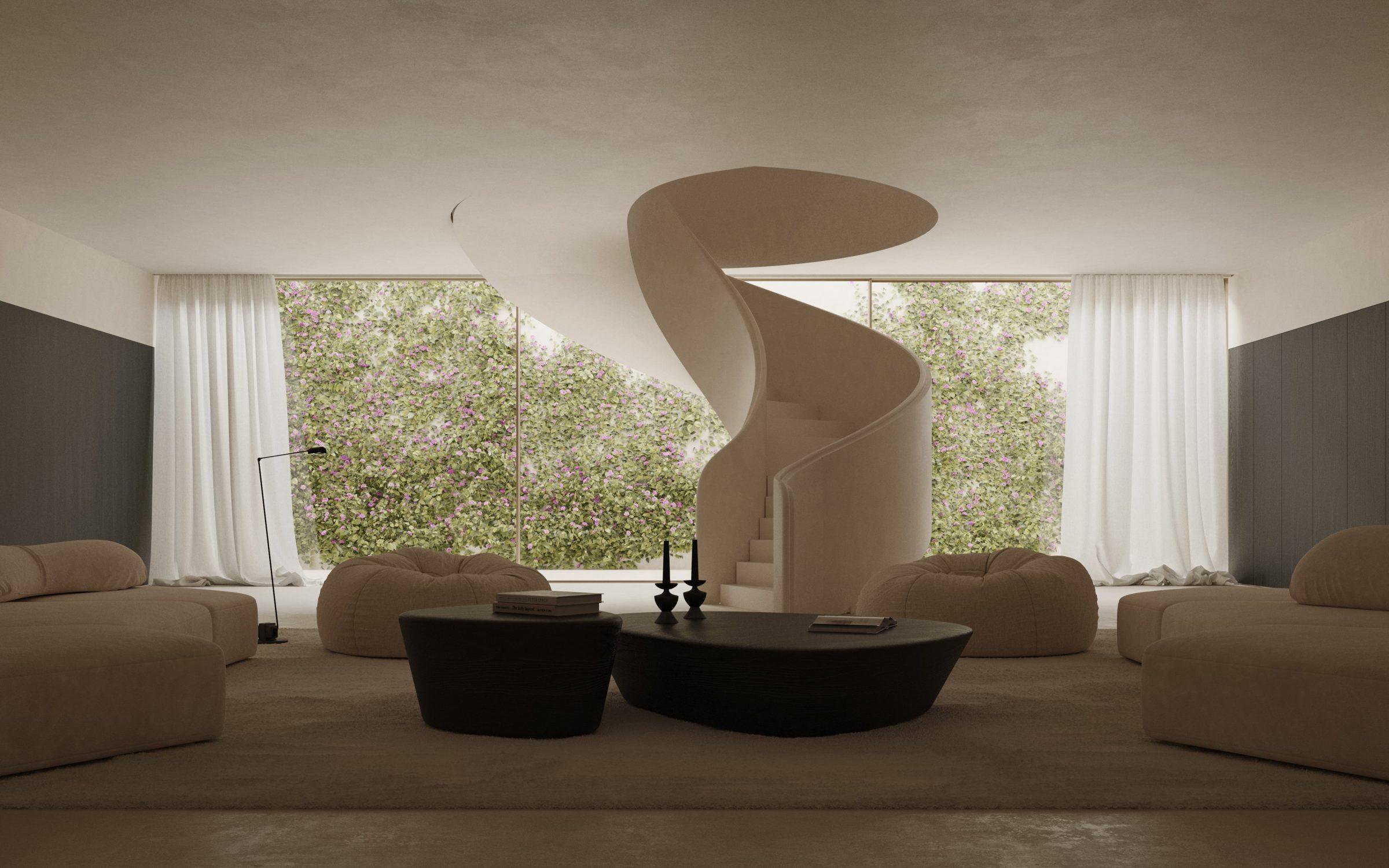
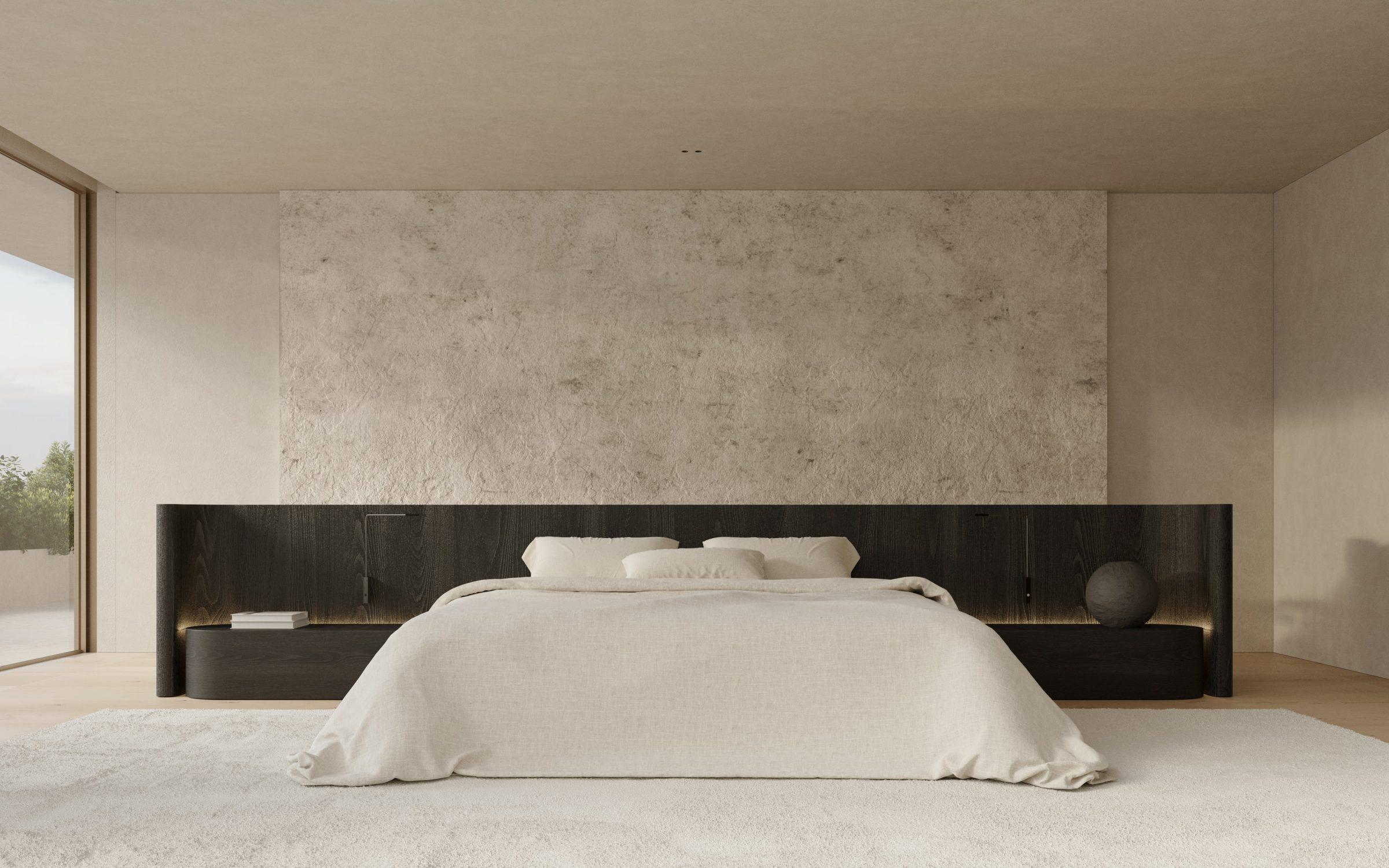
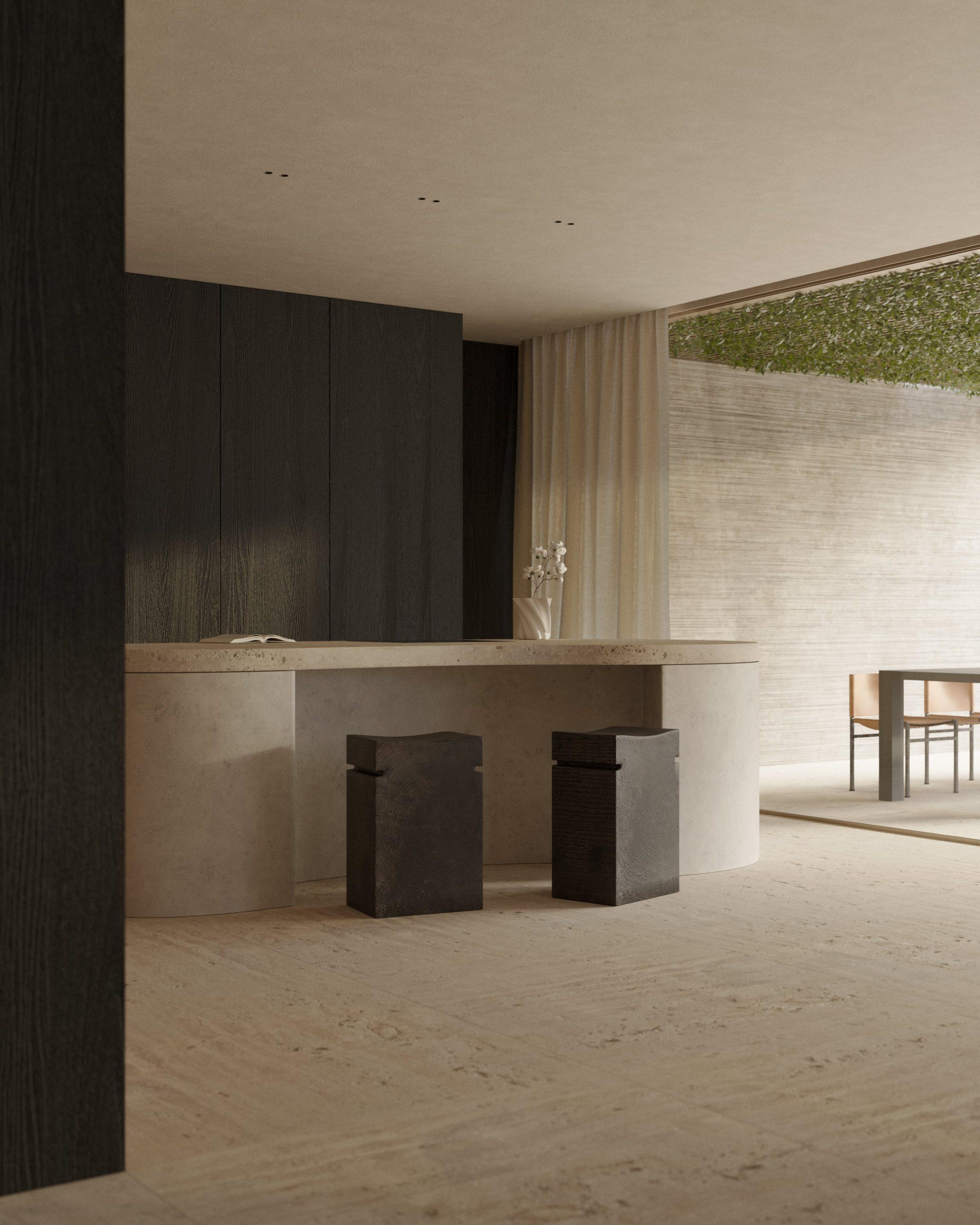
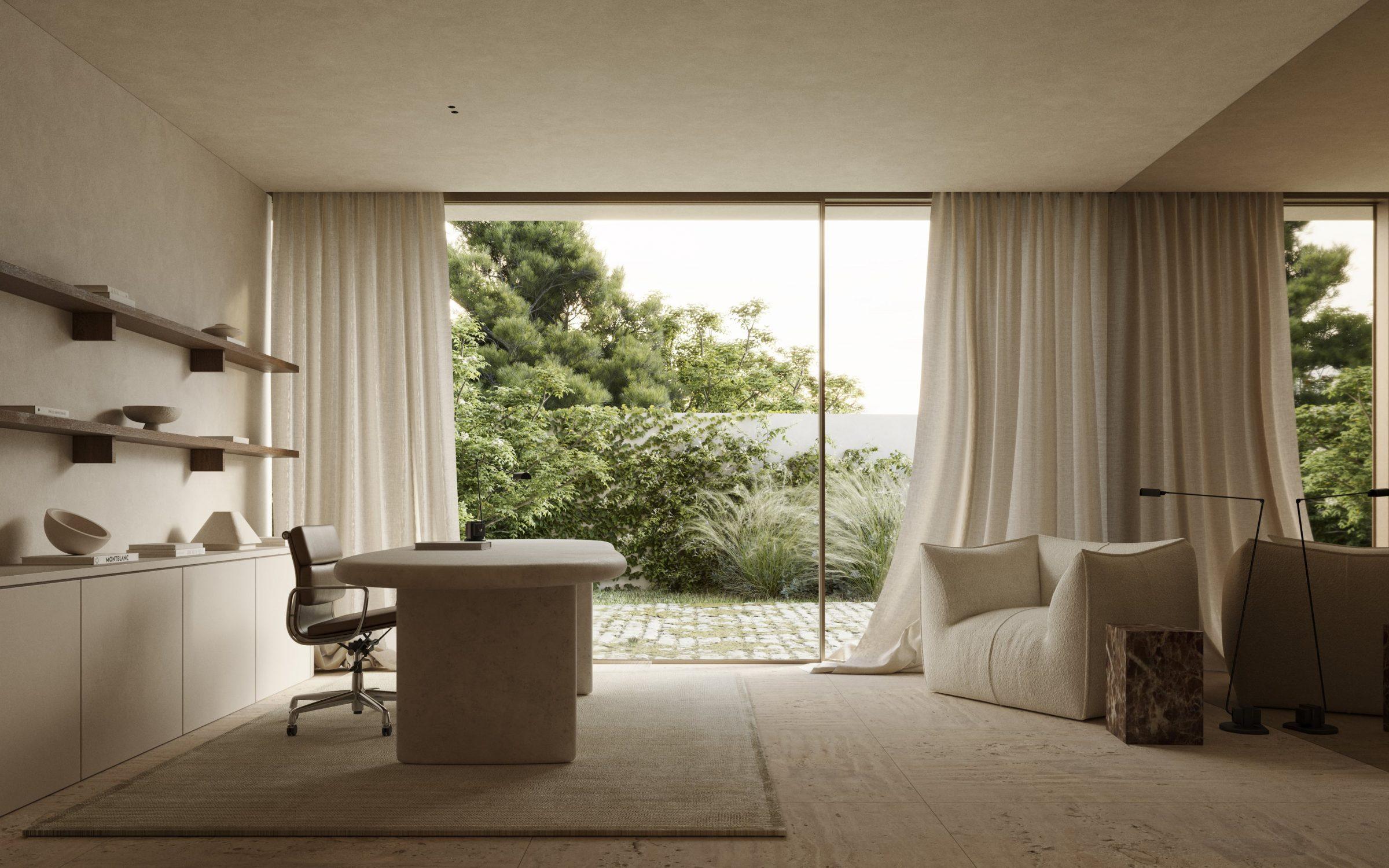
The secondary pavilion sits within the garden, set at the residual angle between the main house and the perimeter. Its roof is defined by climbing vegetation, a structure for plants as much as for people. It is a room without walls: a place for meals outside, for play, for shade during the hottest hours.
Existing pines and palms across the plot are retained throughout. They are not incidental to the composition, they are part of it. The pavilion position, the pool axis, the pergola orientation: each is calibrated against the existing tree canopy. The vegetation is prior to the architecture. The architecture acknowledges this.
More on how the studio approaches work of this kind:
Commissioning a private house with Balzar Architects