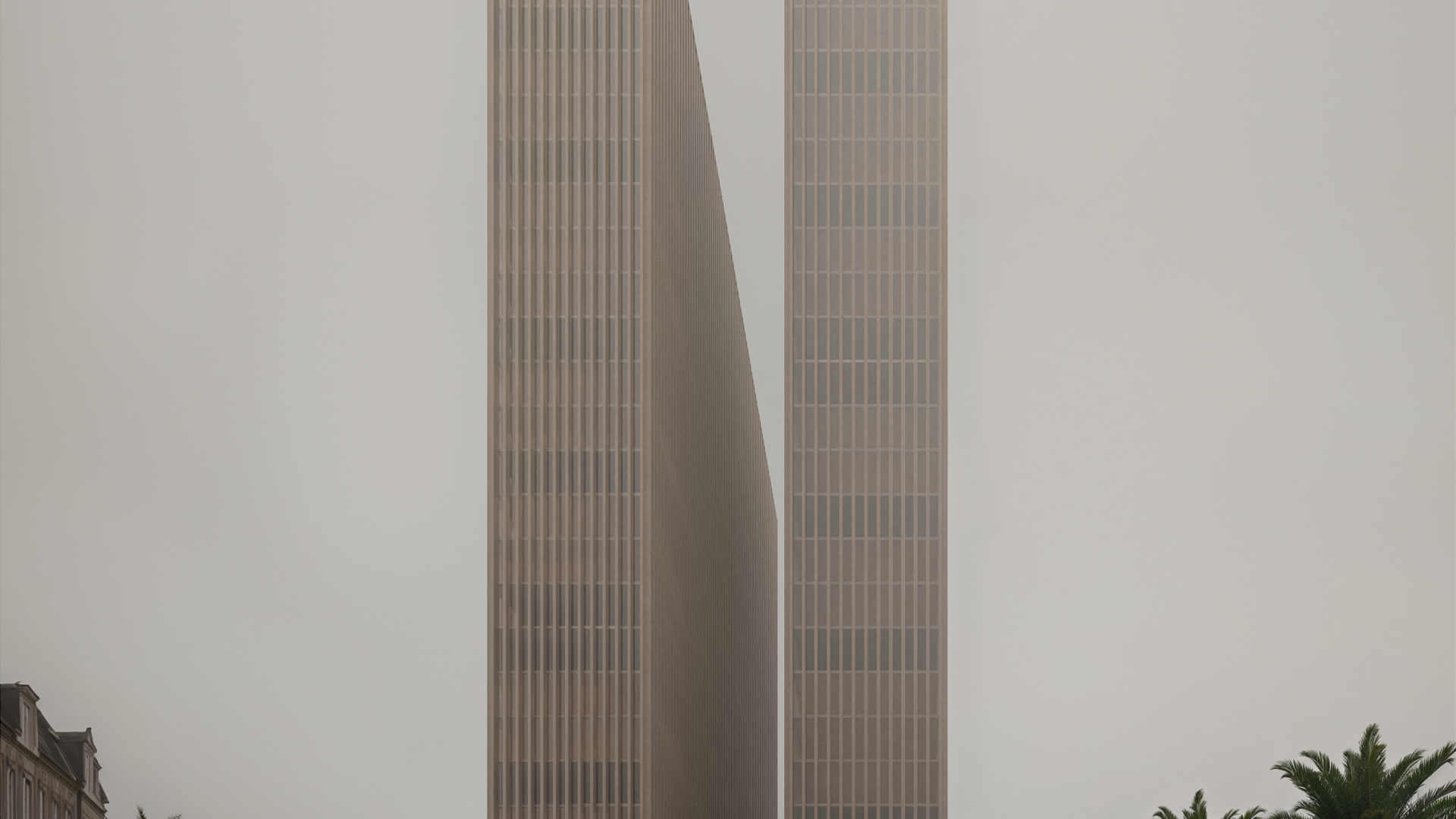
Barzakh is an Arabic word for the interval between two states, the threshold that is neither one nor the other yet holds a character of its own. Two office towers in Kuwait, joined by a shared plinth and developed with Alhumaidhi Architects, take the word as their subject. A single stone lattice rises across both towers, binding 42,000 m² of programme into one vertical order; at the ground it deepens into a colonnade, and the plinth between the towers becomes a public threshold between the city and the building. The project is not named after an idea it illustrates. It is built as the thing the word describes: a passage held open between two conditions.
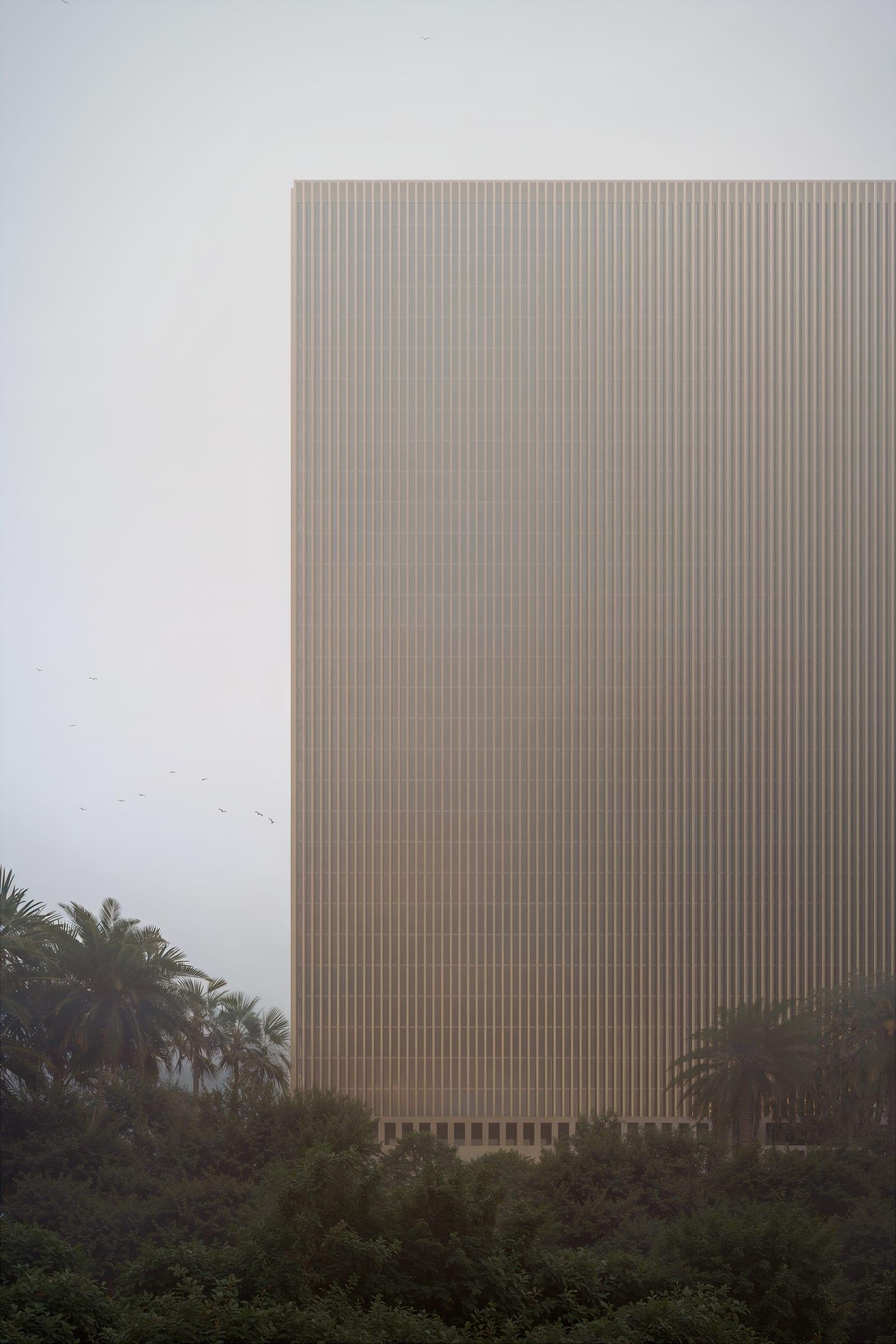
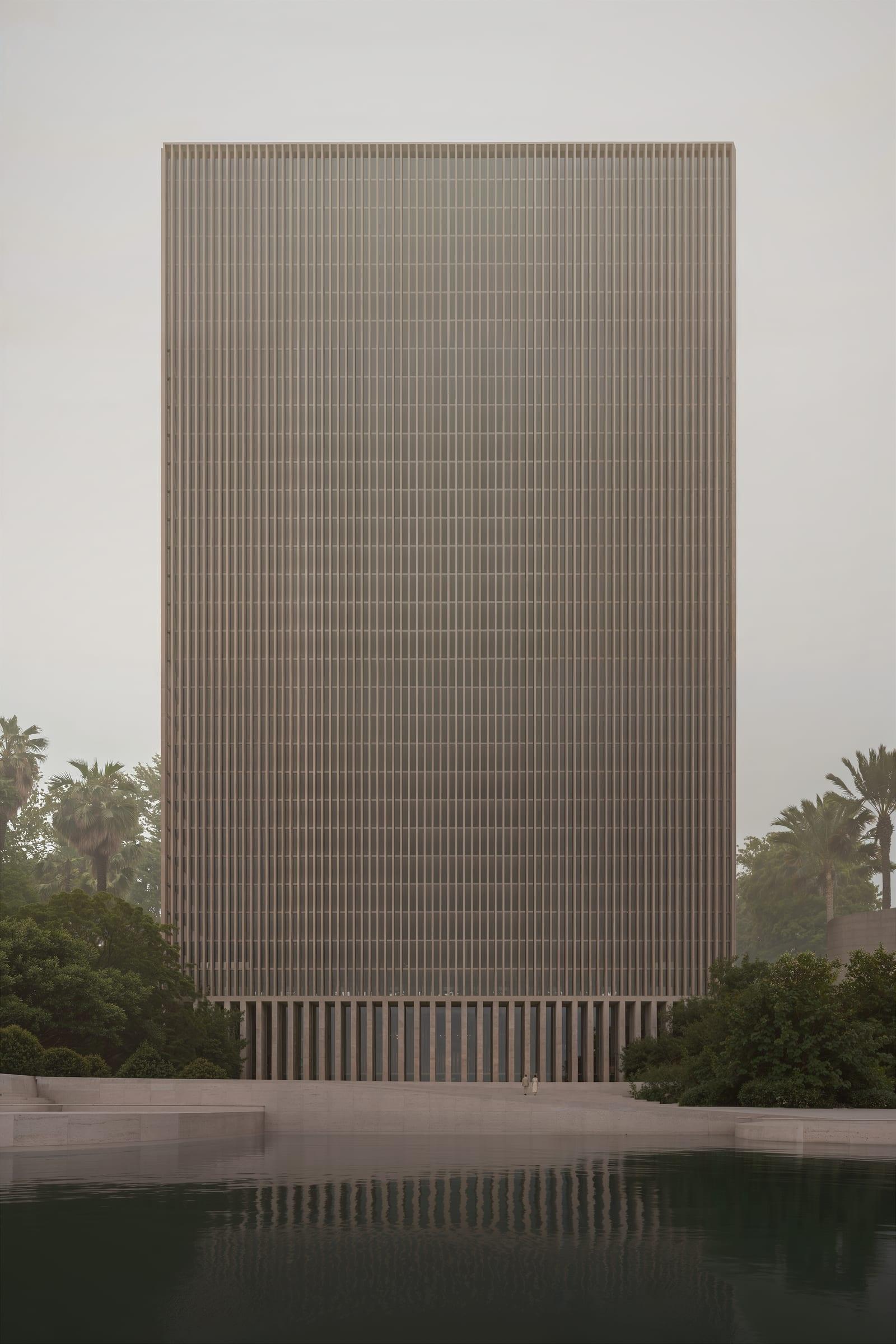
The two towers are conceived as a single architectural body. A stone lattice of vertical members runs across both facades, continuous from base to top, giving the towers a shared measure and a common rhythm. The lattice is structural and climatic as much as formal: it orders the floors behind it, modulates the Gulf sun across the glazed surface, and resolves the scale of a very large building into a repeated vertical element that can be read at the scale of the street.
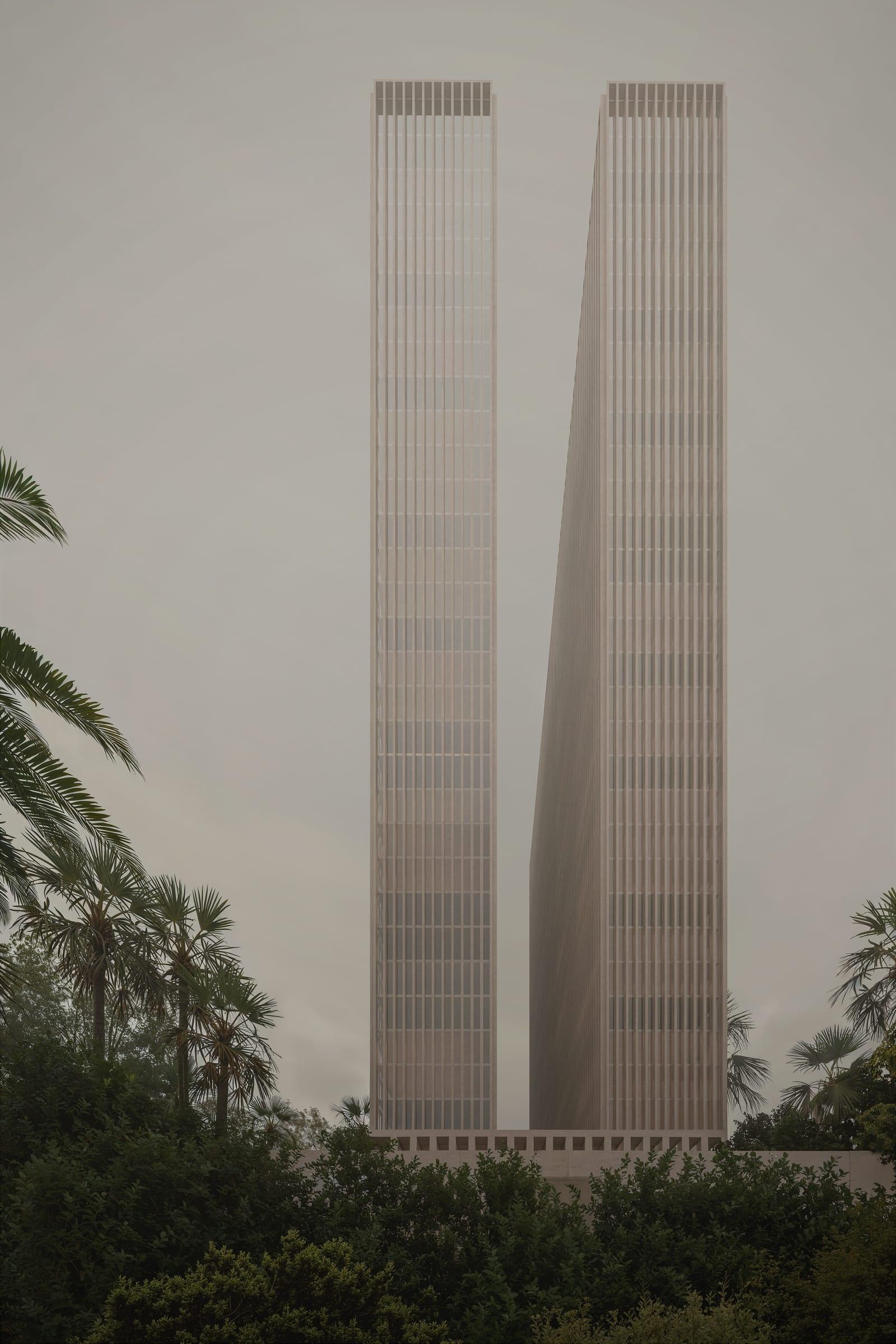
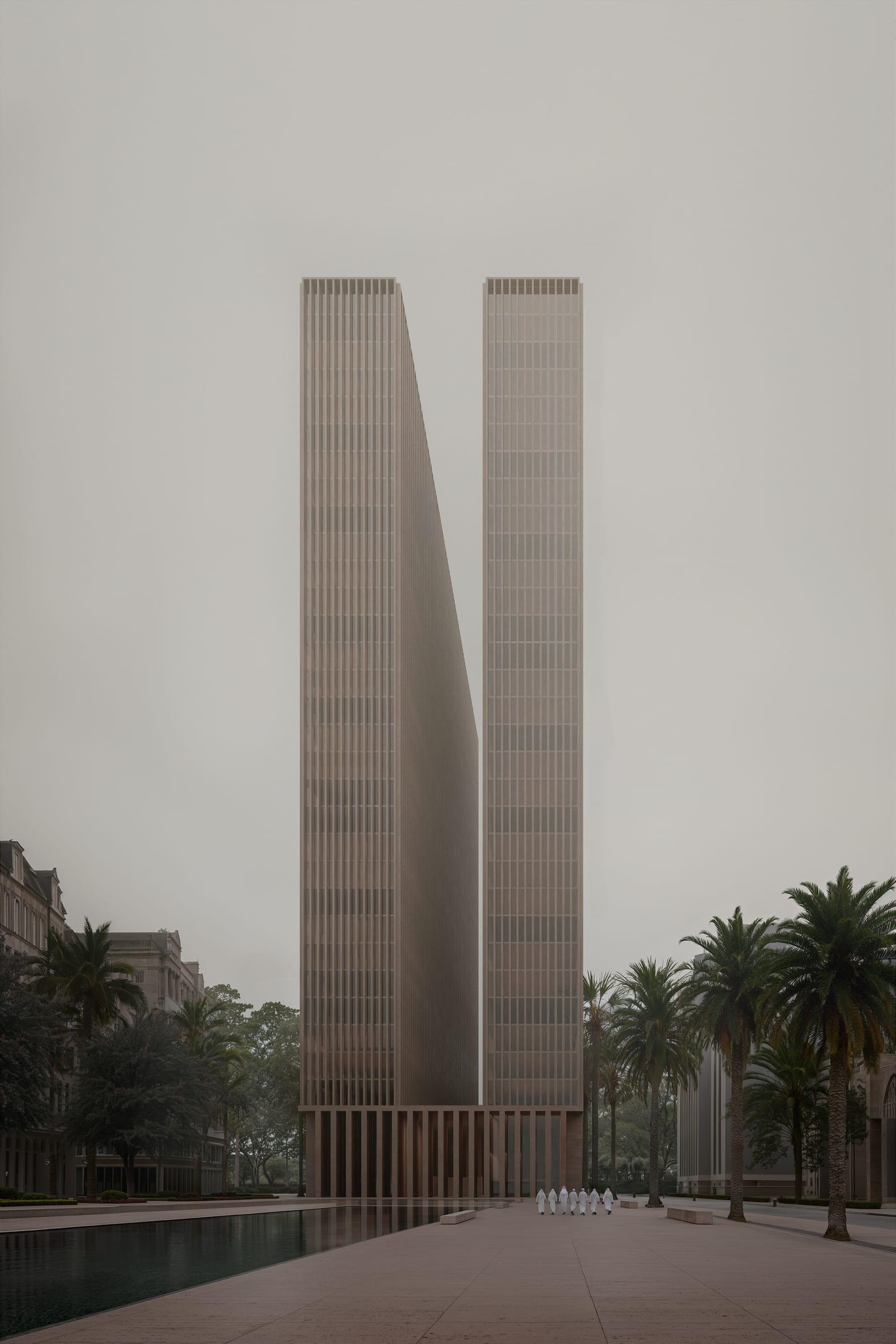
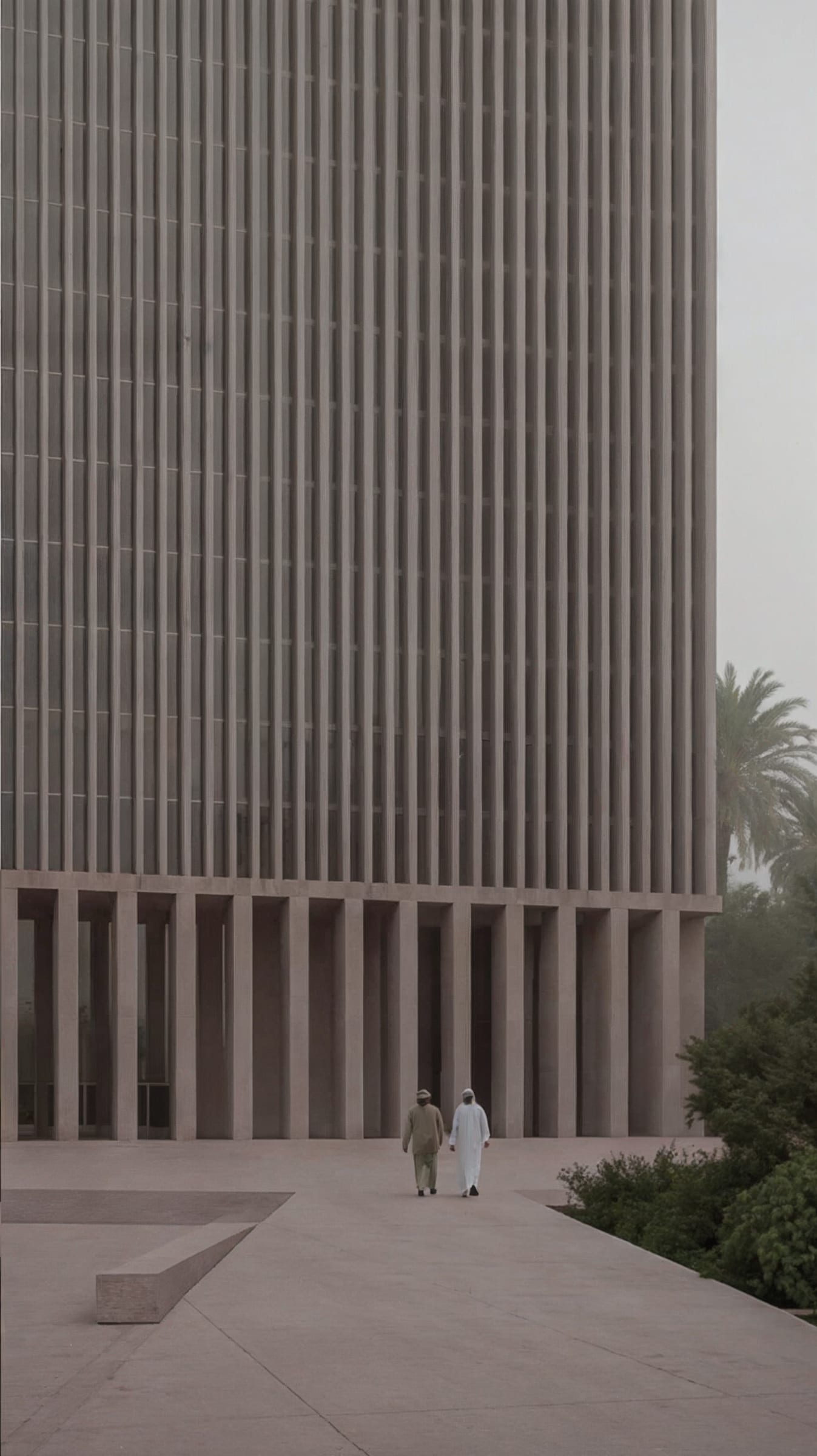
At ground level the lattice deepens into a colonnade. The vertical members thicken into piers, and the facade becomes a portico of deep shadow before the building proper begins. The plinth that connects the two towers is the threshold the project is named for: a shared public level between the city and the offices above, neither fully exterior nor fully interior. Movement into the building passes through this in-between condition rather than across a single line.
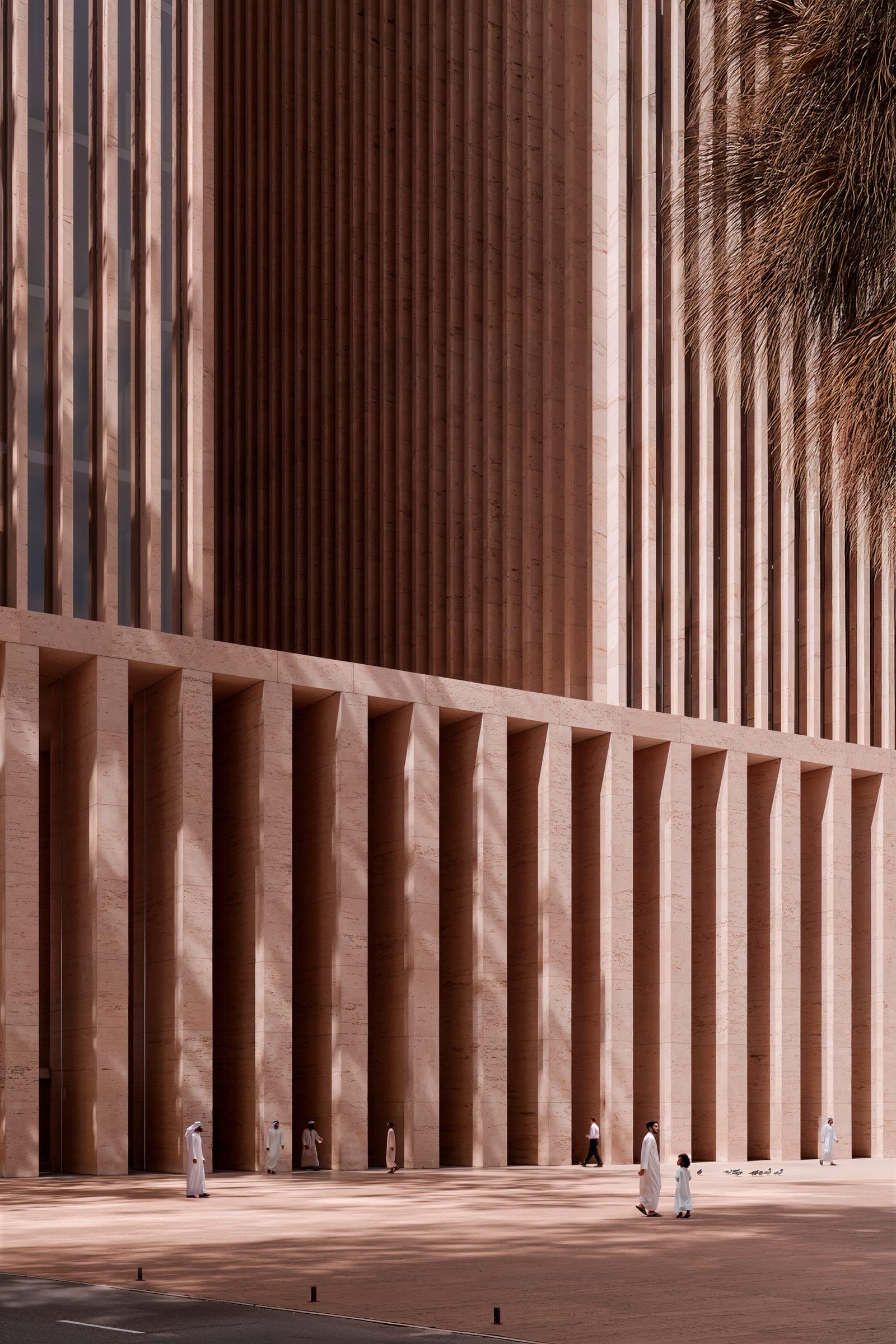
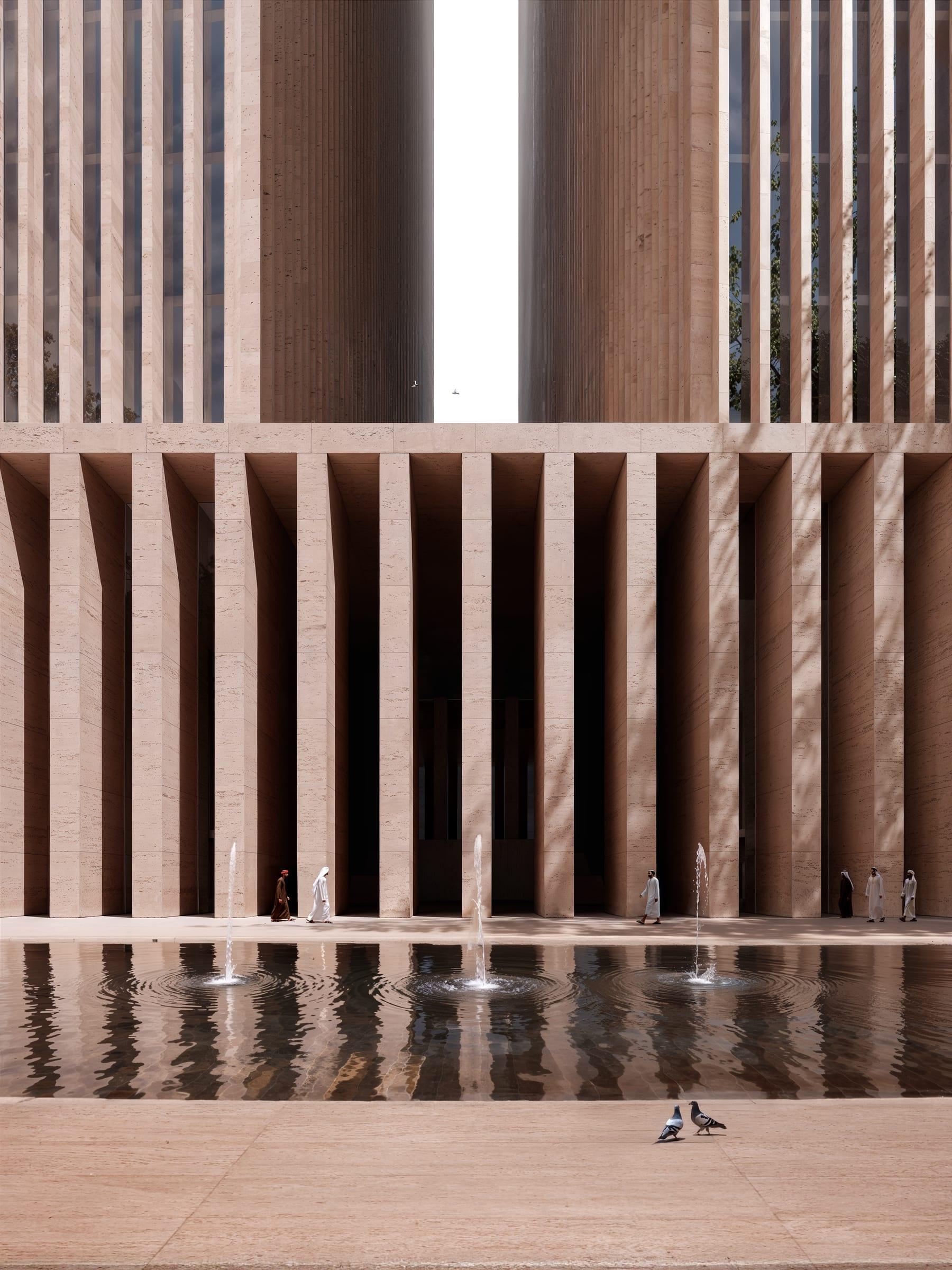
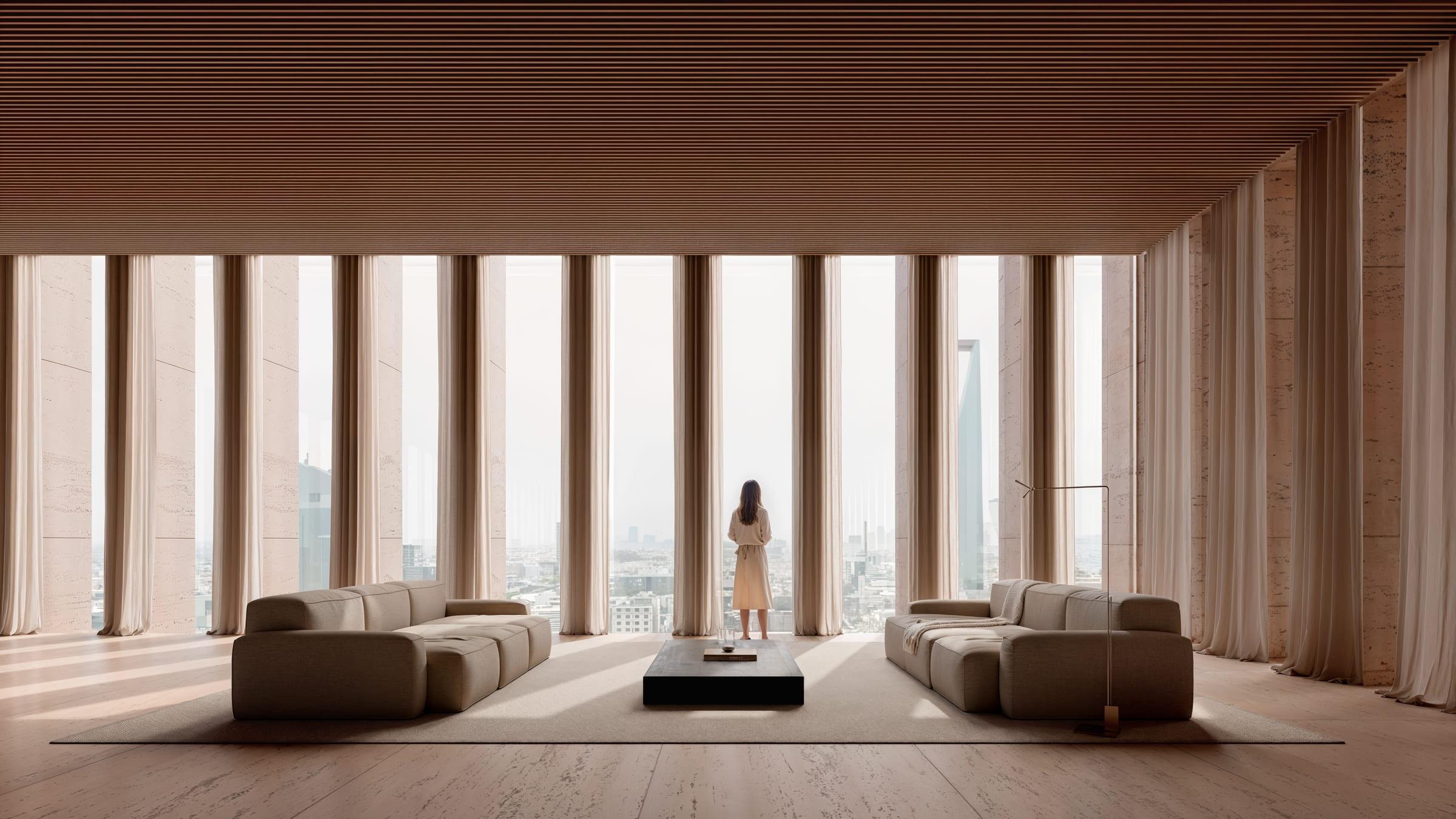
The material is a warm stone, carried from the exterior lattice into the principal interiors. Within, the vertical members frame full-height glazing and the panoramic view across Kuwait; the rhythm of the facade becomes the rhythm of the rooms. Timber linings and a restrained palette hold the interior quiet, so the light filtered through the lattice and the city beyond remain the dominant presence. The building is a threshold in use as much as in name: a measured passage between the scale of the city and the scale of the room.
More on how the studio approaches work of this kind:
Working in Kuwait, Saudi Arabia and the Gulf